

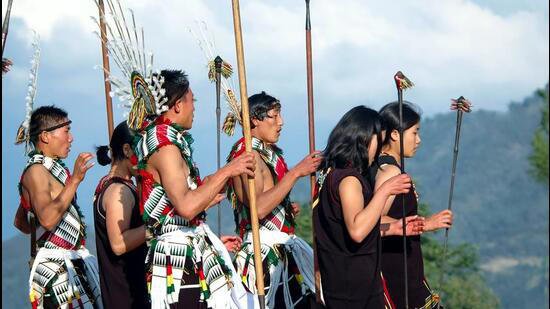
Nagaland’s annual Hornbill Festival is renowned globally as the ‘Festival of Festivals’. It serves not only as a spectacular showcase of the diverse Naga tribes but also as a powerful window into the emerging progress and cultural dynamism of the entire Northeast region. Held every December at the Naga Heritage Village of Kisama, the festival highlights cultural preservation alongside economic and political growth, embodying the spirit of Northeast Rise Hornbill Festival.
This cultural extravaganza now extends beyond Nagaland’s borders. It attracts participation, visitors, and investors from across the country and the world. The festival successfully marries traditional performances with modern entrepreneurship, reflecting the region’s balanced approach to development.
Read More: BJP Discusses Peace, Power, Progress Strategy for Manipur in Delhi
Economic Vibrancy and Entrepreneurship
The festival’s economic impact is immediately visible. Hundreds of stalls feature indigenous crafts, handloom products, and locally sourced organic foods from all eight Northeast states. Consequently, the Hornbill Festival acts as a crucial trade platform. It provides direct market access to artisans and small entrepreneurs who typically struggle with logistics and connectivity.
The surge in visitors, including high-profile domestic and international tourists, fuels a significant boost to the local economy. Specifically, it promotes tourism, hospitality, and service sectors. The focus on showcasing unique, high-quality products, from Manipuri silks to Meghalayan honey, demonstrates the region’s readiness to participate actively in the national economy. This entrepreneurial energy is a key indicator of the broader Northeast Rise Hornbill Festival symbolizes.
Political Significance and Regional Integration
Beyond the cultural fanfare, the Hornbill Festival carries substantial political weight. The event often hosts high-ranking national and state dignitaries. Their presence underscores the Central Government’s increasing focus on the Northeast, particularly through the ‘Act East’ policy. Speeches delivered by chief guests often highlight recent infrastructural developments, improved connectivity, and renewed peace initiatives across the region.
The participation of various tribal cultural troupes from other Northeastern states—such as Mizoram, Arunachal Pradesh, and Meghalaya—underscores a growing regional solidarity. Furthermore, this cross-state cultural exchange builds deeper ties. It showcases the region’s unity despite its vast diversity. This collaborative spirit is essential for sustained progress and is a core component of the vision of Northeast Rise Hornbill Festival promotes.
Culture as a Driver of Development
The festival proves that culture can be a powerful engine for development. By meticulously preserving and showcasing traditional dances, music, and food, Nagaland draws global attention. Thus, this unique cultural heritage transforms into a key economic asset—tourism. The high visibility gained at Hornbill attracts investment in infrastructure, improves civic amenities, and provides motivation for youth to engage in traditional arts and crafts.
The success of the Hornbill Festival serves as a model for how the Northeast can leverage its unique identity to drive economic growth while simultaneously fostering communal understanding and celebrating the region’s increasing prominence on the national stage.
Read More: Tripura Ranks 2nd Nationally in Energy Conservation Efforts