


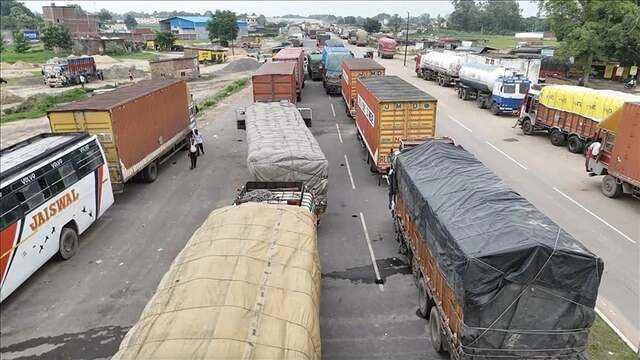
The devastating flash floods in Nepal have disrupted cross-border trade with India, with a 16-km-long queue of cargo trucks forming on the Indian side of the Sonauli border in Uttar Pradesh as damaged and flooded roads hamper the movement of goods into Nepal.
The disruption has affected vehicles carrying supplies to Kathmandu and other parts of Nepal, creating significant delays for transporters and traders. Authorities have stepped up surveillance and traffic management around the border as the situation remains dependent on the restoration of road connectivity inside Nepal.
16-Km Truck Queue Builds Up at Sonauli
A long line of cargo vehicles has formed at the Sonauli border in Maharajganj district of Uttar Pradesh, with the queue extending towards Nautanwa.
The trucks are waiting to cross into Nepal, but damaged and flooded roads on the Nepalese side have disrupted the movement of goods vehicles.
The congestion has raised concerns over traffic movement along the national highway, with a large number of trucks remaining stationary while awaiting clearance to proceed.
Cargo vehicles heading towards Kathmandu are among those affected, while trucks destined for other parts of Nepal are also facing delays.
Nepal Floods Disrupt India-Nepal Trade
The floods have created a major challenge for the movement of goods between India and Nepal.
Roads connecting the border with Kathmandu and other destinations have been damaged or inundated, restricting the movement of trucks after they cross into Nepal.
The disruption is particularly significant because road transport plays a crucial role in the movement of goods between the two neighbouring countries.
Any prolonged interruption could affect supply chains, increase transportation costs and delay the delivery of essential commodities and commercial goods.
Officials have warned that the situation could worsen if road connectivity in Nepal is not restored soon.
Sonauli Border Remains Operational but Movement Slows
The Sonauli border itself has not been reported as being directly affected by the floods. Instead, the major problem is the condition of roads beyond the border inside Nepal.
As a result, trucks continue to arrive on the Indian side but face difficulty moving onward into Nepal.
The accumulation of vehicles has created a bottleneck extending several kilometres from the border point.
Police and security personnel have been deployed to regulate traffic and manage the growing congestion.
Security Agencies Intensify Surveillance
Authorities have increased surveillance around the Sonauli border amid the disruption.
Circle Officer Basant Singh said surveillance had been intensified and police station heads in border areas had been instructed to remain alert.
The increased monitoring is aimed at maintaining orderly movement of vehicles and ensuring that the disruption does not create additional law-and-order or security concerns.
With the border serving as an important commercial and passenger gateway, authorities are also monitoring developments along nearby roads and river systems.
Trade Disruption Could Affect Supplies
The prolonged truck backlog could have consequences for businesses and consumers in Nepal if transport routes remain blocked.
Goods transported from India form an important component of Nepal’s supply network. Delays at the border can therefore affect the availability and movement of products in markets across the country.
Transporters may also face higher costs as vehicles remain stationary for extended periods, while traders could experience delays in fulfilling orders.
If road connectivity is not restored quickly, the impact could extend beyond the immediate border area.
Flood Damage Has Hit Nepal’s Transport Network
The latest disruption is part of the wider infrastructure damage caused by the devastating flash floods.
The disaster swept through parts of Nepal after an ice-and-rock avalanche triggered catastrophic flooding in the Himalayan region. Roads, bridges, settlements and other infrastructure have been severely damaged, making movement difficult across several affected areas.
The destruction of transportation links has complicated both emergency rescue operations and the movement of commercial goods.
Maharajganj Also Feels Impact of Nepal Floods
The consequences of the disaster are being felt on the Indian side as well.
Residents of Uttar Pradesh’s Maharajganj district who work in Nepal have faced difficulties returning home because of the disruption.
Some workers who were in Kathmandu and other affected areas have begun making their way back to India through alternative routes.
The situation has highlighted the close economic and social links between communities on both sides of the India-Nepal border.
Border Areas Remain on Alert
Authorities in Maharajganj and neighbouring areas are also monitoring water levels and vulnerable locations because of the continuing flood situation.
Officials have increased vigilance along embankments and riverside areas, while disaster-response teams remain deployed in vulnerable parts of the district.
The focus is on preventing any spillover of the flood emergency into Indian territory and ensuring that residents in at-risk locations can be evacuated if necessary.
Rescue and Relief Take Priority in Nepal
While trade disruption is creating economic concerns, the immediate priority in Nepal remains rescue and relief operations.
The flash floods have caused a major humanitarian emergency, with hundreds of people killed and many others still missing. Thousands have been rescued as authorities continue searching affected communities and restoring access to isolated areas.
Infrastructure restoration will be essential not only for humanitarian operations but also for reopening important trade routes.
Road Connectivity Key to Restoring Trade
The future of cross-border trade will depend largely on how quickly Nepal can restore damaged roads and bridges.
Once routes connecting the Sonauli border with Kathmandu and other major destinations become accessible, the accumulated cargo traffic can gradually begin moving.
Until then, the backlog of trucks is likely to remain a visible sign of the wider disruption caused by the disaster.
Authorities on both sides may also need to coordinate traffic movement and logistics to prevent further congestion once routes reopen.
Long-Term Impact on India-Nepal Commerce
The current disruption demonstrates the vulnerability of cross-border trade to major natural disasters.
India and Nepal share extensive economic and social links, and border points such as Sonauli facilitate the movement of people and goods between the two countries.
Strengthening road infrastructure, improving disaster preparedness and developing alternative transport routes could help reduce the impact of similar disruptions in the future.
For businesses dependent on timely deliveries, resilient cross-border infrastructure is particularly important.
16-Km Queue Highlights Scale of Disruption
The 16-km cargo truck queue at Sonauli provides a clear indication of how severely the Nepal flash floods have disrupted regional trade.
Although the border itself remains operational, damaged and flooded roads inside Nepal are preventing trucks from moving efficiently towards Kathmandu and other destinations.
The immediate priority is to restore road connectivity and ensure the safe movement of essential supplies.
Until that happens, traders, transporters and residents on both sides of the border are likely to continue facing the economic and logistical consequences of the disaster.
As rescue operations continue in Nepal, restoring critical transport links will be essential for both humanitarian relief and the eventual revival of normal India-Nepal cross-border commerce.