

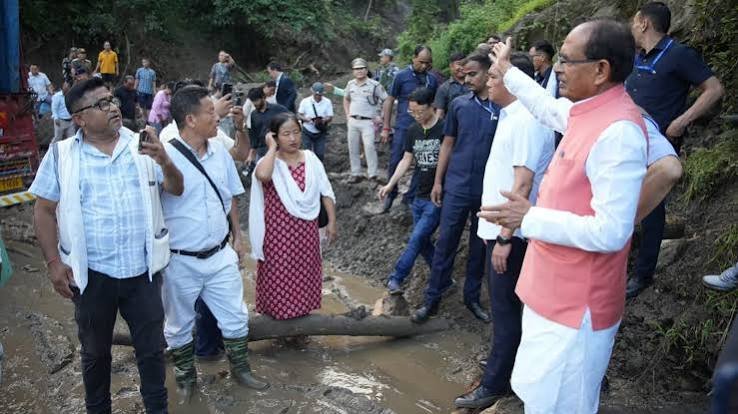
The Northeast Climate Policy Task Force was formed as regional political parties joined efforts to seek higher central flood-mitigation relief. The initiative aims to create a coordinated policy platform and pursue stronger financial support for flood management and climate-related challenges across the Northeast.
The Northeast Climate Policy Task Force was established oafter regional political parties across the Northeast formed a joint platform to demand higher central relief support for flood mitigation. The initiative focuses on developing a coordinated approach toward climate-related challenges and seeking greater assistance for affected regions.
Moreover, the Northeast frequently faces environmental challenges linked to heavy rainfall, flooding, and difficult terrain. Therefore, regional leaders have emphasized the need for stronger disaster management resources and long-term mitigation strategies.
The task force represents a collective political effort to highlight flood-related concerns, while any increase in central assistance would depend on government evaluation and policy decisions.
CPI(M) Criticizes Manik Saha Government Over Extensions for Retired Bureaucrats
Northeast Climate Policy Task Force Begins Joint Initiative
The Northeast Climate Policy Task Force was created after multiple regional political parties came together to advocate for enhanced flood-mitigation support.
Furthermore, the task force aims to coordinate discussions and present a unified position on climate-related issues affecting northeastern states. Consequently, the platform seeks to strengthen regional representation in discussions regarding disaster management funding.
The available information does not specify the names of participating parties, the structure of the task force, or the exact amount of additional relief requested.
Moreover, joint policy platforms allow political groups to combine concerns and develop common strategies on issues affecting multiple states.
Political Parties Seek Greater Flood Mitigation Support
The Northeast Climate Policy Task Force emerged from concerns regarding the financial requirements of flood management and climate adaptation.
Additionally, regional parties argued for stronger central assistance to support mitigation efforts. Therefore, the demand highlights the importance of adequate resources for infrastructure improvement, disaster preparedness, and community protection.
Flood management often requires coordination between state governments, central agencies, and local administrations. Consequently, financial support plays an important role in implementing long-term solutions.
Meanwhile, authorities continue to assess disaster-related requirements through established relief and funding mechanisms.
Northeast Climate Policy Task Force Focuses on Legal and Policy Channels
The Northeast Climate Policy Task Force plans to pursue its demands through formal policy and legal channels. Moreover, political organizations often use institutional mechanisms to seek changes in funding patterns, administrative approaches, and development priorities.
Similarly, climate policy discussions increasingly involve legal frameworks, environmental planning, and disaster management strategies. Therefore, the task force’s approach reflects an effort to address flood-related issues through structured advocacy.
However, forming a task force does not guarantee immediate changes in government funding decisions. Any additional relief measures will depend on assessments by competent authorities.
Climate Challenges Require Regional Coordination
The Northeast Climate Policy Task Force highlights the importance of regional cooperation in addressing climate-related risks. Furthermore, floods often affect multiple states simultaneously, making coordination essential for effective disaster response and mitigation planning.
Moreover, shared strategies can help states present common concerns while seeking support for infrastructure and resilience programs. Consequently, regional collaboration may strengthen discussions with central authorities.
At the same time, climate-related policies require long-term planning, scientific assessment, and administrative coordination. Therefore, sustainable flood mitigation efforts depend on cooperation among governments, experts, and communities.
Conclusion
The Northeast Climate Policy Task Force represents a coordinated effort by regional political parties to seek increased central flood-mitigation relief. Established, the platform aims to highlight climate challenges and advocate for stronger financial support for disaster management initiatives.
Moreover, the initiative reflects the growing importance of regional cooperation in addressing environmental concerns that affect multiple northeastern states. Flood mitigation requires consistent investment, effective planning, and coordination between different levels of government.
Overall, the Northeast Climate Policy Task Force marks a collective political effort to bring climate-related concerns into policy discussions. Future developments will depend on government responses, funding assessments, and the implementation of flood-management strategies.
FAQs
1. What is the Northeast Climate Policy Task Force?
The Northeast Climate Policy Task Force is a joint platform formed by regional political parties to advocate for stronger climate policy measures and higher flood-mitigation relief.
2. When was the task force formed?
The task force was formed on July 6.
3. Why was the task force created?
It was created to seek greater central support for flood mitigation and address climate-related challenges affecting Northeast states.
4. Does the task force control government funding decisions?
No. The task force can make demands and policy representations, but funding decisions depend on government authorities.
5. Why is flood mitigation important in Northeast India?
Flood mitigation helps protect communities, infrastructure, and livelihoods in regions affected by recurring climate-related challenges.