

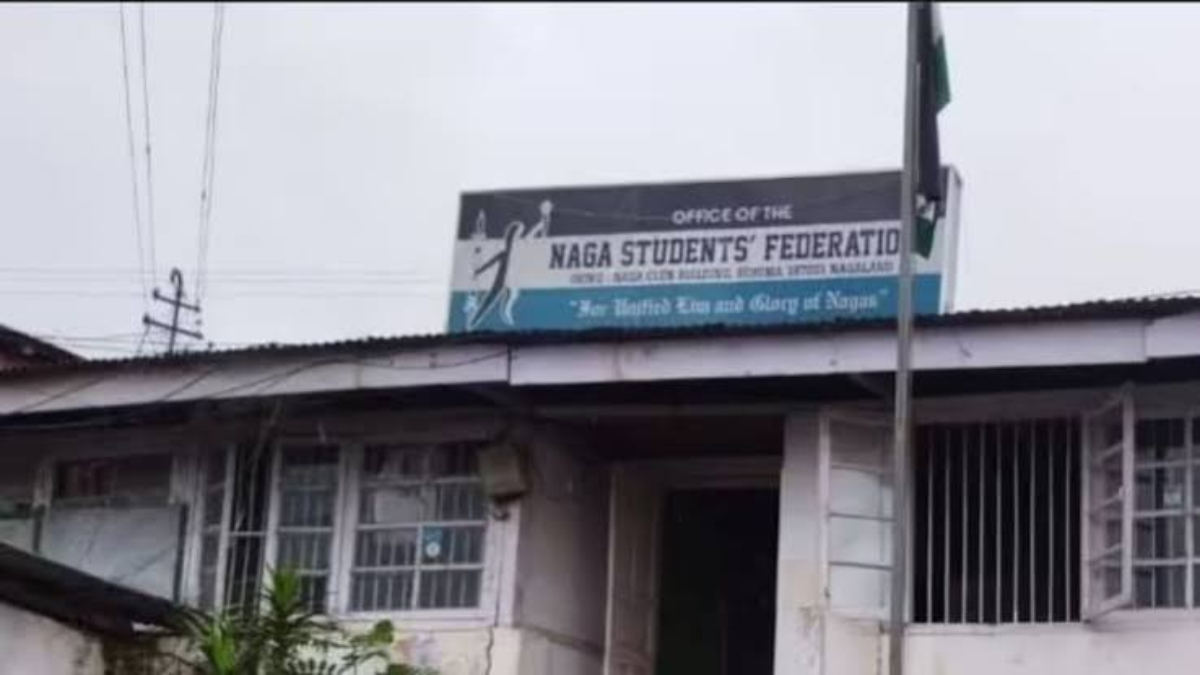
Illegal immigration in Nagaland has become a renewed concern for Naga organisations, with the Naga Students’ Federation (NSF) backing the Angami Public Organisation’s (APO) resolution to strengthen the enforcement of the Inner Line Permit (ILP) system. On October 13, 2026, the NSF’s Inner Line Regulation Commission (ILRC) called for a coordinated response from tribal organisations and urged the state government to act on gaps in the implementation of existing legal safeguards.
NSF Backs Angami Organisation’s Resolution
The ILRC welcomed the APO’s resolution, which seeks stricter enforcement of the ILP system in Nagaland. According to the commission, the resolution highlights continuing shortcomings in implementing safeguards under the Bengal Eastern Frontier Regulation (BEFR), 1873.
The NSF commission specifically identified Dimapur, Chümoukedima and Niuland as areas where stronger enforcement is needed. It called on other Naga tribal organisations and apex bodies to support the Angami organisation’s initiative and work together to address concerns over compliance with existing laws.
The commission said a united approach would help improve enforcement and ensure that the rules governing entry, residence and commercial activities are followed.
Illegal Immigration in Nagaland Raises ILP Enforcement Concerns
The Inner Line Permit system regulates the entry of people from outside designated protected areas. In Nagaland, its implementation is closely linked to the protection of indigenous communities and the regulation of movement and settlement.
The NSF has argued that stronger enforcement is necessary to prevent unlawful entry and residence. It has also raised concerns about the verification of identity documents and the issuance of permits, licences and other official documents.
In July 2026, the ILRC expressed concern over reports of people from Bangladesh and Myanmar attempting to enter or transit through parts of the Northeast. It urged the state government to strengthen surveillance at entry points, verify identity documents and improve coordination among enforcement agencies.
However, the commission clarified that its concerns relate to unlawful entry and violations of applicable laws, rather than people who legally enter, work, trade or reside in Nagaland.
APO Proposes Phased Measures
The APO’s latest resolutions outline a phased approach to addressing people it identifies as illegal immigrants within its jurisdiction. The organisation adopted the resolutions at a general meeting on September 4, 2026, and issued its appeal on October 7.
Under the proposed measures, Naga youth would not be permitted to work for people identified as illegal immigrants after December 31, 2026. The resolution covers employment in shops and other forms of work.
A further deadline of March 31, 2027, concerns the provision of services and the use of certain documents and accounts associated with Angami residents. The measures also address arrangements involving trade licences, identity documents, mobile connections and bank accounts.
The APO has said the phased approach is intended to give affected individuals and non-indigenous communities time to comply with applicable laws and regularise arrangements where legally possible.
These are organisational resolutions, and their implementation must remain consistent with applicable law and the authority of the relevant government agencies.
NSF Seeks Government Response
The ILRC also urged the Nagaland government to respond to its earlier representation on strengthening the Inner Line Regulation framework.
The commission said it submitted the representation to Chief Minister Neiphiu Rio on October 1, 2026, following a national seminar on the Bengal Eastern Frontier Regulation held in Dimapur on August 28 and 29.
According to the commission, the representation had been reported in the print media, but its full contents could not be published because of space constraints. It said the Chief Minister’s Office had yet to respond.
The NSF has called for timely government intervention, arguing that effective enforcement requires clear responsibility, stronger monitoring and coordination between departments and local authorities.
In a separate development earlier this month, the NSF also called for the establishment of a statutory Nagaland Inner Line Regulation Commission. The proposed body would serve as a central authority for administering and enforcing the BEFR, 1873, addressing what the federation described as fragmented responsibility among government departments and local institutions.
Coordinated Action Remains Central to the Demand
The NSF’s support for the APO reflects a broader effort by Naga organisations to strengthen existing legal safeguards and improve enforcement of the ILP system. The commission has urged tribal bodies, district administrations and the state government to work together rather than pursue disconnected measures.
The issue also requires careful implementation to distinguish unlawful entry and document violations from legitimate migration, employment and trade. Any enforcement action must follow the law and respect the rights of people who are legally present in the state.
The immediate focus is now on the state government’s response to the NSF’s representation and the implementation of the APO’s phased resolutions. Whether the demands lead to stronger institutional oversight and more consistent enforcement will depend on the steps taken by the authorities in the coming weeks and months.
Article 371F Gains Strong Backing as Sikkim Flags Darjeeling Option-4