

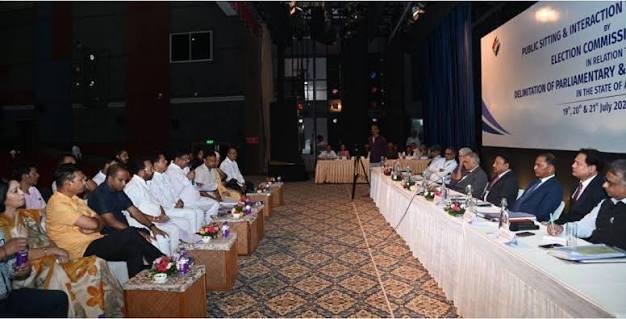
Eight major opposition parties in Assam, including the Congress, CPI(M), and Raijor Dal, have reportedly agreed to contest the upcoming political cycle under a unified opposition front. The agreement could reshape the state’s political landscape by bringing several parties together against the ruling establishment.
The alliance seeks to combine the organisational strength, voter bases, and political resources of its participating parties. Moreover, a coordinated opposition strategy could help the parties avoid vote fragmentation across constituencies.
The arrangement will now depend on seat-sharing, candidate selection, campaign coordination, and the ability of the participating parties to maintain unity.
Walking Out of Unity Talks: Pradyut Bordoloi Exit Exposes Tensions in Assam Opposition Alliance
Eight Opposition Parties Join Forces
The Assam opposition alliance brings together eight major opposition parties under a common political framework.
Congress, CPI(M), and Raijor Dal are among the parties reportedly participating in the arrangement. Furthermore, the combined platform could give smaller parties greater visibility while providing the Congress with additional political partners.
The parties will need to translate the agreement into a workable electoral strategy.
Unified Front Targets Upcoming Political Cycle
The opposition parties have reportedly agreed to fight the upcoming political cycle together.
A unified approach could allow the parties to coordinate campaign messaging and avoid competing directly against one another in constituencies where a single opposition candidate could perform better. Additionally, coordinated campaigning could help them pool organisational resources.
The effectiveness of the arrangement will depend heavily on implementation at the constituency level.
Vote Consolidation Becomes Key Objective
Opposition parties often face challenges when multiple candidates divide votes among themselves.
A common front could reduce such fragmentation by encouraging coordinated candidate selection. Moreover, parties could focus their resources on constituencies where they have stronger organisational networks.
However, achieving consensus over seat-sharing could become one of the alliance’s biggest challenges.
Congress Brings Major Organisation
The Congress remains one of the state’s major opposition forces and brings an extensive organisational network to the alliance.
Its participation could provide the coalition with greater statewide reach. Furthermore, cooperation with regional parties could help the Congress strengthen its presence in areas where local parties have established support.
The alliance will need to balance the interests of larger and smaller partners.
Raijor Dal Adds Regional Dimension
Raijor Dal brings a distinct regional political identity to the opposition grouping.
Its participation could help the alliance appeal to voters seeking an alternative to established political parties. Additionally, coordination with regional forces could broaden the coalition’s campaign across different sections of Assam.
Maintaining a common programme will remain important.
CPI(M) Adds Left Representation
The CPI(M) brings the Left’s organisational and ideological presence into the alliance.
Its participation broadens the political spectrum represented within the opposition grouping. Moreover, the party’s local networks could contribute to grassroots mobilisation in selected constituencies.
The alliance will need to accommodate differences in ideology while maintaining common electoral objectives.
Seat-Sharing Could Test Unity
The next major challenge will likely involve seat-sharing negotiations.
Each participating party may seek constituencies where it believes it has a strong chance of winning. Furthermore, disagreements over candidate selection could create tensions within the coalition.
A clear and mutually accepted formula could help prevent internal disputes.
Common Campaign Could Strengthen Message
A unified campaign can provide voters with a clearer alternative.
The parties could develop common positions on governance, employment, development, social issues, and regional concerns. Additionally, coordinated rallies and campaign events could demonstrate organisational unity.
However, individual parties may still retain distinct positions on issues outside the common programme.
Regional Politics Could Shift
The alliance could alter the competitive dynamics across Assam.
If opposition parties successfully transfer their combined support to common candidates, the arrangement could create stronger electoral contests. Moreover, the alliance could encourage voters who previously divided their support among opposition parties to consolidate behind a single candidate.
The actual impact will become clearer once seat-sharing and candidate decisions emerge.
Maintaining Unity Will Be Crucial
Forming an alliance is easier than maintaining one throughout a campaign.
Differences over leadership, ideology, constituencies, and campaign priorities can challenge coalition arrangements. Furthermore, participating parties will need to ensure that local workers cooperate even where they previously competed against one another.
Strong coordination mechanisms could help manage these differences.
What Happens Next?
The eight parties will likely focus on developing the details of their unified strategy.
Seat-sharing discussions, candidate selection, campaign coordination, and the preparation of a common agenda will become key priorities. Additionally, the alliance may expand its outreach to other political and social groups.
The coming months will reveal how effectively the parties can transform their agreement into an electoral organisation.
Conclusion
The Assam opposition alliance marks a significant attempt by eight major opposition parties to contest the upcoming political cycle under a unified front. The participation of Congress, CPI(M), Raijor Dal, and other parties could help consolidate opposition votes and create stronger electoral contests.
Moreover, the alliance provides an opportunity to combine different organisational networks and regional support bases. At the same time, seat-sharing, candidate selection, ideological differences, and local-level coordination could test the coalition’s unity.
Overall, the unified opposition front could become an important factor in Assam’s next political contest if its participating parties successfully maintain coordination and present a coherent alternative to voters.
FAQs
1. How many parties have joined the opposition front?
Eight major opposition parties have reportedly agreed to work under the unified front.
2. Which major parties are included?
The reported alliance includes the Congress, CPI(M), and Raijor Dal, among other opposition parties.
3. Why are the parties forming an alliance?
The parties aim to coordinate their electoral efforts, reduce vote division, and present a stronger combined challenge.
4. What will be the biggest challenge?
Seat-sharing and candidate selection could become major tests of unity among the participating parties.
5. Could the alliance change Assam’s political landscape?
Potentially. A successful alliance could consolidate opposition votes and alter electoral competition across several constituencies.