

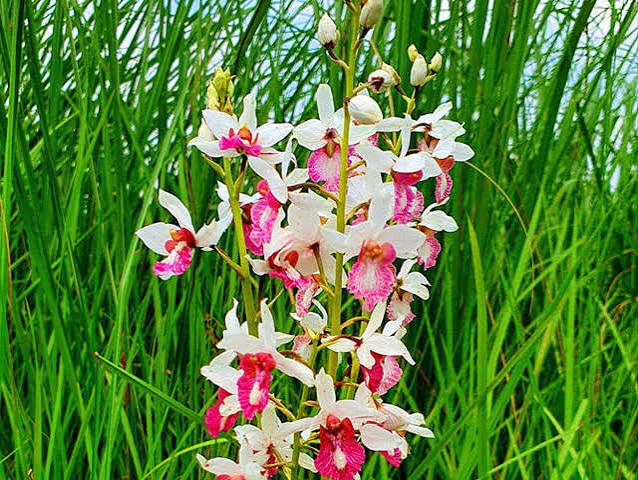
The Orchid Conservation effort has gained significance after botanists discovered two rare orchid species inside the dense forests of Namdapha National Park. The discovery adds to scientific knowledge of the park’s plant diversity and highlights the importance of protecting forest habitats that support rare and specialized plant species.
The Orchid Conservation development follows the discovery of two rare orchid species during botanical exploration inside Namdapha National Park. Botanists documented the species in the park’s dense forest environment, adding new information to the region’s known botanical diversity.
Orchids can depend on specific environmental conditions, including suitable host trees, moisture, temperature, and forest habitats. Moreover, documenting rare species can help researchers understand the distribution and ecological requirements of plants within protected areas.
The discovery therefore carries scientific importance beyond the identification of two individual plants.
However, the available information does not provide the scientific names of the orchids, their exact locations, or details about the botanical survey that led to the discovery.
Organic Pineapple Push: Nagaland Cooperatives Flag Off First International Export Consignment
Orchid Conservation Gains From New Species Records
The Orchid Conservation effort can benefit from detailed records of rare orchid species found within protected forests.
Botanical discoveries provide researchers with information about where species occur and the habitats they occupy. Furthermore, accurate documentation can help scientists compare plant distributions across different regions and monitor changes over time.
The discovery in Namdapha National Park adds to the available knowledge of the park’s plant life.
However, the information provided does not clarify whether the two orchids represent species previously unknown from Namdapha or species that scientists had already recorded elsewhere but had not documented in this particular area.
Therefore, the precise scientific significance of the discovery requires further botanical confirmation.
Orchid Conservation Highlights Namdapha’s Forest Diversity
The Orchid Conservation discovery also draws attention to the ecological diversity of Namdapha National Park.
Dense forest ecosystems can support a wide variety of plants, including species that depend on specialized habitat conditions. Moreover, orchids can occupy different ecological niches and may grow on trees, rocks, or forest-floor environments depending on the species.
Finding rare orchids within the park demonstrates the value of continued botanical research.
However, the available information does not identify the habitat characteristics of the newly discovered orchids.
Consequently, researchers will need additional observations to determine the environmental conditions that support their growth.
Orchid Conservation Depends on Protecting Natural Habitats
The Orchid Conservation effort emphasizes the connection between plant discoveries and habitat protection.
Rare orchids can face pressure when their natural habitats experience disturbance or degradation. Furthermore, protecting intact forest ecosystems can help preserve the environmental conditions that allow specialized plant species to survive.
Protected areas such as national parks provide an important framework for conserving these habitats.
However, the available information does not identify any specific threats facing the two orchid species discovered in Namdapha.
Therefore, it would be inappropriate to associate the discovery with particular threats without further evidence.
The immediate significance lies in documenting the species within the park.
Orchid Conservation Supports Botanical Research
The Orchid Conservation initiative can also strengthen scientific research into the region’s plant diversity.
Botanists can study newly documented orchids to understand their physical characteristics, habitat preferences, flowering patterns, and geographic distribution. Additionally, accurate identification can contribute to scientific databases and future conservation planning.
Such research can become especially valuable when species have limited known distributions.
However, the available information does not provide details about the researchers’ next steps or whether additional surveys will follow.
Consequently, the long-term research programme associated with the discovery remains unclear.
Further fieldwork could reveal whether the orchids occur elsewhere within the national park.
Orchid Conservation Can Improve Species Monitoring
The Orchid Conservation discovery could provide a basis for future monitoring of the two rare orchids.
Regular observations can help researchers understand whether populations remain stable and whether the plants continue to occupy suitable habitats. Moreover, monitoring can provide evidence about changes in forest conditions over time.
However, the discovery itself does not establish the size or health of the orchid populations.
The available information does not state how many individual plants botanists found or whether researchers identified established populations.
Therefore, further surveys would be necessary to determine their abundance and distribution.
Orchid Conservation Strengthens Public Awareness
The Orchid Conservation discovery can also increase public interest in the botanical richness of protected forests.
Rare plant discoveries can demonstrate that national parks contain important biodiversity beyond more visible wildlife. Furthermore, greater awareness of plant diversity can encourage support for habitat protection and responsible nature tourism.
However, conservation awareness should avoid encouraging visitors to collect or disturb rare plants.
The available information does not mention any public-awareness campaign linked to the discovery.
Therefore, its educational impact will depend on how researchers and authorities communicate the findings.
Orchid Conservation Highlights the Importance of Protected Forests
The Orchid Conservation development reinforces the role of protected forests in preserving plant diversity.
Namdapha National Park provides a large forest landscape where researchers can continue studying species and ecosystems. Additionally, maintaining natural habitats can support both known and undiscovered species.
The discovery of two rare orchids demonstrates that botanical exploration can continue to reveal new information even within established protected areas.
However, the available information does not indicate whether the botanists plan to conduct broader surveys of other plant groups.
Consequently, the full botanical significance of the discovery may become clearer through future research.
Conclusion
The Orchid Conservation development marks an important botanical discovery in Namdapha National Park, where researchers identified two rare orchid species inside the dense forest. The finding adds to scientific knowledge of the park’s plant diversity and demonstrates the value of continued field research.
Moreover, documenting rare orchids can support future monitoring and help researchers understand the habitats required by specialized plant species. However, the available information does not provide the orchids’ scientific names, population sizes, precise locations, or details about the survey methodology.
Overall, the Orchid Conservation significance of the discovery will depend on continued research, accurate documentation, and protection of the natural forest habitats where these orchids grow. Further botanical surveys could provide additional information about their distribution and long-term conservation needs.
FAQs
1. What is the Orchid Conservation discovery?
Botanists discovered two rare orchid species inside the dense forests of Namdapha National Park during botanical research.
2. Why is the discovery important?
The discovery adds to scientific knowledge about plant diversity in Namdapha and can provide useful information for future orchid conservation and research.
3. Are the names of the two orchid species known?
The available information does not provide their scientific names.
4. Does the discovery confirm large orchid populations?
No. Finding the species does not establish their population size, abundance, or distribution within the park. Further field surveys would be required.
5. How can Orchid Conservation benefit from the discovery?
The discovery can support future research, habitat monitoring, and conservation planning for rare orchids and the forest ecosystems where they grow.