


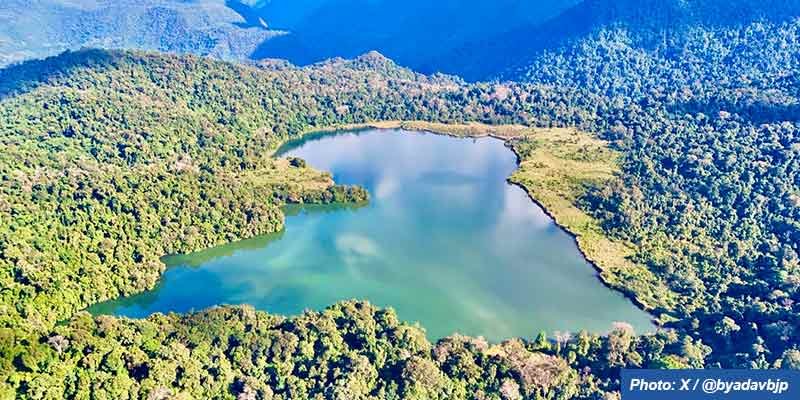
The Ramsar Site Win marks a significant development for wetland conservation after Glaw Lake received official international recognition as a Ramsar wetland. The designation places the lake within an internationally recognized framework for wetland conservation and highlights its ecological importance.
The recognition can strengthen attention toward protecting the lake’s ecosystem, biodiversity, and surrounding natural environment. Moreover, Ramsar status can encourage scientific monitoring and coordinated conservation planning for wetlands of international importance.
The designation also brings greater visibility to Glaw Lake as an important natural site. However, the available information does not provide the designation date, the lake’s exact location, or details about the specific ecological characteristics that supported the recognition.
Organic Pineapple Push: Nagaland Cooperatives Flag Off First International Export Consignment
Ramsar Site Win Strengthens Wetland Conservation
The Ramsar Site Win gives Glaw Lake international recognition under the Ramsar framework for wetlands.
The Ramsar Convention promotes the conservation and wise use of wetlands and encourages countries to identify and protect wetlands that hold international importance. Furthermore, designation can increase attention toward maintaining the ecological character of recognized sites.
Glaw Lake’s recognition therefore represents an important development for wetland conservation.
However, Ramsar designation does not mean that every activity around a wetland automatically becomes prohibited.
Instead, authorities generally focus on maintaining the ecological character of the site while managing activities in accordance with applicable conservation frameworks.
Ramsar Site Win Highlights Glaw Lake’s Ecological Value
The Ramsar Site Win draws attention to the ecological importance of Glaw Lake.
Wetlands can provide habitat for plants, birds, aquatic organisms, and other wildlife. Additionally, they can contribute to water regulation, nutrient cycling, groundwater processes, and other ecological functions.
International recognition can encourage researchers and conservation agencies to study these functions more closely.
However, the available information does not identify the species, habitats, or ecological features that specifically supported Glaw Lake’s designation.
Therefore, the precise scientific basis for the recognition requires further official documentation.
Ramsar Site Win Could Improve Conservation Monitoring
The Ramsar Site Win can provide a stronger framework for monitoring the condition of Glaw Lake.
Regular ecological assessments can help authorities identify changes in water quality, biodiversity, vegetation, and other environmental indicators. Moreover, monitoring can help detect emerging pressures before they significantly affect the wetland.
International recognition can also encourage greater scientific interest in the site.
However, the available information does not specify whether a dedicated monitoring programme has already been established for Glaw Lake.
Consequently, the practical conservation measures following the designation remain unclear.
Ramsar Site Win Raises Awareness About Wetlands
The Ramsar Site Win can increase public awareness about the importance of wetland ecosystems.
Wetlands often support communities through ecological services while also providing habitats for diverse species. Furthermore, recognizing such areas internationally can encourage responsible environmental education and conservation awareness.
Greater public attention can help strengthen support for protecting sensitive ecosystems.
However, increased visibility also requires responsible management of visitors and tourism activities where applicable.
The available information does not indicate whether authorities plan to develop tourism or educational programmes around Glaw Lake.
Ramsar Site Win Supports Long-Term Environmental Planning
The Ramsar Site Win can contribute to long-term environmental planning around Glaw Lake.
Authorities can incorporate wetland conservation objectives into broader land-use and environmental management strategies. Additionally, scientific information gathered through monitoring can help guide decisions affecting water resources, biodiversity, and surrounding habitats.
This approach can help balance conservation with legitimate local activities.
However, the available information does not describe any specific management plan prepared following the designation.
Therefore, the next stage will depend on how authorities translate international recognition into practical conservation measures.
Ramsar Site Win Could Encourage Scientific Research
The Ramsar Site Win may encourage additional research into Glaw Lake’s ecology.
Researchers can study wetland biodiversity, water conditions, seasonal changes, ecosystem services, and environmental pressures. Moreover, long-term scientific studies can help authorities understand how the lake responds to natural and human-induced changes.
International recognition can provide greater visibility for such research.
However, the available information does not confirm whether new scientific studies have already begun.
Consequently, the research impact of the designation will become clearer through future initiatives.
Ramsar Site Win Highlights the Need for Responsible Management
The Ramsar Site Win also creates a need for effective wetland management.
Protected wetlands can face pressures from pollution, habitat alteration, invasive species, unplanned development, and changes in water conditions. Furthermore, climate-related changes can influence wetland ecosystems through shifts in rainfall, temperature, and water availability.
Effective management can help maintain the ecological character that justified international recognition.
However, the available information does not identify any specific environmental threats facing Glaw Lake.
Therefore, conservation priorities should rely on detailed scientific assessments rather than assumptions.
Ramsar Site Win Could Boost Conservation Visibility
The Ramsar Site Win can increase the national and international visibility of Glaw Lake.
International recognition can draw attention from researchers, conservation organizations, environmental agencies, and visitors interested in wetland ecosystems. Additionally, greater visibility can create opportunities for collaboration and knowledge sharing.
However, recognition alone does not guarantee additional funding or immediate improvements in conservation infrastructure.
Authorities will need to develop and implement appropriate management measures to translate the designation into lasting environmental benefits.
Conclusion
The Ramsar Site Win marks an important milestone for Glaw Lake after the wetland received official international recognition under the Ramsar framework. The designation highlights the importance of protecting the lake and maintaining its ecological character for the long term.
Moreover, Ramsar recognition can support conservation monitoring, scientific research, environmental awareness, and stronger planning for wetland management. However, the available information does not provide the designation date, exact location, ecological criteria, or specific management measures associated with the recognition.
Overall, the Ramsar Site Win provides Glaw Lake with greater international conservation visibility. Continued scientific monitoring, responsible management, and protection of surrounding habitats will remain essential to ensure that the lake retains its ecological importance.
FAQs
1. What is the Ramsar Site Win for Glaw Lake?
The Ramsar Site Win refers to Glaw Lake receiving international recognition as a wetland of importance under the Ramsar framework.
2. What does Ramsar recognition mean?
Ramsar recognition identifies wetlands that have international importance and encourages their conservation and wise use.
3. Does Ramsar status completely prohibit human activity?
No. Ramsar recognition focuses on maintaining the ecological character of wetlands and promoting their conservation and wise use.
4. Why are wetlands important?
Wetlands can provide habitats for biodiversity and perform important ecological functions related to water, nutrients, and natural ecosystem processes.
5. What happens after a wetland receives Ramsar recognition?
Authorities can strengthen monitoring, management, research, and conservation planning to maintain the wetland’s ecological character.