

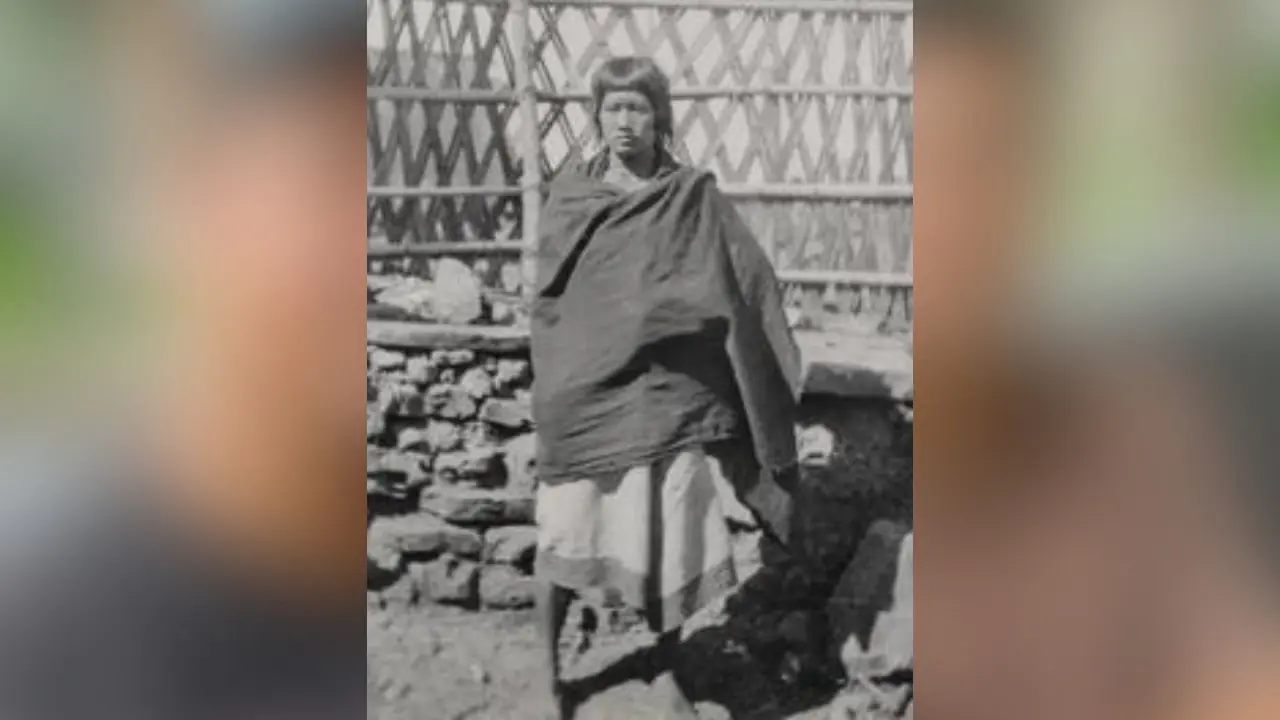
The University of Oxford’s Pitt Rivers Museum has displayed 27 personal possessions seized from Naga leader Rani Gaidinliu during British colonial rule. The exhibition explores her life, the history of the objects and efforts to reconnect them with Naga communities.
635-Member Assam Delegation Heads to Delhi for Bhupen Hazarika Centenary
Indian Army and NFR Sign New Rail Logistics Pact at Narangi Cantonment
Rani Gaidinliu’s Belongings Go on Display at Oxford Museum
A significant collection connected to Naga history has gone on public display for the first time at the Pitt Rivers Museum in Oxford, United Kingdom.
The collection consists of 27 objects seized from Rani Gaidinliu by British colonial officers during the 1930s. The possessions had remained in the museum’s storage for decades.
The exhibition, titled “The Afterlives of Captured Objects: Reanimating the Gaidinliu Collection Digitally,” opened on November 27, 2026.
It presents the historical objects alongside research and creative responses from Naga communities. The exhibition also examines the colonial circumstances in which the belongings were taken and preserved in a British museum.
The development has attracted attention across Northeast India, particularly following the recent handover of 39 Naga ancestral remains by Oxford University to representatives of the Naga people.
Who Was Rani Gaidinliu?
Rani Gaidinliu was a Naga spiritual and political leader who resisted British colonial rule in Northeast India.
Born on January 26, 1915, in the present-day Tamenglong district of Manipur, she became involved in the Heraka movement as a young girl.
She worked alongside spiritual and political leader Haipou Jadonang. The movement sought to resist British authority and strengthen the religious and cultural identity of the Naga people.
Following Jadonang’s execution by the British in 1931, Gaidinliu continued the resistance movement.
British forces arrested her in 1932 when she was still a teenager. She was subsequently sentenced to life imprisonment and remained incarcerated until India gained independence in 1947.
After her release, she continued working for the interests and identity of her community. Her contribution to the freedom movement earned her national recognition.
In 1982, the Government of India awarded her the Padma Bhushan. She passed away in 1993.
Her life remains an important part of the history of resistance and indigenous leadership in Northeast India.
27 Objects Seized During British Colonial Rule
The Pitt Rivers Museum exhibition features 27 objects that form the Gaidinliu Collection.
British colonial officers and other individuals acquired these possessions during efforts to capture Gaidinliu and suppress the movement she led.
The collection includes personal belongings, notebooks, clothing, jewellery and ritual objects.
One of its important items is a basket containing notebooks believed to record Gaidinliu’s prophetic visions. These writings were associated with her role as a spiritual guide within the Heraka movement.
Other displayed objects include:
- Notebooks: Writings associated with Gaidinliu’s spiritual leadership and prophetic visions.
- Clothing: Garments connected to her personal history.
- Bracelets and amulets: Personal and cultural objects from the collection.
- Ritual objects: Items associated with Naga spiritual practices.
- Protective objects: A stick featuring a monkey skull and small wooden clubs associated with traditional ritual practices.
- Textiles: Materials removed from sacred figures at a Heraka temple.
Together, these objects provide a glimpse into Gaidinliu’s life, beliefs and resistance against colonial authority.
Exhibition Highlights the Colonial History of the Collection
The exhibition also raises questions about how colonial authorities collected and described indigenous cultural objects.
According to curator Professor Clare Harris, some historical descriptions reflected prejudiced colonial attitudes towards indigenous communities.
One example concerns Gaidinliu’s notebooks. Colonial anthropologist J.P. Mills reportedly dismissed the writings as meaningless scribbling.
However, Mills also acknowledged that the notebooks contributed to Gaidinliu’s influence among her followers.
Researchers have suggested that the seizure of these writings may have formed part of wider efforts to weaken the Heraka religious and political movement.
The exhibition encourages visitors to examine these historical records critically. It also highlights the importance of understanding the cultural and spiritual significance of objects taken during colonial rule.
Sacred Textiles Reveal Another Part of Naga History
Some objects in the collection have a connection to the destruction of a Heraka temple in Kambiron village in 1931.
British forces destroyed the temple and sacred clay figures representing male and female figures. Textiles taken from these figures are now included in the Oxford exhibition.
The display places the textiles alongside a historical photograph showing a British soldier with the sacred figures.
This presentation helps visitors understand the circumstances in which the materials were removed.
It also draws attention to the loss of cultural and religious heritage experienced by indigenous communities during colonial campaigns.
The textiles are therefore more than historical artefacts. They represent a wider story of cultural disruption and the removal of sacred objects from their original settings.
Four-Year Digital Project Reconnects the Collection with Naga Communities
A major part of the exhibition comes from a four-year research project involving scholars from India and the universities of Oxford and Edinburgh.
The project focused on digitising the Gaidinliu Collection and making its contents accessible to Naga communities.
Researchers created digital representations of the original objects. They then shared these materials with communities in Assam, Nagaland and Manipur.
The project used workshops, pop-up exhibitions, creative activities and social media to encourage community engagement.
This process allowed people to reconnect with objects that had remained physically distant from their ancestral homeland for decades.
The digital initiative also created opportunities for Naga communities to interpret the collection through their own cultural knowledge and experiences.
Naga Artisans Use Digital Images to Revive Traditional Crafts
The digital project has encouraged creative responses among Naga communities.
Craftspeople have used images of the historical objects to explore and revive traditional practices. These include basket weaving and textile making.
Some of the new creations produced through these activities are also included in the Oxford exhibition.
This approach gives the collection a contemporary cultural role. Instead of presenting the objects only as historical museum pieces, the project connects them with living traditions and community creativity.
The initiative also demonstrates how digital technology can support cultural preservation.
Although the original possessions remain in Oxford, digital access allows communities to study their designs, materials and cultural associations.
Researchers Explore Gaidinliu’s Notebooks for Language Reconstruction
Another important aspect of the research involves Gaidinliu’s notebooks.
Researchers are examining the symbols and writings in an effort to understand their meaning and cultural context.
Professor Arkotong Longkumer of the University of Edinburgh, who co-led the project with Clare Harris, has discussed efforts to use the writings in exploring the reconstruction of an indigenous language system.
Some symbols appear connected to familiar stories and myths. However, interpreting them presents challenges because they may not have direct translations into conventional written languages.
The research could provide valuable insights into Naga knowledge systems, oral traditions and historical forms of communication.
It also highlights the importance of preserving indigenous records that may otherwise remain difficult to interpret.
Exhibition Follows Return of 39 Naga Ancestral Remains
The new exhibition has opened shortly after a major development involving Naga ancestral remains held at the same Oxford museum.
On November 9, 2026, the University of Oxford transferred custodianship of 39 Naga ancestral human remains to representatives of the Naga people.
The handover took place at the Pitt Rivers Museum through the Forum for Naga Reconciliation and the Naga Tribe Hoho.
The transfer followed a decision by the University of Oxford Council on July 13, 2026, approving the return of the 39 remains. One additional remain was excluded because its Naga provenance could not be established.
The remains had been brought to Oxford during the colonial period. Historical records associate much of the collection with British colonial administrators and anthropologists John Henry Hutton and James Philip Mills.
The handover marked an important step in the wider effort to return ancestral remains to their communities.
However, the return of the ancestral remains and the exhibition of Gaidinliu’s possessions are separate developments. The 27 objects in the Gaidinliu Collection have been made accessible digitally, but the exhibition does not announce their physical repatriation.
A Historic Moment for Naga Cultural Heritage
The display of Gaidinliu’s possessions offers an opportunity to revisit an important chapter of Naga history.
For decades, the collection remained largely inaccessible to the communities connected to its cultural and historical background.
The new exhibition brings these objects into public view while also highlighting the voices and contributions of Naga communities.
It connects historical research with contemporary cultural practices and encourages discussion about the treatment of indigenous heritage in museums.
The exhibition also highlights the importance of community participation in interpreting historical collections.
For Nagas across Assam, Manipur and Nagaland, the digital project provides an opportunity to reconnect with cultural materials held overseas.
Conclusion
The Pitt Rivers Museum in Oxford has put 27 possessions seized from Rani Gaidinliu on public display for the first time. The exhibition explores her resistance against British colonial rule, the history of the objects and their significance to Naga communities.
Its four-year digital research project has also helped reconnect the collection with communities across Northeast India. Meanwhile, the recent handover of 39 Naga ancestral remains marks another important development in the recognition and return of indigenous heritage.
Together, these developments have renewed attention on Naga history, cultural identity and the importance of preserving indigenous heritage for future generations.
Frequently Asked Questions (FAQs)
1. Where are Rani Gaidinliu’s seized possessions being displayed?
Her possessions are being displayed at the Pitt Rivers Museum, part of the University of Oxford in the United Kingdom.
2. How many objects from Rani Gaidinliu’s collection are on display?
The exhibition features 27 objects that form the Gaidinliu Collection.
3. When did the Oxford exhibition open?
The exhibition opened on November 27, 2026.
4. What is the name of the exhibition?
It is titled “The Afterlives of Captured Objects: Reanimating the Gaidinliu Collection Digitally.”
5. What objects are included in the Gaidinliu Collection?
The collection includes notebooks, clothing, bracelets, amulets, ritual objects, protective items and textiles.
6. Why were Rani Gaidinliu’s possessions taken by British officers?
British colonial officers seized the objects during their campaign against Gaidinliu and the resistance movement she led in Northeast India.
7. How are Naga communities reconnecting with the collection?
A four-year digital research project has shared digital versions of the objects with Naga communities in Assam, Nagaland and Manipur through workshops and other activities.
8. Have Naga ancestral remains recently been returned from Oxford?
Yes. On November 9, 2026, the University of Oxford transferred custodianship of 39 Naga ancestral human remains to representatives of the Naga people.
9. Are Rani Gaidinliu’s 27 possessions also being physically returned?
The exhibition announcement concerns their public display and digital accessibility. It does not announce the physical return of the 27 objects.
10. Until when will the exhibition remain open?
The exhibition is scheduled to remain open until August 31, 2027.