

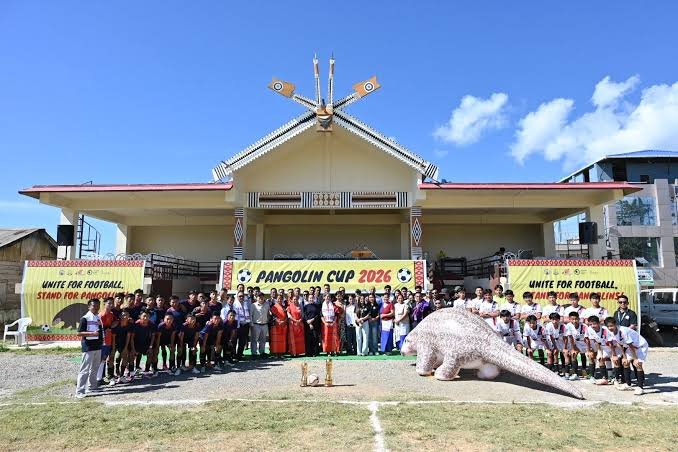
The Pangolin Cup 2026 in Meluri, Nagaland, is bringing football and wildlife conservation together to encourage community participation in protecting threatened species. The second edition began on October 26 at Meluri Local Ground, featuring eight local teams. Organisers aim to raise awareness about pangolin hunting, illegal wildlife trade and the importance of protecting the region’s natural heritage. The initiative brings together sports organisations, conservation groups and government representatives. Moreover, it highlights how local sporting events can engage young people and communities in environmental protection.
Donyi Polo Airport Upgrades Strengthen Night Operations in Arunachal Pradesh
Pangolin Cup 2026 Opens With Eight Teams in Meluri
The second edition of the Pangolin Cup began on October 26, 2026, at Meluri Local Ground in Nagaland. Eight local teams are participating in the tournament, which combines competitive football with a public awareness campaign focused on pangolin conservation.
The participating teams include Royals FC, Knight Riders Club, Jessami Students Club, Khumiaii FC, Meluri Town Club, United Brothers Club, Wukruorii FC and Kara Junior. The opening match featured Royals FC and Knight Riders Club.
The Wildlife Trust of India (WTI), Meluri Range Sports Association and Nagaland’s Department of Environment, Forest and Climate Change are collaborating on the event. The Pangolin Crisis Fund, under the Wildlife Conservation Network, and the Serenity Trust are also supporting the initiative.
The opening ceremony featured traditional performances by the Meluri Area Public Organisation, alongside addresses from officials, community representatives and conservation workers. Organisers used the occasion to connect local culture, sporting participation and environmental responsibility.
Additional Deputy Commissioner of Meluri Shelly Katiry highlighted the importance of ecological balance and community involvement. Meanwhile, Sub-Divisional Police Officer Dr T. Desela Sangtam encouraged the participating players to demonstrate discipline, teamwork and respect.
The tournament provides local footballers with an opportunity to compete while drawing attention to an environmental issue that affects wildlife across the region. By using football as its platform, the event seeks to reach people who may not regularly attend formal conservation programmes.
The organisers also hope to encourage conversations about the protection of pangolins beyond the football ground. Players, spectators, families and community leaders can help spread awareness about the threats facing the species.
Reports place the tournament’s conclusion on October 30 or October 31, 2026. Despite the difference in reported dates, the event’s main purpose remains the same: to promote wildlife protection through community engagement and sport.
Wildlife Trust of India Supports Pangolin Protection
The Pangolin Cup forms part of broader conservation efforts led by the Wildlife Trust of India. Its Countering Pangolin Trafficking project focuses on addressing illegal pangolin trade in Nagaland and Manipur, where community participation can support efforts to protect wildlife.
Pangolins are mammals covered in protective scales. They feed mainly on ants and termites and play a role in their natural ecosystems. However, illegal hunting and trafficking have placed significant pressure on pangolin populations.
Demand for pangolin scales and meat drives much of this illegal trade. Traffickers may move wildlife products across administrative boundaries, making cooperation among communities, enforcement agencies and conservation organisations important.
The tournament aims to make these threats easier to discuss within local communities. Instead of limiting awareness efforts to meetings and presentations, organisers have connected conservation messaging with an activity that attracts players and spectators.
WTI Joint Director Sunil Kyarong delivered the keynote address under the theme “Communities as Partners in Conservation.” His message highlighted the importance of local participation in protecting wildlife and preserving natural heritage.
Community involvement can contribute in several ways. Residents can learn to recognise threats to wildlife, discourage hunting and share concerns with the appropriate authorities. Local institutions can also communicate conservation rules and encourage responsible behaviour.
Nevertheless, awareness campaigns alone cannot eliminate illegal wildlife trade. Effective enforcement, information sharing, habitat protection and cooperation across regions remain essential. The Pangolin Cup can contribute by encouraging public understanding and building support for these wider measures.
The tournament also highlights the value of engaging younger generations. Young people can carry conservation messages into their homes, schools, clubs and communities. By connecting wildlife protection with football, organisers hope to make the issue more accessible to a wider audience.
Pochury Villages Strengthen Community Conservation Efforts
Community-led initiatives form another important part of the Pangolin Cup’s conservation message. During the inauguration, representatives of the Pochury Hoho highlighted efforts by more than 30 Pochury villages to prohibit pangolin hunting through community resolutions.
According to the organisation, the resolutions prescribe a fine of ₹50,000 for offenders involved in pangolin hunting or illegal wildlife trade. These measures reflect a local effort to discourage activities that threaten the species.
Village councils and community organisations can play an important role in conservation. They can communicate local rules, encourage responsible conduct and bring residents together around shared environmental goals.
Wildlife Warden of Kiphire Siechutho Katiry urged younger generations to reconnect with traditional conservation values. He also highlighted the importance of protecting pangolins and preserving the natural heritage of the region.
Traditional beliefs and community practices can sometimes support wildlife protection. However, conservation efforts must also respond to modern pressures, including the commercial demand that drives illegal trafficking.
Community resolutions can help establish local expectations, but their effectiveness depends on awareness, consistent implementation and cooperation with the relevant authorities. Where suspected wildlife offences occur, officials must follow applicable legal procedures.
The Pochury Hoho’s initiative demonstrates how community institutions can support conservation beyond government programmes. The Pangolin Cup gives these efforts a wider platform and helps communicate their importance to players and spectators.
The approach also connects environmental protection with local identity. By discussing traditional values alongside current conservation challenges, organisers can encourage younger residents to understand the relationship between cultural heritage and the natural environment.
Such community participation is particularly important for long-term conservation. Protecting wildlife requires more than a single tournament or awareness campaign. It depends on sustained cooperation between residents, conservation groups and enforcement agencies.
Football Creates a Platform for Regional Wildlife Awareness
The Pangolin Cup demonstrates how sport can support public awareness beyond the playing field. Local football tournaments bring people together, creating opportunities to communicate messages about wildlife, environmental responsibility and community action.
Young people are a key audience for this approach. Players and supporters can share information with their families and peers, helping conservation messages reach more people. In addition, football encourages teamwork and collective responsibility, ideas that also apply to community conservation.
The tournament’s combination of football, cultural performances and conservation messaging gives different groups an opportunity to participate. Sports organisations can support the campaign through their networks, while community leaders can reinforce its message during local activities.
However, lasting results will depend on continued engagement after the tournament ends. Organisers and local institutions can build on the event through further awareness activities, community discussions and cooperation with wildlife authorities.
The wider challenge extends beyond Meluri. Illegal wildlife trade can cross state and national boundaries, while demand for animal products can threaten species far from the markets where those products are sold. Local awareness must therefore complement wider enforcement and conservation efforts.
The Pangolin Cup offers one way to build that connection. It brings conservation organisations, government representatives, football teams and local communities together around a shared objective.
The initiative also demonstrates that wildlife conservation can form part of everyday community activities. By linking a popular sport with environmental protection, organisers can encourage residents to view wildlife preservation as a shared responsibility.
For Meluri, the tournament provides an opportunity to celebrate local football while drawing attention to pangolins and the threats they face. Its broader significance will depend on whether the event encourages sustained awareness and practical action beyond the competition.
Conclusion
The Pangolin Cup 2026 began in Meluri, Nagaland, on October 26, bringing together eight local football teams for a tournament focused on wildlife conservation. The Wildlife Trust of India, Meluri Range Sports Association and Nagaland’s Department of Environment, Forest and Climate Change are collaborating on the initiative. Their goal is to raise awareness about pangolins, illegal wildlife trade and the importance of community participation.
The event also highlights conservation efforts by more than 30 Pochury villages, which have adopted community resolutions against pangolin hunting and illegal trade, according to the Pochury Hoho. These efforts demonstrate how local institutions can support wildlife protection. However, lasting progress also requires effective enforcement, continued awareness and cooperation among communities and conservation agencies.
By connecting football with environmental responsibility, the Pangolin Cup gives young people and residents a shared platform to discuss wildlife protection. Continued community engagement will determine how far the initiative’s message reaches beyond the tournament. Cooperation between local institutions, conservation organisations and authorities remains important for protecting pangolins in Nagaland and the wider Northeast.
FAQs
1. What is the Pangolin Cup 2026?
The Pangolin Cup 2026 is a football tournament held in Meluri, Nagaland, that promotes awareness about pangolin conservation and illegal wildlife trade.
2. When did the Pangolin Cup 2026 begin?
The second edition began on October 26, 2026, at Meluri Local Ground. Reports differ on whether the tournament concludes on October 30 or October 31.
3. Who is organising the Pangolin Cup?
The Wildlife Trust of India, Meluri Range Sports Association and Nagaland’s Department of Environment, Forest and Climate Change are collaborating on the tournament.
4. Why are pangolins important to conservation efforts?
Pangolins feed mainly on ants and termites and contribute to their ecosystems. Illegal hunting and trafficking threaten their survival, making public awareness and enforcement important.
5. How are Pochury villages supporting pangolin conservation?
The Pochury Hoho has reported that more than 30 Pochury villages adopted resolutions prohibiting pangolin hunting and illegal wildlife trade, with a stated fine of ₹50,000 for offenders.