

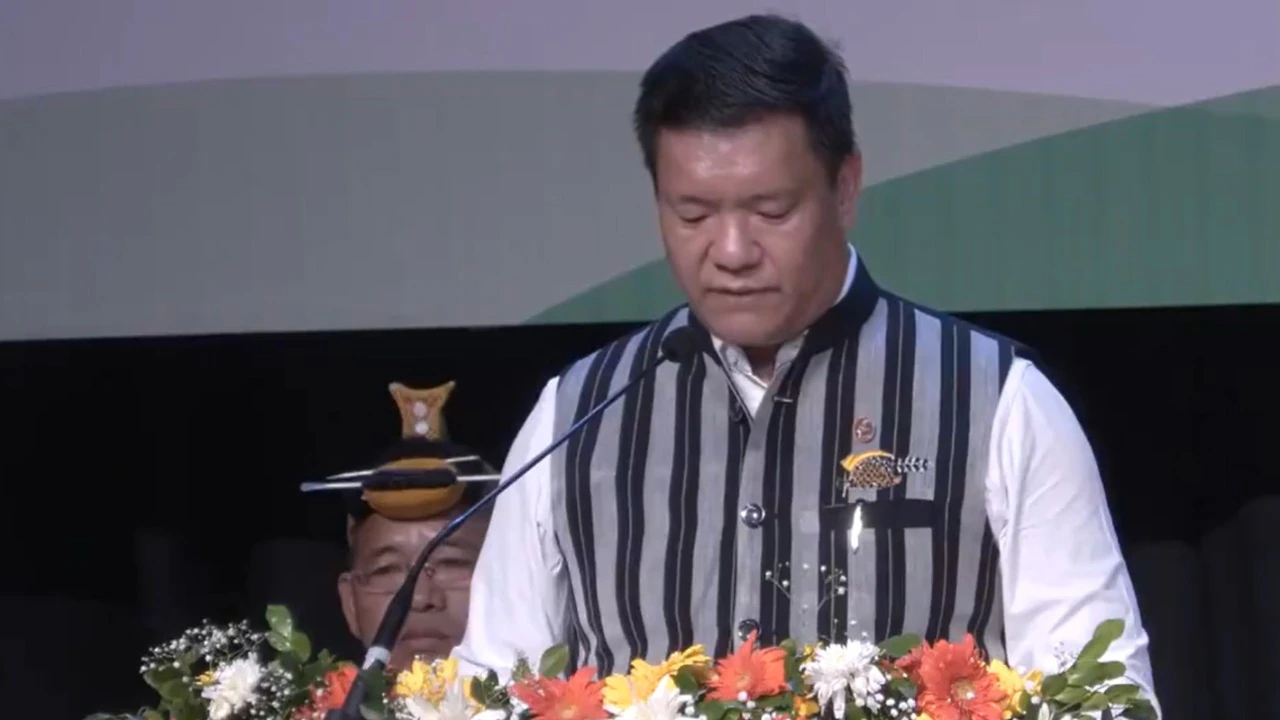
The Pema Khandu resignation rumours triggered widespread discussion across social media platforms after a viral video falsely claimed that Arunachal Pradesh Chief Minister Pema Khandu had stepped down from office. The Arunachal Pradesh BJP swiftly rejected the claims and described the circulating content as AI-generated misinformation intended to mislead the public. Party leaders stated that the video had no factual basis and warned that individuals responsible for creating or sharing fabricated political content could face legal action. The controversy has once again highlighted growing concerns over the misuse of artificial intelligence in political communication and the spread of digital misinformation ahead of important governance and policy discussions in the state.
Itanagar Disaster Response Facility Foundation Laid
West Tripura MGNREGA Employment Achievement
BJP Rejects Viral Claims Over Chief Minister
The Arunachal Pradesh BJP issued a strong statement condemning the viral content that suggested Chief Minister Pema Khandu had resigned from his post. According to party leaders, the video circulating online was entirely fabricated and did not reflect any official development within the state government. The party maintained that Khandu continues to perform his constitutional responsibilities and remains fully engaged in governance activities.
Officials emphasized that no resignation letter had been submitted and no constitutional process related to a leadership change had been initiated. As a result, the BJP described the reports as an organized attempt to spread confusion among citizens. The party also appealed to the public to verify information through official government and party channels before sharing content online. In its statement, the BJP specifically referred to the Pema Khandu resignation rumours as false and misleading propaganda designed to create unnecessary political uncertainty.
AI-Generated Misinformation Raises Fresh Concerns
The controversy has intensified discussions about the growing use of artificial intelligence tools to create deceptive political content. BJP leaders alleged that the viral clip was generated or manipulated using AI technology and deliberately crafted to resemble authentic news material. Because of advances in synthetic media technology, experts have repeatedly warned that fake videos can rapidly influence public perception before fact-checking mechanisms catch up.
Authorities noted that digitally altered videos can damage public trust in institutions and elected representatives. Consequently, political parties and law enforcement agencies across India have increasingly focused on identifying and countering deepfake content. The spread of the disputed video prompted renewed calls for stronger digital literacy and public awareness campaigns. In its response, the state BJP argued that the Pema Khandu resignation rumours represented a dangerous example of how AI-generated misinformation can distort political discourse and undermine democratic processes.
Legal Action Warning Under IT Act And BNS
Along with dismissing the claims, the Arunachal Pradesh BJP warned that strict legal measures could be pursued against those responsible for producing and distributing the fabricated content. Party representatives stated that relevant provisions of the Information Technology Act and the Bharatiya Nyaya Sanhita may be invoked if investigations establish deliberate attempts to spread misinformation.
Legal experts have increasingly pointed out that digitally manipulated political content can attract penalties when it causes public disorder, reputational harm, or deliberate deception. Therefore, authorities may examine both the origin of the content and the networks responsible for amplifying it. The BJP said that individuals engaging in such activities should not assume anonymity on digital platforms would protect them from accountability.
The party further stated that the Pema Khandu resignation rumours were not merely political speculation but a case involving potentially harmful misinformation. As a result, officials indicated that appropriate complaints and legal procedures could follow if evidence supports prosecution.
Political Context Behind The Controversy
The emergence of the viral claims comes amid heightened political attention surrounding governance and administrative matters in Arunachal Pradesh. Chief Minister Pema Khandu remains one of the most prominent political figures in the Northeast and has led the BJP government in the state for several years. His administration has overseen infrastructure development, connectivity initiatives, border-region projects, and welfare programs.
Because of his central role in state politics, any suggestion regarding a leadership change naturally attracts public interest. However, BJP leaders insisted that no internal crisis exists and that the government continues to function normally. The party accused unnamed actors of attempting to exploit public curiosity by circulating fabricated content designed to gain online traction.
Political observers noted that misinformation campaigns often become more influential when they involve prominent leaders. Consequently, state authorities are expected to monitor similar content closely in the coming months. The BJP reiterated that the Pema Khandu resignation rumours have no connection with any official government decision or party directive.
Growing Challenge Of Digital Verification
The incident has also renewed debate about the responsibility of social media users, content creators, and platform operators. Experts frequently argue that technological advancements have made it easier to generate realistic videos, images, and audio recordings capable of misleading large audiences within hours.
As misinformation techniques become more sophisticated, governments and institutions face increasing pressure to strengthen verification mechanisms. Citizens are also being encouraged to rely on trusted news organizations, official statements, and verified public communication channels before accepting sensational claims.
Digital literacy advocates believe that public awareness remains one of the most effective tools against misinformation. They stress that users should examine sources carefully, cross-check information, and avoid forwarding unverified material. The latest controversy demonstrates how quickly fabricated political narratives can spread when emotionally charged content reaches large audiences.
Conclusion
The controversy surrounding the Pema Khandu resignation rumours has underscored the growing risks posed by AI-generated misinformation in contemporary politics. Arunachal Pradesh BJP leaders have categorically denied the viral claims, described the video as fabricated, and warned of possible legal action under existing laws. While the incident generated significant online attention, officials maintain that Chief Minister Pema Khandu continues to lead the government without interruption. The episode serves as another reminder of the importance of fact-checking, responsible digital behavior, and stronger safeguards against misleading content in the rapidly evolving information landscape.
FAQs
Q1. Why did the resignation claim become viral?
The claim spread after a widely circulated social media video falsely suggested that the chief minister had stepped down.
Q2. What is the BJP’s position on the issue?
The party has officially denied the allegations and described the circulating content as fake.
Q3. What are Pema Khandu resignation rumours?
They are false social media claims alleging that the Arunachal Pradesh chief minister resigned from office.
Q4. Can legal action be taken against those spreading fake content?
Yes, authorities may pursue action under applicable digital and criminal laws if violations are established.
Q5. Why are AI-generated videos a concern?
Such videos can appear authentic and may influence public opinion before verification occurs.
Q6. How can citizens verify political information online?
People should rely on official government statements, verified media reports, and trusted information sources.