

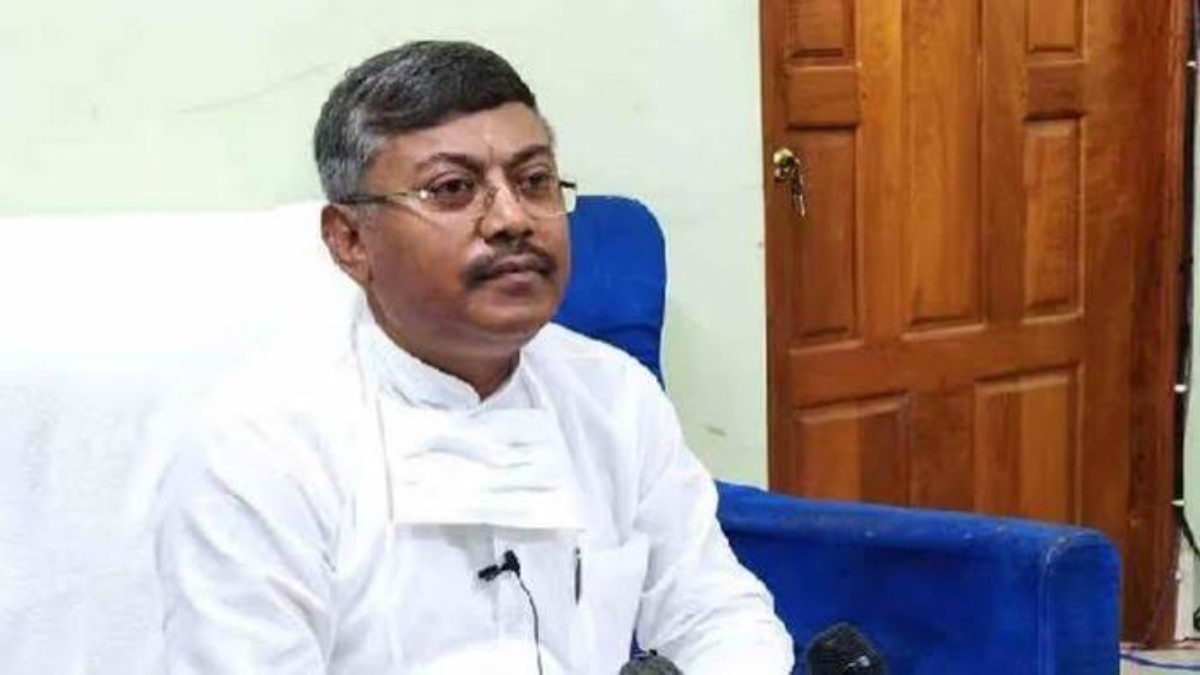
Save Manipur slogan has become the centre of a fresh political controversy after Manipur Home Minister Govindas Konthoujam alleged that the slogan raised during a protest at Delhi’s Jantar Mantar was intended to mislead the youth of the state. The minister claimed that the campaign was politically motivated and asserted that Manipur’s future would be secured by its own people rather than through protests and slogans raised outside the state. His remarks come amid heightened political activity surrounding demonstrations linked to the ongoing situation in Manipur and the Monsoon Session of Parliament.
Home Minister Criticises the Save Manipur Slogan
Addressing a press conference at the BJP headquarters in Imphal, Home Minister Govindas Konthoujam said those raising the Save Manipur slogan during the protest were attempting to provoke and mislead Manipuri youths.
According to the minister, genuine efforts to restore peace and stability in the state must come from its own residents rather than through demonstrations organised in the national capital. He described the slogan as a political show rather than a sincere attempt to resolve Manipur’s challenges.
What Happened at the Delhi Protest?
The controversy stems from a protest organised by the Citizens for Justice and Peace (CJP) at Jantar Mantar in New Delhi. During the demonstration, participants raised the Save Manipur slogan alongside other demands linked to recent national protests.
The event took place amid ongoing political demonstrations in Delhi, with several opposition leaders and student groups participating in protests over broader issues. The Manipur Home Minister alleged that opposition political workers were present in significant numbers and accused them of attempting to influence young protesters.
Allegations Against Opposition Parties
Konthoujam further alleged that political parties, including the Congress, Aam Aadmi Party, Samajwadi Party and Left parties, were using student protests for political purposes. According to him, the demonstrations were aimed at creating unrest during Parliament’s Monsoon Session.
The minister claimed that while students appeared to be leading the protests, political workers were actively encouraging confrontation. These allegations have added another layer of political debate to the ongoing demonstrations.
Claims of External Influence
The Home Minister also alleged that the continuing protests in Delhi had received external financial support, although he did not publicly present evidence to substantiate the claim. He maintained that security agencies were examining various aspects related to the demonstrations.
His remarks have drawn attention because they connect the protests with broader concerns over political mobilisation surrounding Manipur and national issues.
Major Tripura Detention Centre Escape Raises Security Concerns After 18 Bangladeshi Immigrants Flee
Political Reactions Continue
The minister’s comments came as political tensions remained high over demonstrations in the national capital. Alongside the CJP protest, opposition leaders have continued to criticise the government’s handling of recent events, while the ruling BJP has accused the Opposition of exploiting student sentiment for political gains.
Separately, senior BJP leaders, including Defence Minister Rajnath Singh, have also criticised attempts to use student protests for political purposes, arguing that young people should not become tools for partisan agendas.
Delhi Protest and Security Measures
The protests in Delhi witnessed heavy security deployment, with police imposing restrictions in several areas around central Delhi. Authorities clarified that administrative measures, including security arrangements, were routine and not specifically linked to any single protest.
Meanwhile, officials urged citizens to avoid misinformation after fake content related to the protests circulated on social media, highlighting concerns over the spread of misleading information during politically sensitive events.
What Lies Ahead for Manipur?
The debate surrounding the Save Manipur slogan reflects the continuing political sensitivity surrounding the state’s situation. While the Home Minister insists that Manipur’s future depends on the efforts of its own people, opposition groups and activists continue to argue that national attention is necessary to address the state’s concerns.
As Parliament’s Monsoon Session progresses and political demonstrations continue, discussions over Manipur are likely to remain part of the national conversation. Whether these competing narratives influence public opinion, particularly among the youth, will become clearer in the coming weeks. For now, the controversy has underscored how slogans and political messaging remain central to the ongoing debate over Manipur’s future.