

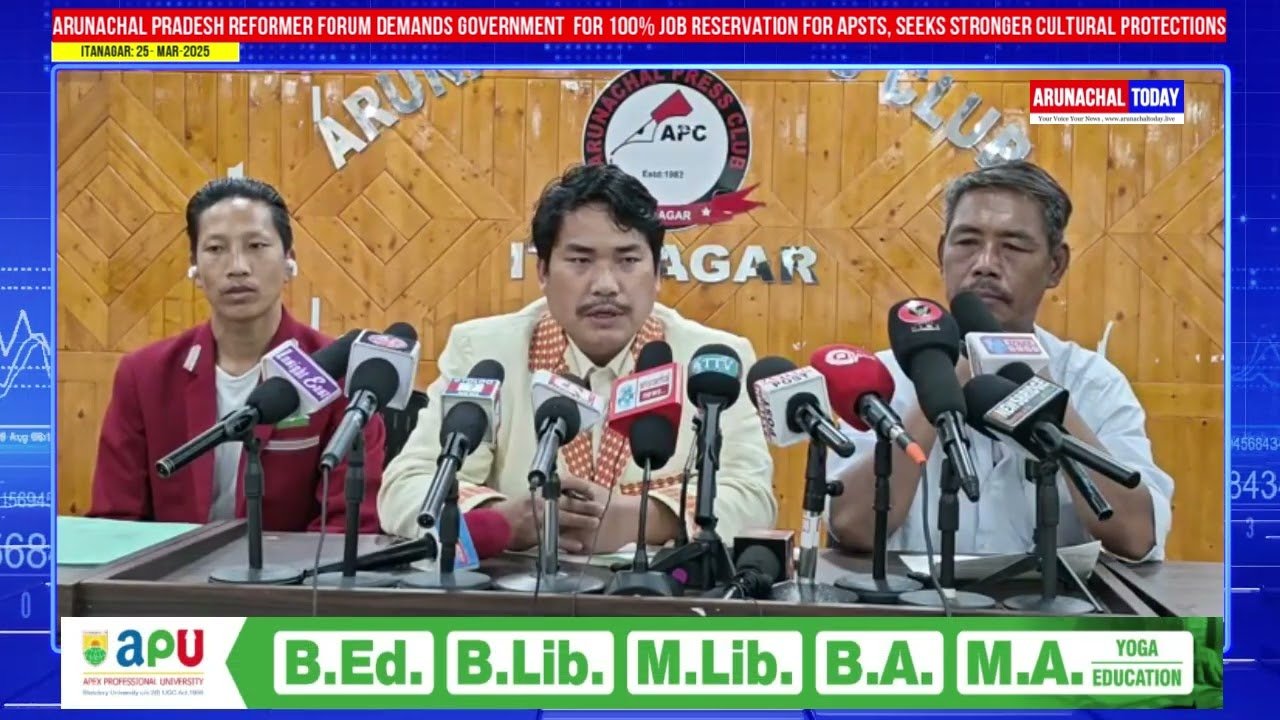
The APST Reservation Demand has gained widespread attention after protesters called for 100% reservation for Arunachal Pradesh Scheduled Tribe (APST) candidates in state government jobs. Moreover, demonstrators urged the government to review the existing recruitment framework, arguing that employment policies should address the aspirations of indigenous communities. Consequently, the issue has sparked fresh discussions on reservation policy, public employment, and administrative reforms in Arunachal Pradesh.
Mizoram Seeks Central Support to Strengthen Ginger Processing Amid Monsoon Challenges
Heavy Rains Suspend Train Services in Assam’s Dhemaji After Bridge Safety Concerns
APST Reservation Demand Draws Public Attention
The APST Reservation Demand came into focus as protesters organized demonstrations seeking complete reservation for APST candidates in state government recruitment. Furthermore, participants called for a review of the existing employment policy through established legal and administrative processes.
Public employment policies often generate extensive public discussion because they directly affect recruitment opportunities. Consequently, stakeholders continue expressing their views on reservation frameworks and recruitment practices.
Moreover, demonstrations remained centered on policy-related demands. Therefore, attention has shifted toward possible administrative discussions on the issue.
Additionally, authorities continue monitoring developments while maintaining public order. Thus, the matter remains under public and governmental consideration.
Protesters Seek Changes to Recruitment Policy
The APST Reservation Demand reflects calls from demonstrators for amendments to the current recruitment system governing government employment in Arunachal Pradesh. Furthermore, protesters argued that the existing framework should be reassessed to better address their concerns.
Policy reviews are typically conducted through constitutional, legal, and administrative mechanisms. Consequently, any future changes would require examination by the appropriate authorities.
Moreover, stakeholder consultations often contribute to informed policymaking. Therefore, dialogue remains an important part of democratic governance.
Similarly, transparent administrative procedures strengthen public confidence in policy decisions. Additionally, constructive engagement supports balanced discussions.
Reservation Policies Shape Public Employment
The APST Reservation Demand highlights the broader significance of reservation policies in public sector recruitment. Furthermore, such policies are intended to guide recruitment within the framework established by applicable laws and government regulations.
Recruitment policies influence representation, administrative efficiency, and public confidence. Consequently, governments periodically review employment policies in response to changing requirements and stakeholder feedback.
Moreover, legal safeguards and constitutional provisions guide policy implementation. Therefore, any modifications generally follow established legislative or administrative procedures.
Similarly, transparent recruitment systems promote fairness and accountability. Additionally, effective governance depends on consistent implementation of applicable rules.
Dialogue and Due Process Remain Essential
The APST Reservation Demand underscores the importance of constructive dialogue between the government and stakeholder groups when addressing public policy issues. Furthermore, peaceful engagement enables authorities to examine concerns through institutional processes.
Consultative governance encourages balanced and evidence-based decision-making. Consequently, continued communication among all stakeholders supports democratic policymaking.
Moreover, transparent review mechanisms help improve public understanding of complex policy issues. Therefore, institutional consultation remains valuable throughout the process.
Similarly, public participation contributes to informed policy discussions. Additionally, adherence to legal procedures strengthens confidence in administrative decisions.
Conclusion
The APST Reservation Demand has generated renewed debate following protests seeking 100% reservation for APST candidates in Arunachal Pradesh government jobs. Moreover, the demonstrations have highlighted broader discussions surrounding recruitment policy, public employment, and administrative reforms.
Furthermore, any future review of the reservation framework is expected to proceed through established constitutional, legal, and administrative channels. Consequently, continued dialogue, transparent policymaking, and due process will remain essential in addressing the APST Reservation Demand while ensuring balanced governance.
FAQs
1. What is the APST Reservation Demand?
It refers to protesters’ call for 100% reservation for Arunachal Pradesh Scheduled Tribe (APST) candidates in state government jobs.
2. Who raised the demand?
Groups of protesters in Arunachal Pradesh organized demonstrations seeking changes to the existing recruitment policy.
3. What are the protesters requesting?
They are urging the government to review the current recruitment framework and consider full reservation for APST candidates in state government employment.
4. Can reservation policies be changed?
Any changes would generally require review through established constitutional, legal, and administrative procedures.
5. Why is the APST Reservation Demand significant?
It has renewed discussions on reservation policy, public employment, stakeholder consultation, and administrative reforms in Arunachal Pradesh.