

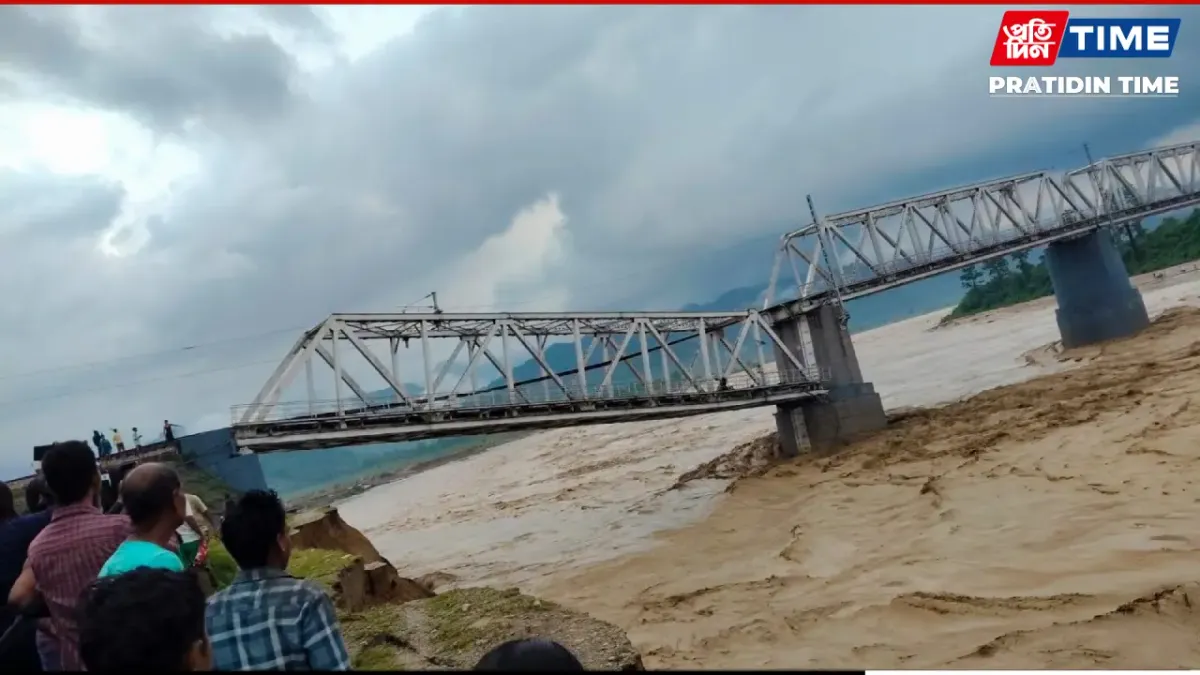
The Dhemaji Riverbank Erosion crisis has disrupted railway operations after severe riverbank erosion forced the suspension of train services in parts of Assam’s Dhemaji district. Moreover, the erosion threatened the safety of railway infrastructure, prompting authorities to halt rail traffic as a precautionary measure. Consequently, railway officials and local administrations have initiated inspections while monitoring the affected stretch to restore services safely.
Flash Floods Submerge Over 3,800 Hectares of Cropland in Assam
AIUDF Retains Two Seats in Assam Assembly
Dhemaji Riverbank Erosion Disrupts Railway Operations
The Dhemaji Riverbank Erosion incident led to the temporary suspension of train services after erosion weakened land near the railway corridor. Furthermore, railway authorities acted promptly to ensure passenger safety and protect critical infrastructure.
Riverbank erosion is a recurring challenge in several flood-prone areas of Assam, particularly during the monsoon season. Consequently, transportation services can face temporary disruptions when infrastructure is threatened.
Moreover, railway engineers have begun assessing the stability of the affected section. Therefore, restoration work will proceed only after safety standards are fully met.
Additionally, continuous inspections are being carried out to monitor further erosion. Thus, authorities remain vigilant as weather conditions evolve.
Railway Safety Measures Take Priority
The Dhemaji Riverbank Erosion situation prompted railway officials to suspend train operations as a preventive safety measure. Furthermore, technical teams are evaluating the condition of tracks, embankments, and nearby riverbanks before allowing train movement to resume.
Passenger safety remains the highest priority during infrastructure-related emergencies. Consequently, precautionary suspensions help minimize operational risks.
Moreover, maintenance teams are coordinating with local authorities to assess the extent of erosion. Therefore, repair strategies can be implemented efficiently.
Similarly, regular monitoring will help identify any additional vulnerable sections. Additionally, timely engineering interventions can reduce the risk of future disruptions.
Authorities Monitor Monsoon-Related Erosion
The Dhemaji Riverbank Erosion has highlighted the impact of heavy monsoon rainfall on transportation infrastructure. Furthermore, rising river levels and strong water currents continue to influence erosion along vulnerable riverbanks.
Monsoon conditions frequently accelerate erosion in low-lying and riverside areas. Consequently, infrastructure agencies remain alert throughout the rainy season.
Moreover, weather forecasts and river-level monitoring support better planning for emergency response. Therefore, coordination between railway authorities and disaster management agencies remains essential.
Similarly, local administrations continue assessing nearby areas for additional risks. Additionally, early-warning systems improve preparedness during severe weather conditions.
Restoration Efforts Continue to Resume Services
The Dhemaji Riverbank Erosion response includes engineering assessments and stabilization work aimed at restoring railway connectivity safely. Furthermore, officials are working to minimize disruption while ensuring the structural integrity of the railway network.
Infrastructure restoration requires detailed inspections and adherence to engineering safety standards. Consequently, train services will resume only after the affected section is declared safe.
Moreover, coordinated efforts between railway engineers and local authorities are expected to accelerate recovery. Therefore, passengers are advised to follow official railway updates regarding service restoration.
Similarly, long-term erosion control measures may strengthen infrastructure resilience. Additionally, continued investment in protective works can help reduce future risks.
Conclusion
The Dhemaji Riverbank Erosion incident has temporarily halted train services after severe erosion threatened railway infrastructure in Assam’s Dhemaji district. Moreover, authorities have prioritized passenger safety by suspending operations while carrying out technical inspections and stabilization measures.
Furthermore, continuous monitoring, engineering assessments, and coordinated restoration efforts will remain essential before rail services are fully resumed. Consequently, the incident underscores the importance of resilient infrastructure and proactive erosion management during the monsoon season.
Looking ahead, stronger riverbank protection, regular infrastructure inspections, and effective disaster preparedness will help reduce the impact of future Dhemaji Riverbank Erosion incidents on railway connectivity and public transportation.
FAQs
1. Why were train services suspended in Dhemaji?
Train services were halted because severe riverbank erosion threatened the safety of the railway infrastructure.
2. What caused the riverbank erosion?
The erosion was linked to monsoon-related river activity and changing riverbank conditions.
3. What actions are railway authorities taking?
Officials are conducting technical inspections, monitoring the affected area, and carrying out stabilization work before restoring services.
4. When will train services resume?
Rail operations are expected to resume only after engineers confirm that the affected railway section is safe for passenger movement.
5. Why is the Dhemaji Riverbank Erosion incident significant?
It highlights the impact of monsoon-induced erosion on critical infrastructure and emphasizes the need for strong riverbank protection and railway safety measures.