

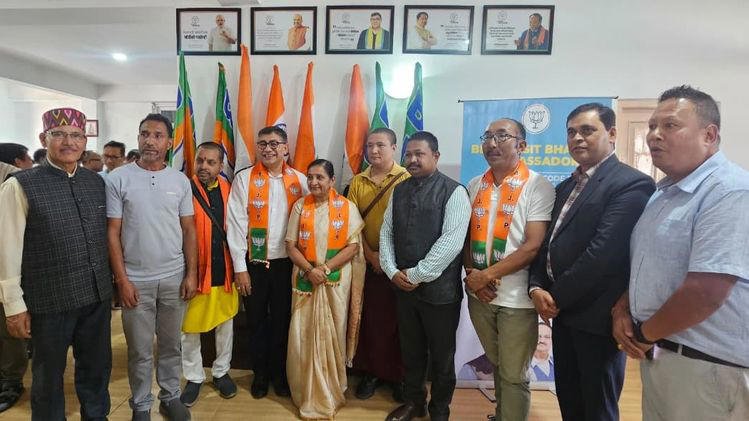
Sikkim recently showcased its path to self-reliance during the visit of a Union Minister, highlighting the state’s progressive development models and sustainable growth initiatives. The visit aimed to review the state’s achievements in agriculture, renewable energy, and local entrepreneurship while exploring ways to enhance economic self-sufficiency.
Read More: Sikkim’s Nawang Gyatso Bhutia Represents India at Bhutan Butterfly Meet
Union Minister Visits Sikkim
The Union Minister arrived in Sikkim to engage with government officials, local entrepreneurs, and community leaders. The focus of the visit was to evaluate the state’s initiatives promoting self-reliance, particularly under schemes supporting sustainable agriculture, clean energy, and skill development. The Minister appreciated Sikkim’s efforts in integrating modern technology with traditional practices, noting that the state has become a model for other regions striving for holistic growth.
Chief Minister of Sikkim, along with key officials, welcomed the Union Minister and briefed him about the state’s initiatives. The discussions included strategies for enhancing local industries, boosting organic farming, and promoting renewable energy sources such as solar and hydroelectric power. The Minister also observed firsthand how Sikkim has leveraged its natural resources and human capital to reduce dependence on external aid.
Agriculture and Organic Farming
One of the major highlights of the visit was Sikkim’s exemplary performance in agriculture. The state has successfully transitioned to 100% organic farming, a significant achievement that has garnered national and international recognition. Officials presented data showing increased productivity and income for farmers, attributing the success to government support, training programs, and community participation.
The Union Minister praised the state’s organic farming initiatives, emphasizing that such models could be replicated across the country to ensure sustainable agriculture and food security. He also suggested measures to enhance marketing strategies for organic produce, ensuring farmers receive fair prices while maintaining environmentally friendly practices.
Renewable Energy and Sustainability
Sikkim’s renewable energy initiatives were another key focus during the visit. The state has invested significantly in solar, hydroelectric, and wind energy projects, aiming to become energy self-sufficient. The Minister toured several renewable energy installations, including small-scale hydroelectric plants and solar farms, which contribute to the state’s clean energy goals.
Officials explained that the integration of renewable energy sources has reduced reliance on imported fuels and decreased the state’s carbon footprint. The Minister highlighted Sikkim’s model as an example of how clean energy can drive self-reliance while promoting environmental sustainability.
Promoting Local Entrepreneurship
Sikkim has also focused on empowering local entrepreneurs through skill development programs and financial support. During the visit, the Union Minister interacted with several local business owners who shared their experiences of government assistance in expanding production and accessing wider markets.
The state’s initiatives encourage youth and women to participate in economic activities, ranging from handicrafts to food processing and eco-tourism. By promoting local entrepreneurship, Sikkim aims to reduce unemployment and stimulate economic growth while maintaining cultural heritage.
Skill Development and Education
Education and skill development play a central role in Sikkim’s self-reliance strategy. The Union Minister visited vocational training centers and educational institutions where programs are designed to equip youth with skills needed for modern industries. Officials explained that linking education with practical skills ensures employability and supports the state’s broader economic objectives.
Special attention is given to sectors like tourism, agriculture, and information technology, where trained professionals can contribute to sustainable development. These initiatives also encourage innovation and local problem-solving, which are essential components of self-reliance.
Infrastructure and Connectivity
During the visit, the Union Minister also reviewed infrastructure projects that enhance connectivity and access to remote areas. Road networks, bridges, and digital connectivity projects were showcased as examples of how infrastructure development facilitates economic activity and social inclusion. Improved connectivity ensures that farmers, entrepreneurs, and communities can access markets, services, and resources more efficiently.
The Minister noted that such initiatives not only support self-reliance but also foster integration of remote communities into the broader economic framework, ensuring inclusive growth.
Community Participation and Governance
A key factor behind Sikkim’s success is active community participation. The state emphasizes governance models that involve citizens in decision-making processes, particularly in environmental management, agriculture, and local industries. The Union Minister appreciated this approach, highlighting that citizen engagement ensures transparency, accountability, and sustainability of development projects.
Officials explained that policies promoting self-reliance are most effective when communities are stakeholders, taking ownership of projects and contributing their knowledge and skills. This participatory approach strengthens social cohesion and ensures long-term success of development initiatives.
Future Prospects
The Union Minister emphasized the need to replicate successful models from Sikkim across other states. He suggested strengthening partnerships between the central and state governments to expand sustainable agriculture, renewable energy, and local entrepreneurship initiatives.
CM of Sikkim expressed gratitude for the Minister’s visit and highlighted that the state is committed to furthering its self-reliance goals. Plans include scaling up organic farming, increasing renewable energy capacity, and enhancing skill development programs to create more employment opportunities.
Conclusion
Sikkim’s showcase during the Union Minister’s visit highlights the state’s commitment to self-reliance through sustainable development, renewable energy, organic farming, and local entrepreneurship. By combining technology, community participation, and strategic governance, the state has created a model that other regions can emulate.
The visit not only recognized Sikkim’s achievements but also provided valuable insights into strengthening policies for economic independence and sustainable growth. Through continued innovation and citizen engagement, Sikkim demonstrates that a holistic approach to development can lead to lasting self-reliance, benefiting both the state and the nation as a whole.
Read More: Tripura minister participates in National Tourism Ministers’ conference