

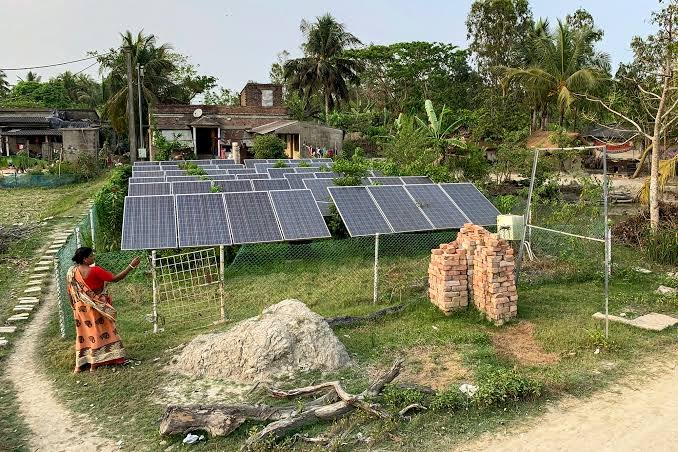
The Solar Micro-Grids initiative has expanded clean-energy access across Assam after green-energy teams completed solar installations in 10 remote riverine island villages, locally known as chars. The project aims to improve electricity access in communities where conventional power infrastructure can face significant geographic and logistical challenges.
The new solar systems can provide a cleaner and potentially more reliable source of electricity for households and community facilities. Moreover, renewable-energy infrastructure can reduce dependence on conventional fuel-based power sources in remote settlements.
The development represents an important step toward improving energy access in isolated riverine communities. However, the available information does not specify the total generation capacity, number of households covered, project cost, or the organization responsible for the installations.
Solar Micro-Grids Expand Clean Energy Access
The Solar Micro-Grids project has brought solar power systems to 10 remote riverine island villages.
Chars often face unique connectivity challenges because rivers and shifting waterways can make infrastructure development more difficult. Furthermore, transporting conventional power infrastructure to isolated settlements can require significant logistical planning.
Solar installations can provide an alternative approach by generating electricity closer to where communities need it.
However, the available information does not specify whether the systems provide electricity to entire villages or selected households and facilities.
Solar Micro-Grids Improve Energy Options in Chars
The Solar Micro-Grids installations could provide residents with greater access to electricity in remote locations.
Reliable power can support lighting, communication, education, small businesses, and community services. Additionally, electricity access can improve the ability of households to use essential electronic devices and maintain daily activities after sunset.
These benefits can be particularly important in geographically isolated settlements.
However, the available information does not provide details about the number of households connected to each solar system.
Consequently, the project’s overall household coverage remains unclear.
Solar Micro-Grids Support Remote Community Development
The Solar Micro-Grids project can contribute to wider development in riverine communities.
Electricity supports economic and social activities ranging from small-scale commerce to education and public services. Moreover, improved energy access can help communities adopt digital communication and other technologies.
The new installations therefore have potential benefits beyond basic lighting.
However, the available information does not identify specific community facilities connected to the solar systems.
Solar Micro-Grids Reduce Dependence on Conventional Power
The Solar Micro-Grids initiative also promotes renewable energy in locations where conventional electricity infrastructure may face challenges.
Solar power uses sunlight to generate electricity without requiring fuel combustion at the point of generation. Furthermore, appropriately designed systems can provide power in locations where extending conventional grids may prove difficult.
This makes decentralized solar generation particularly relevant to isolated settlements.
However, the environmental and financial benefits will depend on system capacity, maintenance, equipment lifespan, and actual electricity usage.
Solar Micro-Grids Could Support Education
The Solar Micro-Grids installations could benefit students and educational activities in remote chars.
Access to reliable electricity can provide better lighting for studying and allow schools or students to use electronic learning resources. Additionally, teachers and educational institutions can use powered devices for communication and administrative work.
Electricity can therefore contribute to improved learning conditions.
However, the available information does not confirm whether schools received dedicated solar systems under the project.
Solar Micro-Grids Could Strengthen Local Livelihoods
The Solar Micro-Grids project could also support small-scale economic activities in riverine villages.
Electricity can help power small shops, communication devices, refrigeration, processing equipment, and other livelihood-related activities. Moreover, reliable energy can reduce dependence on portable fuel-powered equipment for certain applications.
Such improvements could support local economic activity.
However, the available information does not identify specific businesses or livelihood programmes linked to the new installations.
Solar Micro-Grids Require Reliable Maintenance
The Solar Micro-Grids systems will require regular maintenance to deliver long-term benefits.
Solar panels, batteries, wiring, controllers, and other components need appropriate monitoring and servicing. Furthermore, remote locations can make maintenance more difficult because technicians and replacement equipment may need to travel across waterways.
Long-term planning will therefore remain important.
However, the available information does not specify who will operate and maintain the systems after installation.
Solar Micro-Grids Address Geographic Challenges
The Solar Micro-Grids project demonstrates how decentralized renewable energy can address infrastructure challenges in difficult-to-reach locations.
Riverine islands can experience changing land patterns, seasonal flooding, and limited road connectivity. Additionally, these conditions can complicate the construction and maintenance of conventional electricity infrastructure.
Locally generated solar power can offer greater flexibility in such environments.
However, the available information does not provide details about how the systems were designed to withstand seasonal flooding or other environmental risks.
Solar Micro-Grids Could Strengthen Rural Energy Security
The Solar Micro-Grids installations can contribute to energy security for remote communities.
Local electricity generation can reduce dependence on distant infrastructure and provide an additional source of power. Moreover, decentralized systems can support essential services when conventional grid expansion proves difficult.
The 10-village installation therefore represents a potentially important step in improving rural energy access.
However, the available information does not indicate whether authorities plan to expand the programme to additional riverine villages.
Solar Micro-Grids Highlight Renewable Energy Potential
The Solar Micro-Grids project highlights the potential of renewable energy to address electricity-access challenges in remote Assam.
The successful installation across 10 riverine island villages demonstrates that solar systems can reach communities facing difficult geographical conditions. Furthermore, future expansion could help extend clean-energy access to other isolated settlements if authorities and energy organizations identify suitable locations.
The scale of future expansion will depend on technical feasibility, funding, maintenance, and community requirements.
Conclusion
The Solar Micro-Grids initiative has expanded renewable-energy access to 10 remote riverine island villages in Assam after green-energy teams completed solar installations across the communities. The project offers a potential solution to the electricity challenges faced by geographically isolated chars.
Moreover, reliable solar power can support households, education, communication, livelihoods, and community services while reducing dependence on conventional fuel-based energy. However, the available information does not specify the project’s cost, generation capacity, household coverage, technical design, or long-term maintenance arrangements.
Overall, the Solar Micro-Grids project represents a significant step toward bringing clean energy to remote riverine communities. Continued maintenance, community participation, and possible expansion could help strengthen electricity access across other isolated settlements.
FAQs
1. What is the Solar Micro-Grids project?
The Solar Micro-Grids initiative involves installing solar power systems in remote riverine island villages, known locally as chars.
2. How many villages received solar installations?
Green-energy teams completed installations in 10 remote riverine island villages.
3. Why are solar systems useful in riverine villages?
Remote chars can face difficult geographic and transportation conditions, making decentralized solar power a practical option for improving electricity access.
4. What benefits can solar power provide?
Solar electricity can support lighting, education, communication, small businesses, community services, and other everyday activities.
5. Will more villages receive solar systems?
The available information does not confirm a specific expansion plan beyond the 10 villages already covered.