


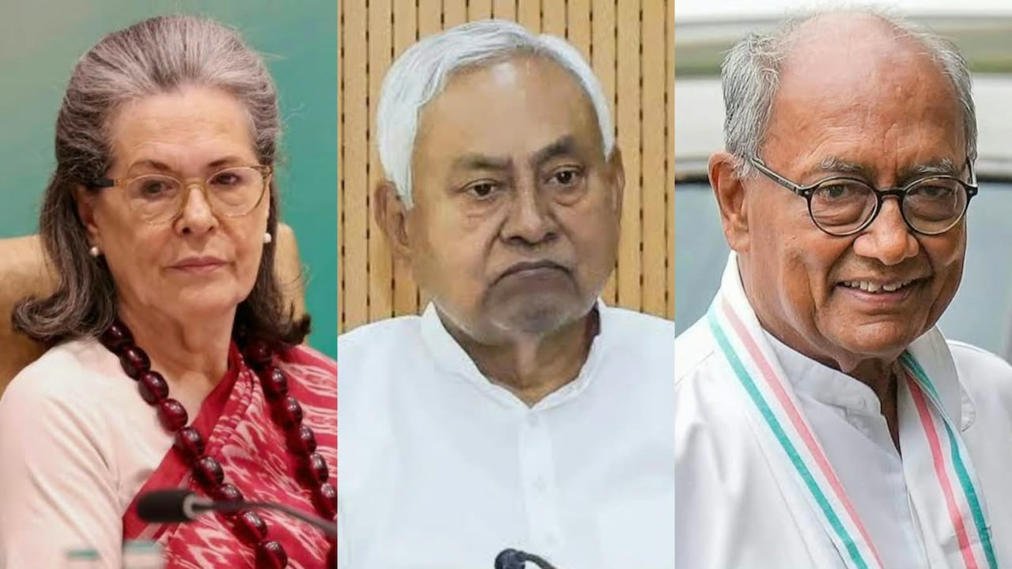
A difference of opinion over Nitish Kumar’s exit from the INDIA bloc reportedly surfaced during a Congress Working Committee (CWC) meeting, with party veteran Digvijaya Singh suggesting that the opposition alliance should not have allowed the Janata Dal (United) leader to leave in 2024. Former Congress president Sonia Gandhi reportedly rejected the view, saying Kumar had been looking for a way out of the alliance.
The exchange took place as Congress leaders discussed the party’s political strategy and its criticism of the Election Commission over the ongoing Special Intensive Revision (SIR) of electoral rolls.
Digvijaya Singh Raises Nitish Kumar’s Exit
According to sources cited by NDTV and India Today, Digvijaya Singh told the CWC that the INDIA bloc should not have allowed Nitish Kumar to leave in January 2024.
Singh reportedly said that the political situation could have been different had Kumar remained with the opposition alliance. His comments referred to Kumar’s decision to end his alliance with the RJD and Congress-led Mahagathbandhan government in Bihar and return to the BJP-led National Democratic Alliance (NDA).
The discussion brought attention to one of the major political developments ahead of the 2024 Lok Sabha elections, when Kumar switched alliances after playing a prominent role in bringing opposition parties together.
Sonia Gandhi Rejects the Argument
Sonia Gandhi reportedly responded sharply to Singh’s assessment, arguing that Kumar’s departure from the INDIA bloc was inevitable.
According to reports based on sources present at the meeting, Gandhi said Kumar had been seeking an opportunity to leave the alliance and that it was better that he left when he did. India Today reported her as saying, “Thank God Nitish Kumar left on time,” while NDTV reported her position as being that Kumar did not wish to remain in the alliance.
The remarks reflected a different assessment within the Congress leadership about whether Kumar’s continued presence could have changed the political dynamics of the opposition alliance.
Kharge Backs Sonia’s Position
Congress president Mallikarjun Kharge also reportedly supported Sonia Gandhi’s assessment during the discussion.
According to NDTV, Kharge recalled that Kumar had previously indicated that he wanted to remain active in Bihar politics while supporting the opposition alliance at the national level. Kharge also suggested that Kumar’s interest in becoming the INDIA bloc’s convenor did not indicate a long-term commitment to the alliance.
These comments were made during an internal party discussion and were reported by news organisations based on sources familiar with the proceedings.
Nitish Kumar’s 2024 Political Switch
Nitish Kumar resigned as Bihar chief minister on January 28, 2024, ending his alliance with the RJD and Congress and returning to the BJP-led NDA. He subsequently formed a new government with BJP support.
Before that, Kumar had been one of the key figures involved in efforts to bring opposition parties together. He hosted the first major meeting of opposition leaders in Patna in June 2023, which was part of the process that eventually led to the formation of the INDIA bloc.
His departure from the alliance came just months before the 2024 Lok Sabha elections and became a significant point of discussion among opposition parties.
CWC Discussion Comes Ahead of INDIA Bloc Meet
The CWC discussion took place ahead of a meeting of INDIA bloc leaders in New Delhi, where opposition parties are discussing their response to the Election Commission’s SIR exercise and other electoral issues.
Congress leaders have been demanding changes to the electoral-roll revision process and have criticised Chief Election Commissioner Gyanesh Kumar. The Election Commission has defended its procedures, while the BJP has rejected the opposition’s allegations.
The reported exchange over Nitish Kumar highlights differing views within the Congress leadership about the opposition alliance’s past political strategy, even as INDIA bloc parties prepare to coordinate their response to current electoral and political issues.