


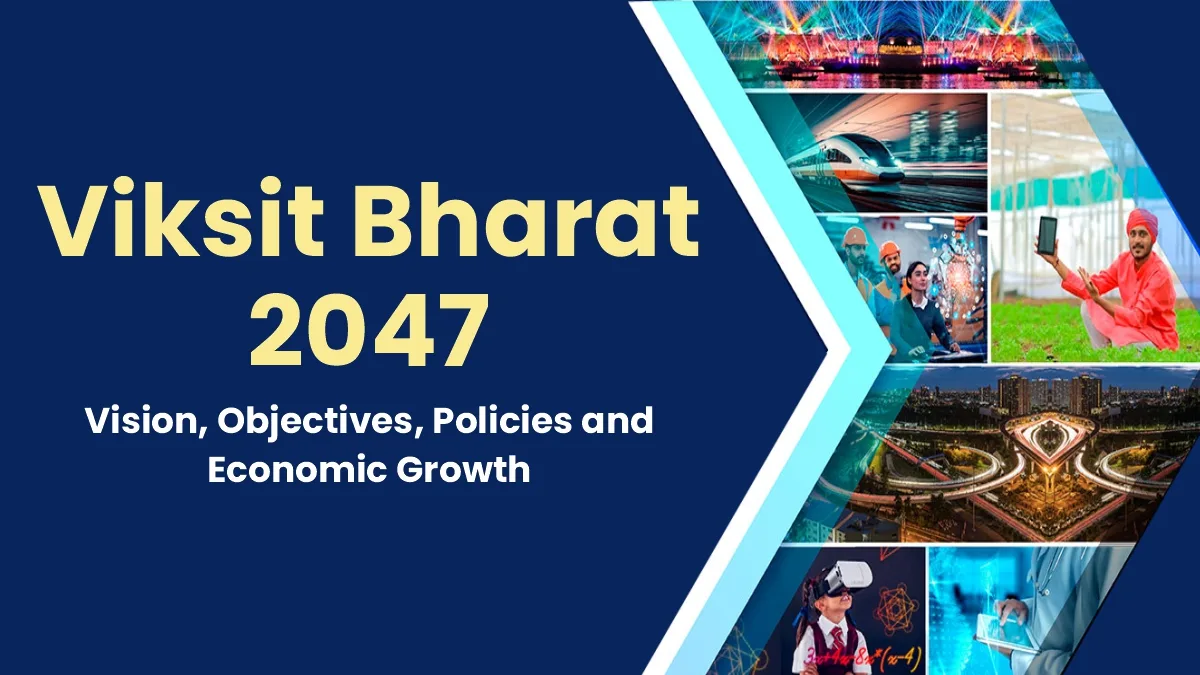
State leaders are united in promoting economic growth and ecological sustainability through projects aligned with the “Viksit Bharat 2047” vision, reflecting a coordinated push toward long-term national development goals. Moreover, this unified approach emphasizes balancing rapid infrastructure expansion with environmental responsibility. Consequently, the initiative is shaping policy discussions around sustainable growth models. Meanwhile, leaders continue to highlight the importance of aligning regional development with the broader national roadmap for 2047.
Tripura Mulls Handing Over Some Government Schools to Private Bodies: CM
North East India Infrastructure Summit: Conrad K. Sangma Inaugurates 2026 Event in Shillong
State Leaders Emphasize Viksit Bharat 2047 for Balanced Development Goals
State leaders aligning with the Viksit Bharat 2047 vision are focusing on balanced development that integrates economic growth with ecological sustainability. Moreover, the vision encourages states to adopt long-term planning frameworks.
Balanced development is essential for ensuring sustainable progress. Furthermore, it helps address both economic aspirations and environmental concerns simultaneously. As a result, the Viksit Bharat 2047 vision is being seen as a guiding framework for future growth.
The emphasis on sustainability reflects growing awareness of environmental challenges. Additionally, leaders are advocating for responsible resource management in development projects. Therefore, policy alignment with ecological goals is becoming a priority.
Meanwhile, inter-state collaboration is being strengthened under shared development objectives. Similarly, policy convergence is helping streamline implementation. Hence, the vision promotes coordinated national progress.
Although balancing growth and sustainability can be challenging, integrated planning helps address trade-offs. Nevertheless, long-term commitment remains essential.
Economic Growth Projects Gain Momentum Under Viksit Bharat 2047 Framework
State leaders promoting Viksit Bharat 2047 are supporting infrastructure and economic growth projects across multiple sectors. Moreover, these projects aim to enhance productivity and regional competitiveness.
Economic growth initiatives include infrastructure development, industrial expansion, and digital transformation. Furthermore, improved connectivity supports trade and investment opportunities. Consequently, states are experiencing increased development momentum.
The focus on growth reflects a broader national strategy for economic expansion. Additionally, investments in key sectors are expected to generate employment and income opportunities. Therefore, the framework supports inclusive economic progress.
Meanwhile, governments are encouraging public-private partnerships to accelerate development. Similarly, innovation-driven growth models are being prioritized. Hence, economic planning is becoming more dynamic.
Although implementation timelines vary, steady progress is being observed. Nevertheless, continued investment is necessary for sustained growth.
Ecological Sustainability Integrated Into Development Planning
State leaders aligning with the Viksit Bharat 2047 vision are increasingly integrating ecological sustainability into development planning. Moreover, environmental protection is being treated as a core policy objective.
Sustainable development ensures that economic progress does not compromise environmental health. Furthermore, conservation efforts help preserve natural resources for future generations. As a result, ecological considerations are shaping infrastructure planning.
The integration of sustainability includes renewable energy adoption and green infrastructure development. Additionally, afforestation and environmental conservation projects are gaining importance. Therefore, development strategies are becoming more environmentally conscious.
Meanwhile, awareness around climate change is influencing policy decisions. Similarly, states are adopting cleaner technologies and sustainable practices. Hence, ecological sustainability is a growing priority.
Although achieving full sustainability requires systemic changes, gradual improvements are being made. Nevertheless, continued commitment is essential.
Viksit Bharat 2047 Vision Strengthens Cooperative Federal Development
The Viksit Bharat 2047 vision supported by state leaders reflects a cooperative federal approach to development. Moreover, it encourages collaboration between the Centre and states for achieving shared goals.
Cooperative federalism ensures that development strategies are aligned across governance levels. Furthermore, it improves policy implementation efficiency. Consequently, development outcomes become more effective.
The vision promotes shared responsibility in achieving national objectives. Additionally, states play a crucial role in executing projects on the ground. Therefore, coordination is key to success.
Meanwhile, institutional frameworks are being strengthened for better collaboration. Similarly, data-driven governance is improving decision-making processes. Hence, federal cooperation is becoming more structured.
Although coordination challenges may arise, unified goals help maintain direction. Nevertheless, continuous dialogue is necessary.
Conclusion
State leaders uniting to promote economic growth and ecological sustainability through projects aligned with the Viksit Bharat 2047 vision highlights a strong commitment to long-term, balanced development. Moreover, the integration of economic and environmental priorities reflects a forward-looking governance approach. Consequently, it supports both prosperity and sustainability goals.
The emphasis on coordinated development under the Viksit Bharat 2047 framework also strengthens cooperative federalism and policy alignment. Furthermore, it ensures that growth strategies remain inclusive and environmentally responsible. As a result, the vision is shaping a comprehensive development roadmap.
Looking ahead, state leaders promoting economic growth and ecological sustainability through Viksit Bharat 2047-aligned projects are expected to drive transformative change. Additionally, continued collaboration and sustainable planning will be essential. Therefore, the initiative represents a unified step toward a developed and environmentally balanced India by 2047.
FAQs
1. What is the Viksit Bharat 2047 vision?
The Viksit Bharat 2047 vision is a long-term development roadmap aimed at making India a developed nation by 2047. Moreover, it focuses on inclusive and sustainable growth.
2. How are state leaders contributing to this vision?
State leaders are promoting economic growth and ecological sustainability through aligned development projects. Furthermore, they support coordinated planning.
3. Why is ecological sustainability important in this framework?
Ecological sustainability ensures that development does not harm the environment. Additionally, it preserves resources for future generations.
4. What types of projects are included under this vision?
Projects include infrastructure development, renewable energy, and green initiatives. Moreover, they focus on balanced growth.
5. Why is cooperation between states and the Centre important?
Cooperation ensures better coordination and effective implementation of policies. Consequently, it improves development outcomes.