

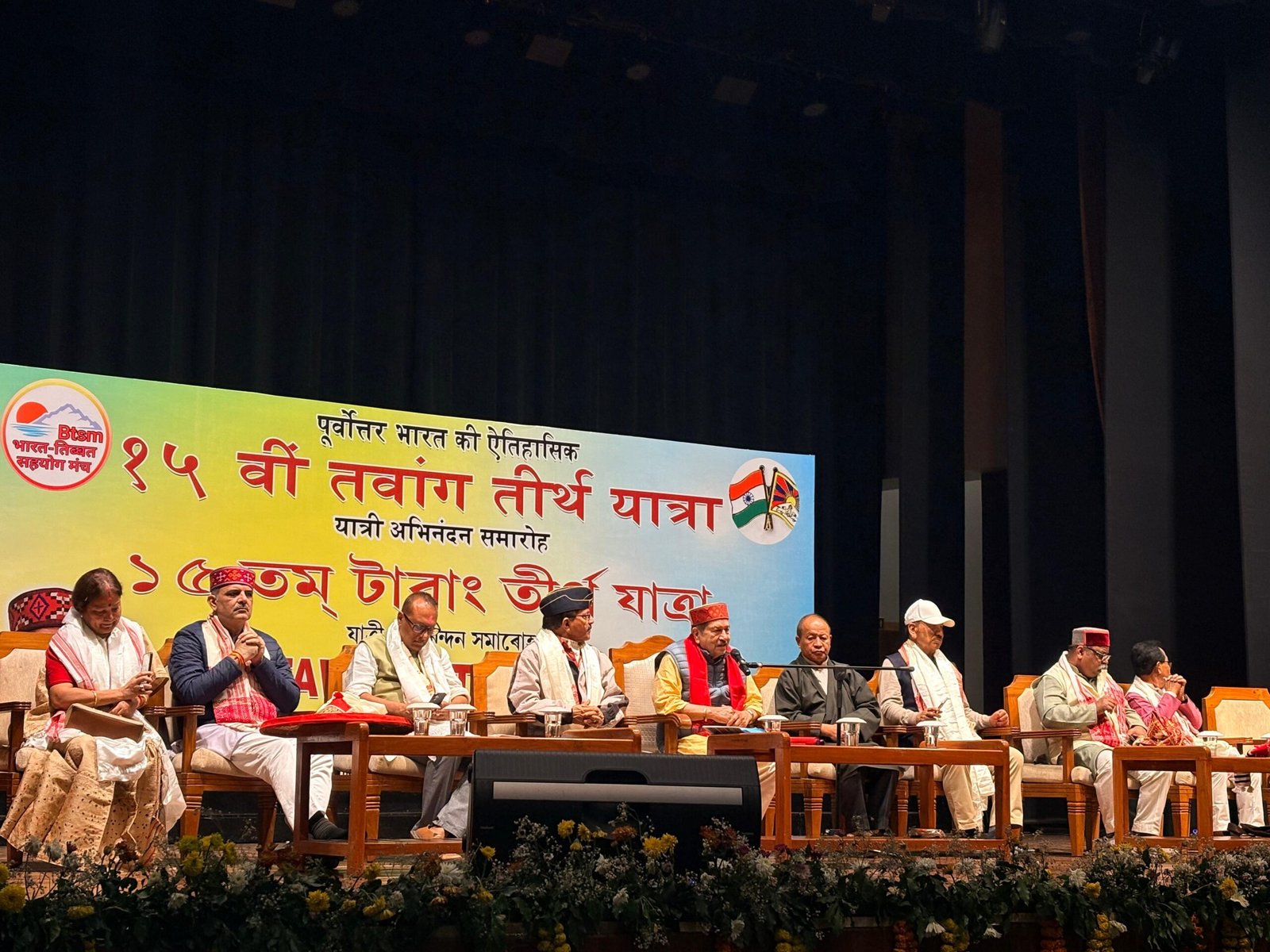
The 15th annual Tawang Tirth Yatra began in Guwahati on November 20, 2026, bringing together 350 participants from different Indian states and Union Territories. Organised by the Assam chapter of the Bharat Tibbat Sahyog Manch (BTSM), the pilgrimage forms part of the organisation’s Tibet Awareness Campaign. The journey aims to highlight historical and cultural connections between India and Tibet while drawing attention to concerns surrounding Tibet’s religious, cultural and human rights situation. The participants will travel through parts of Assam and Arunachal Pradesh before reaching Tawang on November 23.
Mizoram Student Protest Targets MPSC Chairman
350 Participants Begin the Tawang Pilgrimage
The organisers flagged off the 15th Tawang Tirth Yatra from Guwahati on Friday, November 20. The inauguration took place at the Sri Damodar Dev International Auditorium at Srimanta Sankardev Kalakshetra.
Around 350 participants joined the pilgrimage from different parts of India. The annual programme has developed into a platform for discussions about India-Tibet cultural links and the situation in Tibet.
The event featured Dr Indresh Kumar, a national executive member of the Rashtriya Swayamsevak Sangh, and Kalon Tsegyal Chukya Dranyi, Minister for Religious and Cultural Affairs of the Central Tibetan Administration.
Pankaj Goyal, National Organising General Secretary of BTSM, also addressed the gathering. He recalled the pilgrimage’s beginnings in 2012 and described its growth over the years.
The organisers presented the journey as an opportunity to encourage public awareness of Tibetan culture, history and current concerns.
Bharat Tibbat Sahyog Manch Leads Awareness Campaign
The Bharat Tibbat Sahyog Manch organises the annual pilgrimage through its Assam chapter. The organisation uses the journey to promote awareness of Tibet and strengthen cultural engagement between Indian and Tibetan communities.
During the inauguration, Dr Indresh Kumar spoke about the historical and spiritual connections between the two regions. He referred to the influence of Buddhist teachings and highlighted values such as non-violence, compassion and mutual respect.
He also described the pilgrimage as a message of peace and solidarity.
The programme included prayers for the safety of participants and the restoration of peace and justice in Tibet. Through these activities, the organisers seek to connect religious and cultural traditions with wider public discussions.
Tibetan Administration Raises Cultural and Human Rights Concerns
Kalon Tsegyal Chukya Dranyi addressed the gathering on behalf of the Central Tibetan Administration. He thanked India for providing shelter to the 14th Dalai Lama and generations of Tibetans living in exile.
He also acknowledged India’s support for Tibetan religious institutions, education, language and cultural preservation.
During his address, Dranyi raised concerns about the political and human rights situation in Tibet. He criticised restrictions affecting Tibetan religion and language and referred to concerns over environmental damage across the Tibetan Plateau.
These remarks represented the position expressed by the Tibetan official at the event. The pilgrimage organisers have included such discussions within their broader campaign to raise awareness about Tibet.
The programme also highlighted the importance of preserving Tibetan cultural identity and maintaining connections between communities across the Himalayan region.
Pilgrimage Route Passes Through Mongaldai and Bomdila
After leaving Guwahati, the participants will follow a route through Mongaldai, Bomdila and Sela Pass before reaching Tawang.
The journey offers opportunities to visit important cultural and historical locations along the way. It also takes participants through the mountainous landscape of western Arunachal Pradesh.
The organisers have scheduled the pilgrimage’s culmination in Tawang on November 23.
Tawang holds particular importance in Tibetan Buddhist history. The region is widely recognised as the birthplace of the Sixth Dalai Lama, Tsangyang Gyatso.
Its monasteries, religious traditions and historical links with Tibet make the town an important destination for pilgrims and visitors.
The route also connects the pilgrimage with places associated with India’s border history and the 1962 India-China war.
Visit to Shahidi Smarak and Bumla Forms Part of Journey
The programme also includes activities connected with the memory of Indian soldiers who died during the 1962 war.
According to information shared by the Central Tibetan Administration, participants will visit the Shahidi Smarak and offer prayers near the India-Tibet border at Bumla.
The programme also includes tying raksha sutras on Indian soldiers as a gesture of respect and goodwill.
These activities add a remembrance component to the pilgrimage. They connect the organisers’ cultural message with the historical experiences of communities and military personnel in the Himalayan border region.
The visit to Bumla also reflects the geographical and historical importance of the India-Tibet frontier.
Tawang’s Religious Heritage Gives the Yatra Its Significance
Tawang is home to the historic Tawang Monastery, one of the most important centres of Tibetan Buddhism in India.
The monastery plays a major role in the religious and cultural life of the Monpa community. It also attracts pilgrims and visitors interested in Himalayan Buddhist traditions.
The region’s monasteries, festivals and traditional practices reflect centuries of cultural exchange across the Himalayan belt.
The Tawang Tirth Yatra uses this heritage as a foundation for its annual awareness campaign. Participants can engage with the region’s religious history while learning about its cultural connections with Tibet.
Furthermore, the journey gives national visibility to Tawang and its importance in India’s northeastern cultural landscape.
Organisers Hope to Strengthen India-Tibet Cultural Awareness
The 15th edition continues a pilgrimage tradition that began in 2012. Organisers say the annual journey has expanded its reach by attracting participants from different Indian states and Union Territories.
Its programme combines religious visits, historical remembrance and discussions about Tibetan cultural preservation.
The participation of representatives from the Central Tibetan Administration also provides a platform for sharing perspectives on the challenges facing Tibetans in exile and inside Tibet.
As the group prepares to reach Tawang on November 23, the pilgrimage remains focused on cultural awareness, historical connections and public discussion of Tibet-related concerns.
Conclusion
The 15th Tawang Tirth Yatra began in Guwahati on November 20 with 350 participants from across India. Organised by the Bharat Tibbat Sahyog Manch, the pilgrimage combines religious visits, cultural engagement and awareness activities concerning Tibet. Its route through Mongaldai, Bomdila and Sela Pass will conclude in Tawang on November 23. The annual journey also highlights Tawang’s significance in Himalayan Buddhist heritage and remembers the historical links between India and Tibet.
FAQs
1. What is the Tawang Tirth Yatra?
The Tawang Tirth Yatra is an annual pilgrimage organised by the Bharat Tibbat Sahyog Manch to promote awareness of Tibet and India-Tibet cultural connections.
2. Which edition of the pilgrimage began in 2026?
The 15th annual edition began in Guwahati on November 20, 2026.
3. How many people joined the pilgrimage?
Around 350 participants from different Indian states and Union Territories joined the journey.
4. Which organisation is conducting the yatra?
The Assam chapter of the Bharat Tibbat Sahyog Manch is organising the pilgrimage as part of its Tibet Awareness Campaign.
5. Which places will the pilgrimage pass through?
The route includes Mongaldai, Bomdila and Sela Pass before reaching Tawang.
6. When will the pilgrimage conclude?
The organisers have scheduled its culmination in Tawang on November 23, 2026.