

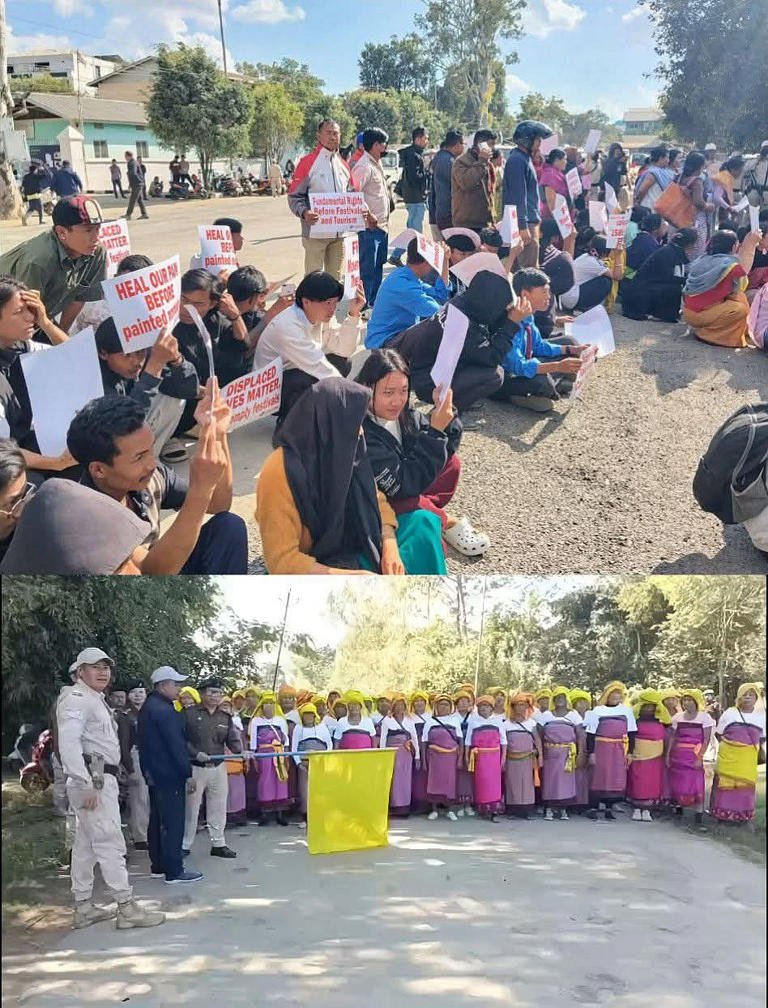
Manipur Sangai festival protest demonstrations intensified this week as groups opposed the state’s flagship tourism event amid ongoing ethnic conflict. The protest atmosphere turned tense in several areas as organisations argued that the current climate is unsuitable for large-scale celebrations. Moreover, the growing resentment reflects deep frustration among communities affected by months of instability and violence.
Read More: CM Manik Saha Urges Tribal Voters to Support BJP Ahead of ADC Election
Manipur Sangai Festival Protest Gains Momentum
The Manipur Sangai festival protest gained wider support after civil groups, student organisations, and local bodies opposed the state government’s decision to proceed with the festival. Protesters argued that hosting a vibrant tourism event feels insensitive while many families continue to face displacement, trauma, and insecurity.
Several groups announced that they cannot endorse festivities when conflict-hit communities remain unsettled. They stated that the festival sends an image of normalcy, which does not match the state’s ground reality. Additionally, spokespersons stressed that the government must prioritise peace-building, rehabilitation, and justice instead of promoting tourism.
Public gatherings, sit-ins, and symbolic demonstrations took place across districts. While most protests remained peaceful, tension increased when several groups attempted to block festival-related activities. Police teams were deployed to maintain control and prevent escalation.
Local Sentiment Turns Critical as Conflict Continues
The Manipur Sangai festival protest reveals deep emotional pressure among residents. Many protestors expressed frustration because they feel unheard. Families affected by the ethnic conflict continue to struggle for safety, livelihood, and stability. Therefore, they believe large celebrations contradict the suffering experienced daily by thousands of people.
Locals described the festival as a distraction. They argued that the government should focus on long-pending concerns such as compensation for affected families, restoration of damaged properties, and improved security. Furthermore, many questioned the timing of the event, saying that organising it now undermines trust between the administration and conflict-hit communities.
However, some residents held mixed views. A small section felt that the festival could boost local business and bring temporary economic activity. They noted that many small vendors rely on seasonal events for income. Even then, they acknowledged that the overall situation remains too fragile for celebrations on a large scale.
Government Stands Firm on Hosting the Festival
Despite rising tensions, the state government remains determined to continue the event. Officials stated that the Sangai Festival represents Manipur’s cultural identity, traditional heritage, and artistic strength. They argued that cancelling it may weaken the state’s tourism prospects and dampen public morale.
Government representatives also stressed that the festival could help project a message of resilience. They believe that continuing with such events supports social recovery. Additionally, they stated that the administration has planned cultural programmes, exhibitions, and community-oriented activities that can encourage unity.
Law enforcement agencies increased security around festival venues. Police units, rapid-response teams, and surveillance systems were deployed to maintain order. Furthermore, the government held coordination meetings with organisers, cultural groups, and district authorities to ensure that the event proceeds safely.
Manipur Sangai Festival Protest Reveals Bigger Concerns
The Manipur Sangai festival protest reflects deeper concerns that extend beyond the festival itself. Community leaders highlighted long-standing worries about unresolved grievances, mistrust between groups, and the slow pace of conflict-related recovery efforts. They called for greater transparency and consistent communication between authorities and affected communities.
Many participants in the protest argued that emotional healing takes time. They emphasised that peace cannot be built through celebrations alone. Instead, they requested inclusive dialogues, stronger support systems, and immediate relief for displaced families. These concerns show how cultural events intersect with unresolved trauma in conflict-affected societies.
Several organisations urged the state government to reconsider its approach. They said the festival could be held later, once the situation improves. Their appeal emphasised sensitivity toward people still coping with loss.
Manipur Sangai Festival Protest Marks a Turning Point
As the Manipur Sangai festival protest continues, the debate over the festival’s timing grows more intense. The state wants to showcase cultural resilience, while protestors want acknowledgment of ongoing pain. This clash highlights the complex balance between celebration and sensitivity during periods of unrest.
The situation also shows that public sentiment remains fragile. Stability requires careful decision-making and meaningful engagement with communities. Authorities now face the challenge of ensuring the festival proceeds without further heightening tensions.
The Manipur Sangai festival protest ultimately underscores the need for peace, empathy, and inclusive governance. Until the state resolves its deeper conflict-related challenges, tensions around public events are likely to continue.
Read More: Team India Reaches Guwahati for 2nd Test