

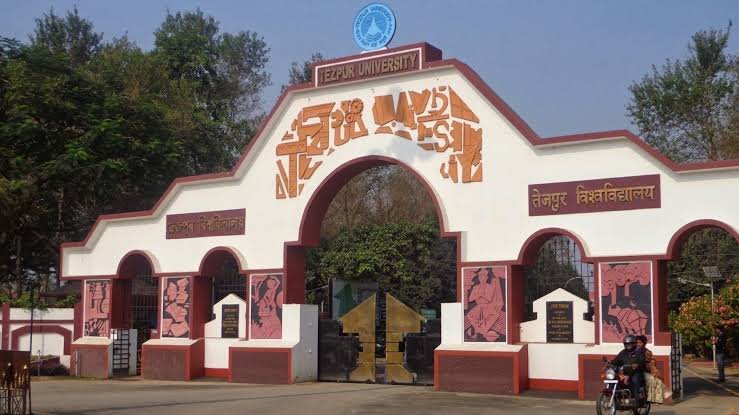
Tezpur University has been selected to host the Centre of Excellence for Studies in Classical Assamese. The Union Ministry of Education approved the centre as part of a wider initiative covering five classical languages. The Tezpur Classical Assamese Centre will focus on research, digitisation, preservation and wider dissemination of Assamese linguistic and literary heritage.
Sikkim Artists Win Ustad Bismillah Khan Yuva Puraskar 2024
Tezpur Classical Assamese Centre Gets Union Approval
The Ministry of Education approved five Centres of Excellence for Classical Assamese, Bengali, Marathi, Pali and Prakrit. The Department of Higher Education conveyed the decision through an Office Memorandum issued on October 1, 2026. The Ministry announced the approval publicly on October 3.
Tezpur University will host the centre dedicated to Classical Assamese. Meanwhile, Visva-Bharati University will lead the centre for Classical Bengali. Deccan College Post-Graduate and Research Institute in Pune will host the Classical Marathi centre. The Central University of Odisha will take up Classical Pali, while the Central University of Gujarat will host Classical Prakrit.
The Ministry said the five centres will create dedicated institutional support for advanced academic research. Furthermore, they will support preservation, digitisation and wider dissemination of linguistic and literary heritage. This approach places classical-language scholarship within specialised academic institutions rather than limiting it to individual research projects.
For Assam, the decision follows the Union Cabinet’s recognition of Assamese as a classical language in October 2024. That recognition created a broader institutional framework for studying the language’s historical, literary and linguistic traditions. The new centre at Tezpur University now adds a dedicated academic platform to that framework.
Why the Tezpur Classical Assamese Centre Matters
The new centre is expected to strengthen scholarship around the classical dimensions of Assamese language and literature. Its proposed areas include manuscript studies, textual criticism, archival preservation, translation, digitisation and research. Moreover, wider dissemination will help make scholarly material accessible beyond traditional archival settings.
Tezpur University already has substantial academic experience in Assamese studies. Its Centre for Assamese Studies was established in 2011. Over the years, the centre worked on Assamese language, literature and culture while developing resources for researchers and students.
One major initiative involved the digitisation of around 4,000 old Assamese manuscripts and printed books. The collection includes rare sanchi-paat manuscripts, early editions of literary works, personal diaries and handwritten manuscripts associated with prominent literary and cultural figures.
Additionally, the university’s Centre for Assamese Studies maintains a digital library containing selected Assamese publications and historical materials. Its holdings include works connected with Srimanta Sankaradeva, Madhavadeva, Madhava Kandali and other important figures in Assamese literary history. The collection also includes archival material, newspapers, periodicals and private papers.
The university established its Department of Assamese in 2019. It later integrated the facilities of the Centre for Assamese Studies. Consequently, the new Centre of Excellence can build on an existing academic structure instead of starting its Assamese research activities from scratch.
Research and Digitisation at Tezpur University
The Tezpur Classical Assamese Centre will provide an institutional platform for expanding research into Assamese’s classical heritage. This work can connect manuscript preservation with modern academic methods, including digital archiving, textual analysis and translation. Such integration can also support researchers studying older forms of the language and its literary traditions.
Digitisation will remain an important component of the initiative. Historical manuscripts can face challenges related to physical deterioration, limited accessibility and preservation requirements. Therefore, creating high-quality digital records can support long-term academic access while reducing the need for repeated handling of fragile materials.
Tezpur University’s existing manuscript resources provide a useful foundation for this work. The university has already developed experience in collecting, preserving and digitising Assamese material. The new centre can therefore consolidate these activities under a broader classical-language research framework.
Furthermore, textual criticism can help scholars examine older literary works, manuscripts and different versions of texts. Translation can then extend the reach of these materials to researchers and readers who may not understand Assamese. Together, these activities can strengthen both specialist scholarship and public access to Assam’s linguistic heritage.
The centre’s role will not be limited to preserving old documents. The Ministry’s framework also emphasises academic research and dissemination. As a result, the initiative could support seminars, scholarly publications, research projects and other academic activities connected with Classical Assamese, subject to the centre’s future programmes and institutional plans.
Classical Language Network Expands Across India
The Tezpur Classical Assamese Centre forms part of a national network involving five institutions and five classical languages. The Ministry of Education said the initiative aims to strengthen the institutional ecosystem for the study, research and preservation of India’s classical languages.
The decision also reflects the growing institutional attention given to classical-language scholarship. Assamese, Bengali, Marathi, Pali and Prakrit received classical-language status from the Union government in 2024. The category itself dates back to 2004, when Tamil became the first language to receive the designation. Sanskrit received the status in 2005.
For Assam, the selection of Tezpur University gives the state’s classical-language work a dedicated national-level academic platform. The university’s existing experience in manuscript studies and Assamese literature was an important institutional foundation for the new centre.
Assam Chief Minister Himanta Biswa Sarma welcomed the decision and described it as significant for Assamese people. He said the state government had pursued the establishment of a dedicated centre after Assamese received classical-language status. He also highlighted research, digitisation, preservation and dissemination as key areas of the initiative.
Tezpur University Pro Vice-Chancellor Prof Amarendra Kumar Das also welcomed the approval. He congratulated the university community and thanked the Ministry of Education for selecting the institution to host the Centre of Excellence for Studies in Classical Assamese.
Conclusion
The Tezpur Classical Assamese Centre gives Assam a dedicated institutional base for advanced research into its classical linguistic and literary heritage. More importantly, Tezpur University’s existing work with manuscripts, digitisation, Assamese literature and archival resources provides a strong foundation for the initiative.
The centre will operate within a wider national programme covering five classical languages. Therefore, its development will be relevant not only to Assamese studies but also to India’s broader effort to preserve and advance classical-language scholarship through specialised academic institutions.
FAQs
What is the Tezpur Classical Assamese Centre?
The Tezpur Classical Assamese Centre is the Centre of Excellence for Studies in Classical Assamese approved by the Union Ministry of Education at Tezpur University.
When was the centre approved?
The Ministry of Education conveyed the approval through an Office Memorandum issued on October 1, 2026, and announced the initiative publicly on October 3.
What will the Tezpur Classical Assamese Centre study?
The centre will focus on academic research, manuscript studies, textual criticism, digitisation, archival preservation, translation and dissemination related to Classical Assamese.
Why was Tezpur University selected?
Tezpur University has longstanding academic work in Assamese language, literature and culture. Its Centre for Assamese Studies has also undertaken digitisation of around 4,000 old Assamese manuscripts and printed books.
Which other classical-language centres were approved?
The Ministry approved centres for Classical Bengali at Visva-Bharati University, Classical Marathi at Deccan College in Pune, Classical Pali at the Central University of Odisha and Classical Prakrit at the Central University of Gujarat.