

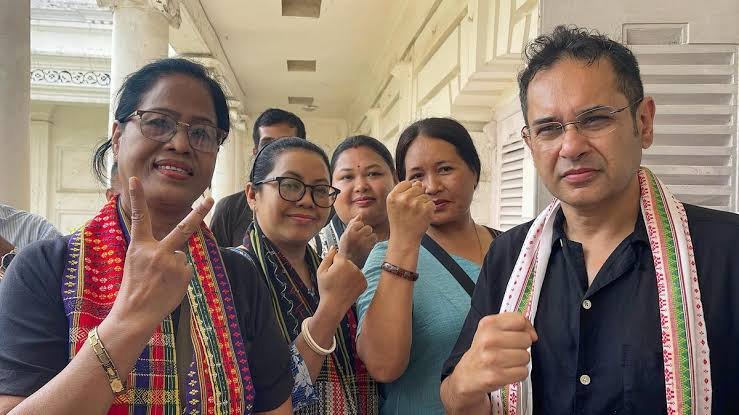
The Tipra Motha massive sweep in Tripura’s Village Committee elections has grown significantly after the completion of the nomination withdrawal process. Tipra Motha candidates secured 1,548 seats unopposed, while BJP candidates secured another 82 seats, leaving 1,630 of the total 4,597 seats without a contest. Polling for the remaining 2,967 seats will take place on September 28.
The latest figure is higher than the 1,148 seats reported before the September 11 withdrawal deadline. Therefore, the earlier 1,148 figure should be treated as the pre-withdrawal position rather than the final uncontested tally. The updated numbers provide a clearer picture of the electoral landscape before polling begins.
Loktak Lake Fishermen Schemes: Manipur Expands Support for Sustainable Floating Livelihoods
Tipra Motha Massive Sweep Expands After Withdrawal Process
The Tipra Motha massive sweep became more pronounced after candidates completed the withdrawal process on September 11. According to State Election Commission figures reported after the deadline, Tipra Motha secured 1,548 seats without a contest.
BJP candidates also secured 82 uncontested seats. Together, the two ruling allies accounted for 1,630 seats, representing more than 35% of the 4,597 seats scheduled for the Village Committee elections.
The development significantly changes the earlier picture. On September 10, reports indicated that Tipra Motha had 1,148 uncontested seats and BJP candidates had 31. However, further withdrawals changed the final number of seats that will not require polling.
A total of 1,069 candidates withdrew their nominations on September 11. The withdrawals involved candidates from several parties and the independent or unrecognised-party category. Consequently, the number of seats remaining for direct electoral contests fell substantially.
The final uncontested tally therefore provides a more accurate picture than the preliminary figures released before the withdrawal deadline. Moreover, it gives Tipra Motha a substantial early presence across the Village Committee system even before voters cast ballots in the contested seats.
1,548 Unopposed Seats Reshape Tripura Village Polls
The Tipra Motha massive sweep has produced a particularly strong showing across several blocks in Tripura’s tribal areas. Earlier figures already showed substantial uncontested victories in Jampuijala, Hezamara and Padmabil.
Jampuijala in Sepahijala district recorded 212 uncontested Tipra Motha victories in the earlier breakdown. Hezamara in West Tripura recorded 149, while Padmabil in Khowai recorded 104. These areas represented some of the party’s strongest concentrations before the final withdrawal process.
The earlier figures also showed 318 uncontested Tipra Motha seats across the listed blocks of Khowai, 263 in Sepahijala and 391 in West Tripura. Those numbers illustrated the party’s broad geographical presence before the final withdrawal figures became available.
However, the updated State Election Commission tally now places the party’s total uncontested seats at 1,548. Therefore, the final result should not be confused with the earlier 1,148 figure circulated before the withdrawal deadline.
The scale of the uncontested outcome means that more than one-third of all Village Committee seats have already been decided without polling when the Tipra Motha and BJP tallies are combined. As a result, the September 28 vote will focus only on the remaining 2,967 seats.
This situation also gives the ruling alliance an early numerical advantage in the local bodies. Nevertheless, the remaining contests will still determine a large share of the elected Village Committee representatives, so the overall political outcome cannot be determined solely from the uncontested seats.
BJP and Tipra Motha Alliance Shapes Electoral Contest
The Tipra Motha massive sweep has emerged alongside a broader electoral understanding between the BJP and Tipra Motha. The two parties had contested the 2026 TTAADC general elections separately, but they subsequently moved toward coordination for the Village Committee elections.
Senior leaders from both parties said they intended to avoid situations where their candidates competed against each other. The seat-sharing discussions therefore aimed to leave one alliance candidate in the field wherever both parties had initially submitted nominations.
However, the final candidate figures show that the arrangement was not implemented uniformly across every seat. After withdrawals, Tipra Motha had 2,731 candidates in the fray, while BJP had 1,853. CPI(M) had 2,151 candidates, followed by independents at 753, Congress at 425 and IPFT at 356.
The presence of candidates from both alliance partners in some remaining contests demonstrates that local-level coordination remained complicated. Moreover, the alliance leadership had acknowledged that limited time and communication challenges affected the implementation of the seat-sharing understanding.
Parliamentary Affairs Minister Ratan Lal Nath said the parties had reached an understanding in a large majority of cases and attributed some remaining differences to the limited time available for coordination. Tipra Motha leader Ranjit Debbarma also said the parties would work to resolve overlapping candidacies.
Meanwhile, opposition parties have raised allegations concerning the nomination process and political pressure. The BJP and Tipra Motha have rejected those allegations. These claims remain political allegations and should not be treated as established facts.
The final candidate distribution will therefore make the September 28 polling important not only for opposition parties but also for measuring how effectively the BJP-Tipra Motha understanding operates at the grassroots level.
September 28 Polling Will Decide Remaining Seats
The Tipra Motha massive sweep has settled a substantial portion of the Village Committee election before polling, but the September 28 contest remains significant. A total of 2,967 seats will still face voters after the withdrawal process.
The Village Committee elections cover 4,597 seats across 587 Village Committees under the Tripura Tribal Areas Autonomous District Council. The elections are being held after a prolonged gap, making them an important grassroots political exercise.
The uncontested results have already provided Tipra Motha with a considerable numerical position. Nevertheless, the remaining contests will determine how the party performs in seats where voters still have multiple candidates to choose from.
The BJP will also attempt to consolidate its position through the alliance arrangement. At the same time, CPI(M), Congress, IPFT and independent candidates remain in the contest across different areas.
Furthermore, the election will offer a clearer indication of grassroots support after the 2026 TTAADC general election. Tipra Motha’s performance in those elections had already established the party as a major political force in the tribal council areas.
However, uncontested victories and contested electoral victories carry different political meanings. An uncontested seat reflects the absence of a remaining rival candidate, while a contested result directly reflects voter choice on polling day.
Therefore, the September 28 results will remain important for understanding the broader political balance across Tripura’s tribal areas. Counting is scheduled for October 5, with the overall election process expected to conclude by October 8.
The final results could also influence future political negotiations, particularly as parties prepare for subsequent electoral contests in the state. Consequently, the Village Committee elections have significance beyond local administration.
Conclusion
The Tipra Motha massive sweep has expanded from the earlier reported 1,148 uncontested seats to a final tally of 1,548 after the September 11 nomination withdrawal process. The BJP also secured 82 seats unopposed, taking the ruling alliance’s combined uncontested total to 1,630 out of 4,597 seats.
The updated figures mean that more than 35% of Village Committee seats will not see polling. Meanwhile, voters will choose representatives for the remaining 2,967 seats on September 28.
The development gives Tipra Motha a substantial early advantage in the local electoral landscape. However, the final political picture will depend on the contested seats and the results of the October 5 counting process.
The large number of uncontested victories also highlights the importance of the BJP-Tipra Motha alliance and its evolving grassroots coordination. Therefore, the remaining contests will be closely watched as an indicator of political strength across Tripura’s tribal areas.
FAQs
How many Village Committee seats did Tipra Motha win unopposed?
Tipra Motha candidates secured 1,548 seats unopposed after the completion of the September 11 nomination withdrawal process.
Was the earlier figure of 1,148 seats correct?
Yes, but it represented the position before the final withdrawal process. After further withdrawals on September 11, the uncontested Tipra Motha tally increased to 1,548.
How many seats will still go to polling?
Polling will take place for 2,967 of the 4,597 seats on September 28, according to the updated election figures.
How many seats did the BJP win unopposed?
The BJP secured 82 seats unopposed after the completion of the withdrawal process.
What does the Tipra Motha massive sweep mean for the Village Committee elections?
It gives Tipra Motha a substantial early numerical advantage, but the overall electoral outcome will still depend on the 2,967 seats that remain contested on September 28.