


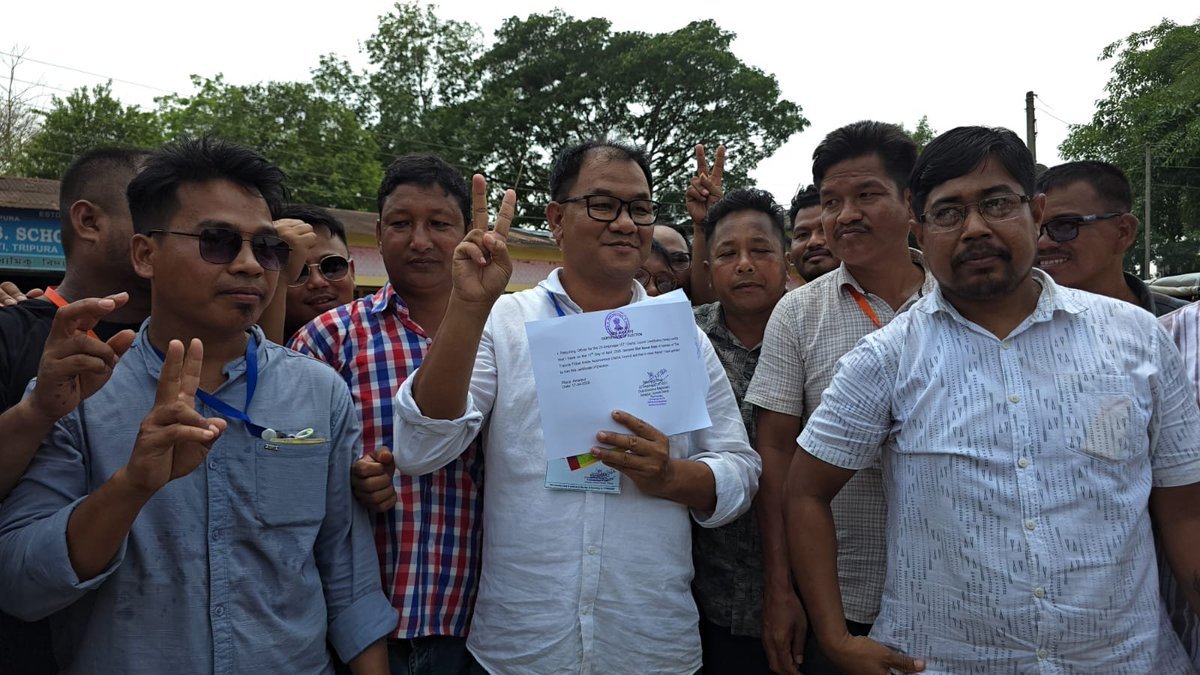
Tripura’s political landscape witnessed a major shift as Tipra Motha TTAADC Victory became the defining outcome of the latest Tripura Tribal Areas Autonomous District Council elections. The regional political force secured a commanding mandate by winning 20 out of 28 seats, reinforcing its influence across indigenous communities and expanding its political footprint in the state. The election result reflected strong voter engagement in tribal areas and highlighted the growing importance of regional identity-driven politics. Political observers described the outcome as a significant moment that may shape future governance, policy priorities, and electoral strategies in Tripura.
Tipra Motha Illegal Immigration Crackdown
Tripura Eviction Policy Debate Intensifies
Background
The Tripura Tribal Areas Autonomous District Council has remained a critical institution for tribal administration and local governance in the state. Established to safeguard the interests of indigenous communities, the council oversees development planning, local administration, and welfare initiatives across notified tribal regions. Over the years, elections to the council have carried substantial political significance because they often indicate public sentiment among tribal populations.
The emergence of regional political movements in Tripura has reshaped electoral competition and governance debates. Indigenous representation, cultural identity, land concerns, and development policies have become central issues in local elections. In recent years, political organizations focusing on tribal aspirations gained wider support and strengthened their grassroots presence across several districts.
Current Update
The latest election delivered a decisive outcome, with Tipra Motha TTAADC Victory becoming the central political development in Tripura. The party secured 20 seats out of the 28 contested seats and established a clear majority within the autonomous council. The result marked one of the strongest performances by a regional tribal-focused political force in recent years.
Political analysts interpreted the outcome as evidence of sustained public support among indigenous voters. The scale of the victory also demonstrated effective organizational outreach and campaign execution across multiple constituencies. Supporters celebrated the result as an endorsement of the party’s political agenda, while rival groups acknowledged the significance of the mandate.
Election observers noted that turnout patterns and constituency-level trends suggested strong consolidation of support in key tribal regions. The outcome further reinforced the importance of local governance institutions in influencing broader state politics.
Key Details
The election result showed that regional political narratives continued to resonate strongly with voters. During the campaign period, discussions focused on governance efficiency, tribal development, economic opportunities, infrastructure, and institutional representation. These themes remained central to public engagement throughout the electoral process.
The scale of Tipra Motha TTAADC Victory provided the party with greater administrative leverage within the council structure. A clear majority enables stronger decision-making authority and may allow smoother implementation of council initiatives and development proposals.
Political experts observed that the result may influence future electoral alignments in Tripura. Regional parties often use local institutional victories to strengthen wider political ambitions, build organizational capacity, and deepen public outreach.
At the same time, governance expectations are expected to rise following such a decisive mandate. Residents and community stakeholders are likely to monitor policy implementation, service delivery, and development outcomes more closely in the coming months.
Impact and Public Significance
The election outcome carries broader implications beyond the council itself. Autonomous district councils play an important role in connecting local priorities with administrative decision-making and resource allocation. As a result, electoral shifts at this level often influence state-level political calculations.
For indigenous communities, the result represents an opportunity to push for greater attention to local concerns and development priorities. Public discussions may increasingly focus on infrastructure expansion, employment generation, education access, and cultural preservation.
The strong electoral mandate also places greater responsibility on elected representatives to deliver measurable outcomes. The significance of Tipra Motha TTAADC Victory now extends beyond electoral success and into expectations surrounding governance performance and institutional accountability.
Political observers believe the result may encourage increased civic participation and strengthen public interest in regional policy issues. The council’s future decisions could become closely watched across Tripura’s broader political environment.
What Happens Next
Following the election, attention will shift toward council formation, leadership decisions, and governance priorities. Administrative planning and policy direction are expected to become immediate focus areas as the new council structure takes shape.
Observers expect discussions around development programs, budget allocation, local administration, and community engagement to intensify. The council’s leadership will likely face pressure to translate electoral support into visible outcomes.
The post-election phase may also influence future political positioning across Tripura. Regional and state-level actors are expected to evaluate the implications of the result and adapt their outreach strategies accordingly. The coming months will reveal how effectively the council converts electoral momentum into long-term governance outcomes.
Conclusion
The TTAADC election result marks a major political moment for Tripura’s tribal governance landscape. With a commanding majority in the autonomous council, Tipra Motha TTAADC Victory reflects changing political dynamics and growing regional influence. The result highlights the importance of local institutions in shaping public priorities and places renewed attention on governance, development delivery, and indigenous representation. Future performance inside the council will likely determine how this electoral success translates into lasting political impact.
FAQs
1. What is the TTAADC?
The Tripura Tribal Areas Autonomous District Council is a local self-governance institution that administers notified tribal areas in Tripura.
2. How many seats did Tipra Motha win?
The party secured 20 out of 28 seats in the election.
3. Why is this election important?
The result influences governance, development planning, and political representation in tribal regions.
4. What does Tipra Motha TTAADC Victory indicate?
It suggests strong public support for the party’s agenda and growing influence among indigenous voters.
5. What issues shaped the election campaign?
Development, representation, governance, local priorities, and community concerns were among the major themes.
6. What happens after the election results?
The council formation process begins, followed by leadership selection and policy implementation.