

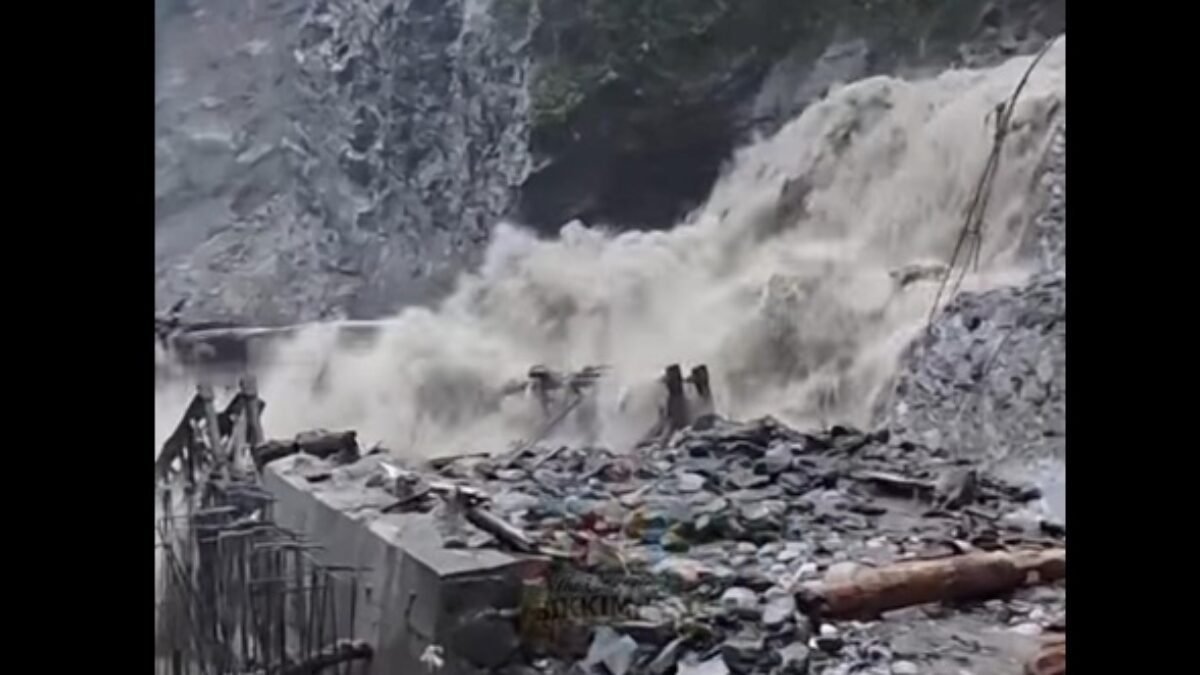
Continuous torrential rainfall in North Sikkim has caused the collapse of the strategic Bailey bridge over the Phee Khola at Phidang, completely severing road connectivity to the Dzongu region. The destruction of the crucial transport link has disrupted the movement of residents, essential supplies, and emergency services, leaving the remote area isolated from the rest of the state. Moreover, authorities have initiated emergency assessments and contingency planning measures to address the growing challenges posed by the ongoing monsoon conditions and infrastructure damage.
Blinkit Blocked In Meghalaya Licensing Row
Torrential Rains Destroy Critical Bailey Bridge
Persistent heavy rainfall and flash flood conditions led to the collapse of the Bailey bridge spanning the Phee Khola at Phidang, a vital transportation link connecting the Dzongu region with other parts of North Sikkim. Consequently, road access to the region has been completely disrupted.
According to officials, intense water flow and continuous rainfall severely weakened the bridge structure before it was ultimately washed away. Moreover, the bridge played a crucial role in facilitating transportation, emergency response operations, and the delivery of essential commodities. Therefore, its destruction has created significant logistical and humanitarian concerns.
Authorities have begun conducting preliminary assessments to determine the extent of the damage and evaluate possible restoration options. Furthermore, engineering and disaster management teams have been mobilized to assess the situation on the ground. As a result, emergency response planning has intensified.
Meanwhile, local administrations continue to monitor weather conditions and infrastructure vulnerabilities. Consequently, additional precautionary measures remain under consideration.
Dzongu Region Completely Cut Off from Road Connectivity
The destruction of the bridge has effectively isolated the Dzongu region, creating major challenges for transportation, communication, and access to essential services. Moreover, the mountainous terrain and limited transportation infrastructure have complicated response efforts. Therefore, authorities are prioritizing emergency coordination.
Officials noted that disruptions to road connectivity may affect the transportation of food supplies, medical assistance, and essential services to affected communities. Consequently, administrative authorities have begun evaluating alternative arrangements and emergency response mechanisms. Such interventions remain critical during periods of isolation.
Furthermore, authorities emphasized the importance of maintaining communication channels with affected areas to ensure effective coordination. As a result, emergency management agencies continue to assess available resources and logistical requirements.
Meanwhile, residents have been advised to remain cautious and cooperate with local authorities. Similarly, emergency preparedness efforts remain active.
Emergency Assessments and Restoration Planning Underway
Government agencies and disaster management authorities have initiated detailed assessments of the damaged infrastructure and surrounding areas. Moreover, restoring connectivity to the Dzongu region has become an immediate priority. Therefore, technical teams are expected to evaluate both temporary and long-term solutions.
Officials stated that rebuilding infrastructure in mountainous regions requires careful engineering assessments and safety considerations. Consequently, authorities continue to examine possible restoration strategies while monitoring ongoing weather conditions. Such evaluations remain essential for ensuring safe reconstruction.
Furthermore, emergency response teams remain prepared to address additional weather-related incidents if necessary. As a result, coordination among various departments has intensified.
Meanwhile, local administrations continue to gather information regarding the broader impact of the disruption. Similarly, disaster response agencies remain on alert.
Extreme Weather Highlights Infrastructure Challenges
The collapse of the Bailey bridge highlights the growing challenges posed by extreme weather events and the vulnerability of critical infrastructure in mountainous regions. Moreover, heavy rainfall, flash floods, and landslides continue to threaten transportation networks across the Himalayan region. Therefore, infrastructure resilience and disaster preparedness remain increasingly important.
Experts have emphasized the need for stronger infrastructure planning, enhanced monitoring systems, and improved disaster mitigation measures. Consequently, authorities continue to prioritize long-term resilience strategies. Such investments contribute to reducing future disaster risks.
Furthermore, climate-related weather extremes have intensified discussions regarding sustainable infrastructure development and emergency preparedness. As a result, policymakers and disaster management agencies continue to review mitigation strategies.
Meanwhile, emergency assessments and recovery planning efforts remain ongoing. Similarly, authorities remain focused on restoring connectivity and ensuring public safety.
Conclusion
The destruction of the strategic Bailey bridge over the Phee Khola at Phidang has left the Dzongu region of North Sikkim completely isolated, underscoring the severe impact of ongoing monsoon conditions. Moreover, the incident highlights the vulnerability of critical infrastructure in remote mountainous areas.
The disruption reinforces the importance of disaster preparedness, resilient infrastructure, and coordinated emergency response systems. Therefore, restoration efforts and emergency planning remain top priorities for authorities.
As assessments and recovery operations continue, ensuring the safety of affected communities and restoring essential connectivity remain the immediate focus.
FAQs
1. What caused the isolation of the Dzongu region?
Continuous torrential rains and flash floods destroyed the Bailey bridge over the Phee Khola at Phidang.
2. Which region has been affected?
The Dzongu region in North Sikkim has been completely cut off.
3. Why was the Bailey bridge important?
The bridge served as a crucial transportation and connectivity link for the region.
4. What actions have authorities taken?
Authorities have initiated damage assessments, emergency planning, and restoration evaluations.
5. What broader issue does the incident highlight?
The incident underscores the vulnerability of mountain infrastructure to extreme weather events.