

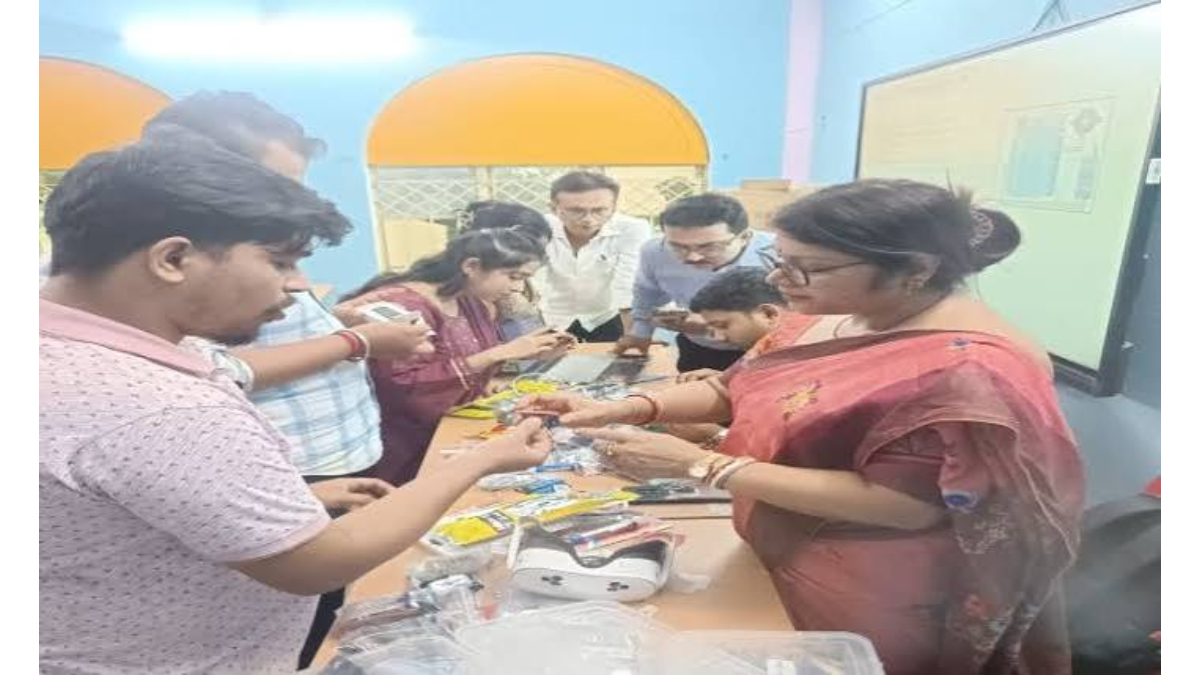
Tripura robotics labs are set to become a major milestone in the state’s education sector as the Tripura government prepares to introduce robotics and Virtual Reality (VR) laboratories in Vidyajyoti schools under the Samagra Shiksha programme. The initiative aims to equip students with practical exposure to emerging technologies while strengthening science, technology, engineering, and mathematics (STEM) education. By integrating robotics and immersive digital learning tools into classrooms, the government hopes to prepare students for future careers driven by innovation and technology.
The move reflects Tripura’s growing emphasis on modernising school education and ensuring that students in government schools have access to the same advanced learning opportunities as their peers elsewhere in the country. Officials believe the project will significantly improve digital literacy, problem-solving abilities, and creativity among students.
Tripura robotics labs to strengthen STEM education
The introduction of Tripura robotics labs forms part of the state’s broader efforts to improve the quality of education through the centrally sponsored Samagra Shiksha scheme. The programme focuses on providing equitable and inclusive education while promoting digital infrastructure and innovative teaching methods.
Under the new initiative, selected Vidyajyoti schools will receive dedicated robotics laboratories equipped with educational robotics kits, programmable devices, sensors, and coding tools. Students will be encouraged to design, build, and programme robots through hands-on learning experiences rather than relying solely on textbook-based instruction.
The robotics labs are expected to enhance students’ understanding of coding, automation, artificial intelligence, and engineering concepts from an early stage.
VR laboratories to make classrooms more interactive
Along with robotics, the government will establish Virtual Reality (VR) laboratories in Vidyajyoti schools to transform the learning experience. VR technology enables students to explore complex subjects through immersive simulations that make learning more engaging and easier to understand.
Through VR, students can virtually visit historical monuments, explore scientific phenomena, study human anatomy, or experience space exploration without leaving the classroom. Such interactive lessons are expected to improve conceptual understanding and increase classroom participation.
Education officials believe the combination of robotics and VR will make government schools more technology-driven and aligned with the National Education Policy (NEP) 2020, which encourages experiential and competency-based learning.
How Tripura robotics labs will benefit students
The introduction of Tripura robotics labs is expected to provide several long-term educational benefits. Students will gain practical exposure to coding, logical thinking, teamwork, and innovation while developing critical 21st-century skills.
Hands-on robotics education encourages learners to solve real-world problems by designing prototypes, testing solutions, and refining their ideas. These activities help improve analytical thinking, creativity, and confidence.
The VR laboratories will complement these efforts by making difficult academic concepts more accessible through visual and interactive experiences. Teachers will also receive opportunities to adopt modern teaching practices using digital technologies.
The initiative is particularly significant for students studying in government schools, where access to advanced technological resources has traditionally been limited.
Samagra Shiksha continues to modernise education
The robotics and VR laboratory project is being implemented under Samagra Shiksha, the flagship education programme aimed at improving school infrastructure, digital learning, teacher capacity building, and student outcomes across India.
Tripura has been steadily expanding its educational reforms by upgrading school facilities, introducing smart classrooms, and improving access to digital education. The addition of robotics and VR labs represents another important step in building future-ready schools.
Officials have indicated that the project will be rolled out in Vidyajyoti schools, which have already been developed as model institutions with improved academic standards and infrastructure.
The initiative also complements the state’s efforts to bridge the digital divide and create equal learning opportunities for students from diverse socio-economic backgrounds.
Preparing students for future careers
Technology-driven education has become increasingly important as industries adopt automation, artificial intelligence, robotics, and digital solutions. By introducing students to these technologies during their school years, Tripura aims to create a strong foundation for future careers in engineering, information technology, research, manufacturing, and innovation.
Experts believe early exposure to robotics encourages curiosity and develops computational thinking skills that remain valuable across multiple professions. Similarly, VR-based learning can improve retention, collaboration, and engagement in classrooms.
Teachers are expected to receive specialised training to effectively integrate robotics and VR into regular classroom activities, ensuring that students fully benefit from the new facilities.
A significant step for Tripura’s education sector
The decision to introduce robotics and VR laboratories demonstrates the state’s commitment to providing high-quality education that matches global learning trends. As technology continues to reshape industries, preparing students with practical digital skills has become essential.
The rollout of Tripura robotics labs in Vidyajyoti schools under Samagra Shiksha is expected to create a more engaging, innovative, and future-oriented educational environment. With advanced infrastructure, interactive learning methods, and improved STEM education, the initiative has the potential to inspire students to pursue careers in science and technology while strengthening Tripura’s overall education ecosystem.