


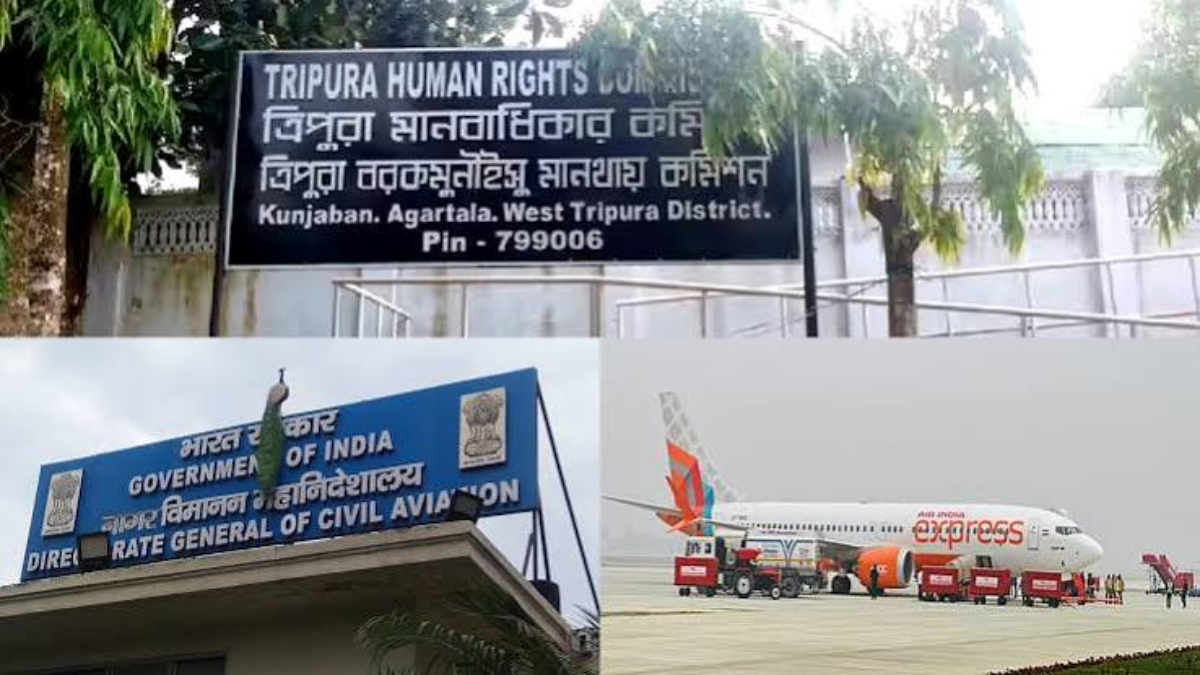
Tripura Human Rights Commission has taken a significant step by issuing notices to Air India Express and the Directorate General of Civil Aviation (DGCA) over a complaint filed by a pilot alleging workplace harassment and violations of fundamental rights. The development has drawn attention to employee welfare in the aviation sector and the accountability of airlines and regulatory authorities in addressing grievances.
The Tripura Human Rights Commission (THRC) has sought detailed responses from both Air India Express and the DGCA after taking cognisance of the complaint. The case has sparked discussions on workplace ethics, fair treatment of employees, and the mechanisms available for aviation professionals to seek justice.
Tripura Human Rights Commission Issues Notices
The Tripura Human Rights Commission issued formal notices to Air India Express and the DGCA following a petition submitted by a pilot who alleged harassment, victimisation, and denial of fair treatment during employment. The commission reportedly found the allegations serious enough to warrant an official inquiry.
According to the order, both Air India Express and the aviation regulator have been directed to submit their responses within the stipulated timeframe. The commission wants clarification on the actions taken regarding the pilot’s complaint and whether established procedures were followed while handling the matter.
The move reflects the commission’s commitment to ensuring that allegations involving possible human rights violations receive due consideration, regardless of the sector involved.
Background of the Pilot’s Complaint
The case revolves around a pilot employed with Air India Express who approached the commission claiming that the airline subjected them to unfair treatment. The complaint reportedly includes allegations of workplace harassment, intimidation, and procedural lapses in addressing grievances.
The petitioner also questioned whether the DGCA adequately discharged its responsibility in overseeing the matter after representations were made to the aviation regulator.
The complaint prompted the THRC to examine whether the issues raised involve violations of the complainant’s fundamental rights and principles of natural justice.
Allegations Raised Before the Commission
The pilot’s petition reportedly highlights several concerns, including:
- Alleged workplace harassment.
- Claims of discrimination and victimisation.
- Lack of an effective grievance redressal process.
- Alleged inaction by the DGCA despite receiving complaints.
At this stage, these remain allegations, and the commission has not reached any final findings. The notices issued are part of the preliminary inquiry process aimed at gathering facts from all concerned parties.
Role of Air India Express and DGCA
Air India Express, one of India’s major low-cost airlines, has been asked to explain its handling of the pilot’s grievance. The airline is expected to provide relevant records, internal communications, and details of any inquiry conducted regarding the allegations.
Meanwhile, the DGCA has also been directed to clarify its role after receiving representations from the complainant. As India’s aviation safety regulator, the DGCA is responsible for ensuring compliance with aviation regulations and maintaining oversight over airlines operating in the country.
The commission’s notices seek to determine whether the regulatory framework was properly followed in addressing the pilot’s concerns.
Tripura Human Rights Commission Expands Scope of Inquiry
The Tripura Human Rights Commission has indicated that its inquiry will focus on whether the complainant’s rights were compromised during the course of employment and whether the institutions involved fulfilled their legal and administrative responsibilities.
Human rights commissions are empowered to investigate complaints involving alleged violations of human rights by public authorities or matters where public institutions are expected to ensure accountability. While airlines operate as commercial entities, issues involving regulatory oversight can fall within the commission’s broader examination.
The commission is expected to review submissions from both Air India Express and the DGCA before deciding on the next course of action.
Critical Assam Flood Situation: Death Toll Climbs to 47 as Over 7.21 Lakh People Affected
Why the Case Matters
The case has broader implications beyond the individual complaint. Aviation professionals often work in highly regulated environments where safety, discipline, and operational efficiency are paramount. At the same time, employees are entitled to fair treatment, transparent disciplinary procedures, and protection from harassment.
The inquiry could highlight the importance of robust grievance redressal mechanisms within airlines and reinforce the responsibility of regulators to respond promptly to complaints raised by aviation personnel.
Legal experts note that the outcome may also influence future discussions on employee rights within India’s rapidly growing aviation industry.
What Happens Next?
Following the issuance of notices, Air India Express and the DGCA are expected to file their replies before the commission within the prescribed period. After examining the responses and any supporting documents, the THRC may conduct further hearings if required.
Depending on its findings, the commission can issue recommendations or seek additional information before arriving at its final observations. Since the matter remains under consideration, no conclusions have yet been drawn regarding the allegations made by the pilot.
The case will continue to be closely watched by the aviation industry, legal observers, and employee rights advocates as the inquiry progresses. The proceedings underscore the importance of transparency, accountability, and adherence to due process whenever workplace disputes involving human rights concerns arise.