

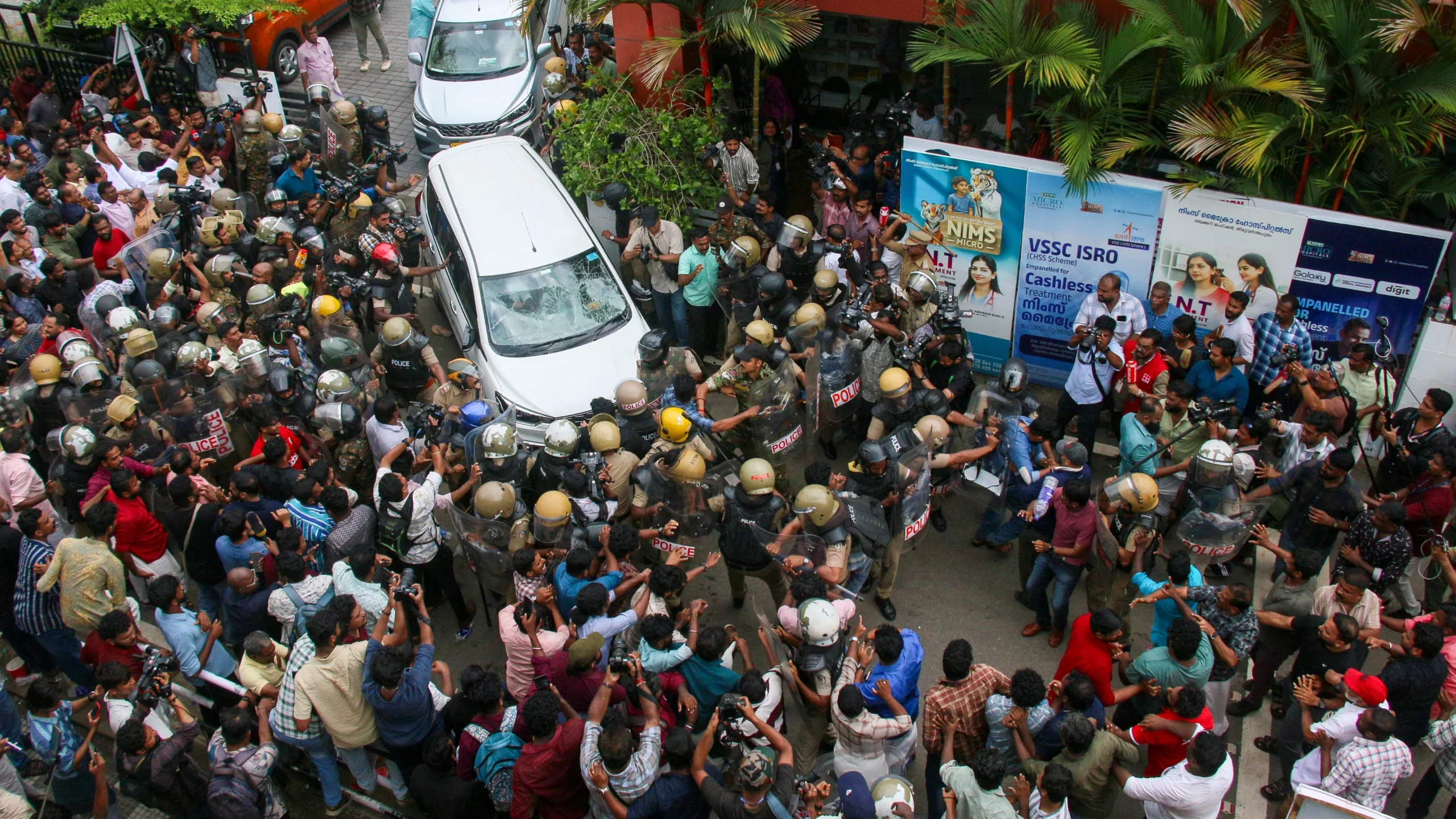
The Tripura Political Tensions Rise situation came into focus after a confrontation broke out between workers of the Bharatiya Janata Party (BJP) and the Tipra Motha Party in Poangbari village under Karbuk block. The dispute reportedly began when Tipra Motha supporters attempted to submit a welfare-related deputation to the Panchayat Secretary. BJP workers objected to the move, leading to heightened tensions and a standoff between members of the two political groups. The situation drew the attention of local authorities, and police personnel eventually intervened to prevent further escalation and restore order. The incident has sparked discussions regarding political rivalry and local governance issues in the region.
Meghalaya Employees Hunger Strike Continues
Nitin Gadkari Announces Major Connectivity Push Across Northeastern States
Dispute Emerges Over Welfare Deputation
The Tripura Political Tensions Rise episode unfolded when Tipra Motha Party workers reportedly sought to submit a welfare deputation to the Panchayat Secretary in Poangbari village. According to accounts from the area, the initiative was intended to raise concerns and demands linked to local welfare matters.
However, the move was met with objections from BJP workers present in the locality. The disagreement quickly developed into a tense political confrontation, drawing supporters from both sides and creating an atmosphere of uncertainty. Witnesses reported heated exchanges as members of the rival political groups defended their respective positions.
Political deputations are a common method used by parties and community groups to communicate concerns to local administrative authorities. Nevertheless, disputes may arise when differing political interests intersect in highly competitive local environments. The incident at Poangbari illustrates how local governance issues can become focal points for broader political disagreements.
As tensions increased, concerns grew about the possibility of further escalation. Local residents closely monitored developments while authorities assessed the situation to ensure public order was maintained.
The confrontation highlighted the intensity of political competition in certain areas where multiple parties actively engage with local administrative processes.
BJP and Tipra Motha Workers Face Off
The confrontation that led to the Tripura Political Tensions Rise situation involved supporters of both the BJP and the Tipra Motha Party. Political rivalry between parties often becomes more visible when local issues attract significant public attention and participation.
According to reports, the disagreement centered on the circumstances surrounding the proposed submission of the deputation. As objections were raised, tensions reportedly intensified, leading to a face-off between workers from the two organizations. The gathering attracted attention from residents and local stakeholders concerned about maintaining peace.
Political analysts note that local-level disputes can sometimes reflect broader competitive dynamics between parties seeking to strengthen their influence among voters and community groups. Consequently, seemingly routine administrative interactions may occasionally become politically sensitive.
The incident demonstrates the importance of effective communication and conflict management during politically charged situations. Maintaining peaceful engagement remains essential for ensuring that public concerns can be addressed through democratic and administrative channels.
Despite the confrontation, no major escalation was reported following the arrival of law enforcement personnel at the scene.
Police Intervention Helps Restore Calm
As the Tripura Political Tensions Rise situation developed, police authorities intervened to prevent the dispute from escalating further. Law enforcement personnel arrived at the location and took steps to separate the opposing groups while encouraging restraint.
Police intervention is often critical in situations involving political confrontations because it helps maintain public order and reduce the risk of violence. Authorities are tasked with ensuring that disagreements remain peaceful and that administrative activities can continue without disruption.
Officials reportedly engaged with representatives from both sides in an effort to de-escalate tensions. Their presence helped stabilize the situation and restore normalcy in the area. Residents welcomed the restoration of calm, emphasizing the importance of peaceful resolution mechanisms during periods of political disagreement.
Law enforcement agencies frequently play a neutral role in managing public gatherings and disputes, particularly when rival groups are involved. Their objective is to ensure that all parties can express their views within the framework of the law.
The prompt response by police personnel contributed significantly to preventing further disturbances and maintaining peace in the village.
Local Governance and Political Competition
The incident in Poangbari has drawn attention to the relationship between local governance processes and political competition. Community issues, welfare initiatives, and administrative interactions often become important points of engagement for political organizations seeking to represent public concerns.
The Tripura Political Tensions Rise development highlights how local administrative matters can occasionally become politically contested. While democratic systems encourage participation and advocacy, maintaining constructive dialogue remains essential for preventing disagreements from escalating into confrontations.
Experts note that political parties play an important role in communicating citizen concerns to authorities. At the same time, cooperation and adherence to democratic norms are necessary to ensure that governance processes function effectively and peacefully.
The event has also underscored the importance of institutional mechanisms capable of addressing disputes through dialogue rather than confrontation. Strong communication between political stakeholders and administrative authorities can help reduce misunderstandings and promote more productive engagement.
As political activity continues across the region, observers stress the value of peaceful participation, mutual respect, and adherence to lawful processes in addressing public issues.
The Tripura Political Tensions Rise incident in Poangbari village reflects the challenges that can emerge when political rivalry intersects with local governance matters. The confrontation between BJP and Tipra Motha Party workers over a welfare deputation created a tense situation that required police intervention to restore order. While the dispute highlighted competing political perspectives, the peaceful resolution of the immediate confrontation helped prevent further escalation. The development serves as a reminder of the importance of dialogue, democratic engagement, and effective conflict management in maintaining harmony while addressing public concerns through established administrative channels.
Q1. Where did the political confrontation occur?
The incident took place in Poangbari village under Karbuk block in Tripura.
Q2. Which political parties were involved?
Workers of the BJP and the Tipra Motha Party were involved in the confrontation.
Q3. What triggered the dispute?
The disagreement reportedly began over the submission of a welfare deputation to the Panchayat Secretary.
Q4. What does Tripura Political Tensions Rise refer to?
It refers to the political confrontation between rival party workers in Poangbari village.
Q5. How was the situation brought under control?
Police intervened, engaged with both sides, and helped restore peace in the area.
Q6. Why is the incident significant?
It highlights the interaction between political competition, local governance, and public order.