


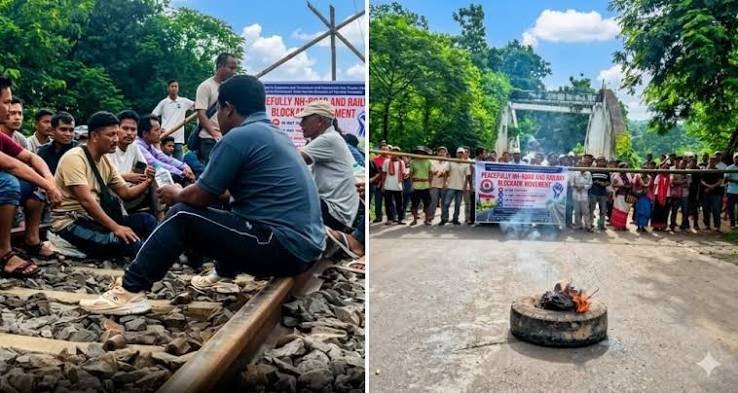
The Tripura Rehabilitation Blockade Withdrawal came on the second day of a planned 72-hour rail and road agitation by members of the All Returnees’ Rehabilitation Committee. The protesters ended the blockade after state officials gave assurances regarding time-bound implementation of rehabilitation packages. Moreover, the agitation had disrupted rail movement at Brigudasbari and affected highways in West Tripura. The early withdrawal has brought relief to transport and railway operations while shifting attention toward the government’s promised rehabilitation measures.
FM Sitharaman Asks Banks to Boost Financial Literacy for MUDRA Beneficiaries
Tripura Rehabilitation Blockade Withdrawal Follows Official Assurances
Members of the All Returnees’ Rehabilitation Committee had launched a 72-hour rail and road blockade over delays concerning rehabilitation packages.
However, the protesters called off the agitation on its second day after receiving assurances from state officials.
The government’s commitment to a time-bound approach played an important role in ending the blockade.
Furthermore, the development highlights the role of dialogue between authorities and groups seeking implementation of rehabilitation commitments.
The Tripura Rehabilitation Blockade Withdrawal therefore ended the immediate disruption while creating expectations that officials will follow through on their assurances.
Moreover, the decision to withdraw the protest before the scheduled 72-hour period indicates that the protesters considered the assurances sufficient to suspend the agitation.
Tripura Rehabilitation Blockade Withdrawal Eases Rail Disruptions
The blockade had affected railway operations at Brigudasbari, creating disruption for passengers and railway services.
Rail connectivity plays an important role in Tripura because it links the state with other parts of the region and the country.
Therefore, any prolonged disruption can affect commuters, businesses and other travellers.
Meanwhile, the withdrawal of the blockade allows railway operations to return toward normal conditions.
Additionally, ending the protest early can reduce the wider impact on passengers who depend on rail services for regular travel.
The Tripura Rehabilitation Blockade Withdrawal consequently removes an immediate obstacle to rail movement while the government works on the concerns raised by the protesters.
Tripura Rehabilitation Blockade Withdrawal Ends Highway Disruption
The agitation also disrupted highways in West Tripura as protesters sought attention for their rehabilitation-related demands.
Road connectivity remains essential for the movement of people, goods and essential services across the state.
Furthermore, prolonged highway blockades can create difficulties for commuters and commercial transport operators.
The decision to withdraw the protest therefore provides immediate relief to road users in affected areas.
However, the underlying rehabilitation concerns remain important for the protesters and their families.
Consequently, the government’s assurances will face attention in the coming period as stakeholders expect progress on the promised packages.
Tripura Rehabilitation Blockade Withdrawal Puts Focus on Rehabilitation
The end of the blockade shifts the focus from transportation disruption toward implementation of rehabilitation commitments.
The All Returnees’ Rehabilitation Committee had used the agitation to press authorities over delayed packages.
Moreover, time-bound assurances can help create a clearer framework for addressing the concerns raised by returnees.
Authorities will now need to maintain communication with the committee and provide progress on the commitments made during discussions.
Furthermore, timely implementation could prevent similar disruptions and strengthen confidence among the affected groups.
The Tripura Rehabilitation Blockade Withdrawal has therefore ended the immediate confrontation, but the next stage will depend on how effectively authorities implement the assurances given to the protesters.
Conclusion
The Tripura Rehabilitation Blockade Withdrawal ended the planned 72-hour rail and road agitation on its second day after state officials assured protesters of time-bound rehabilitation packages. The blockade had disrupted railway movement at Brigudasbari and affected highways in West Tripura. Moreover, the early resolution restores transport activity while placing responsibility on authorities to deliver the rehabilitation measures promised during negotiations.
FAQs
1. Why did the protesters call off the blockade?
The All Returnees’ Rehabilitation Committee withdrew the agitation after state officials provided assurances regarding time-bound rehabilitation packages.
2. How long was the blockade originally planned to last?
The protesters had announced a 72-hour rail and road blockade.
3. Where did the rail disruption occur?
The agitation disrupted rail movement at Brigudasbari.
4. Which area experienced highway disruption?
Highways in West Tripura experienced disruption during the agitation.
5. What happens after the Tripura Rehabilitation Blockade Withdrawal?
Attention will now focus on whether authorities implement the promised rehabilitation packages within the assured timeframe.