

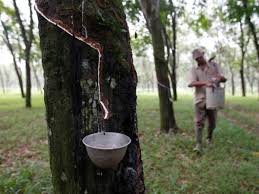
Tripura has adopted a tech-driven rubber plantation management system to improve the quality and productivity of rubber sheets for export markets. The initiative focuses on integrating digital monitoring, scientific tapping methods, and data-based plantation management. Moreover, officials stated that the move aims to enhance consistency in rubber output and strengthen the state’s position in the natural rubber sector. The development reflects a shift toward modern agricultural practices in Tripura’s plantation economy.
Assam State Disaster Management Authority Activates 24/7 Emergency Control Rooms Across 28 Districts
Red Alert Across Assam, Meghalaya, and Sikkim for Severe Rainfall
Technology Integration in Rubber Plantation Practices
Tripura turns to tech-driven rubber plantation management to boost export-quality sheets by introducing modern tools for monitoring plantation health and production cycles. Consequently, farmers and plantation managers are being encouraged to adopt data-supported cultivation techniques.
Digital systems are being used to track tree growth, tapping schedules, and latex yield. Moreover, these tools help identify variations in productivity across different plantation zones. Therefore, management decisions can be made with greater accuracy.
Officials highlighted that scientific tapping methods are being promoted to maintain tree health and long-term yield stability. Furthermore, training programmes are being conducted for rubber growers. As a result, productivity management is becoming more systematic.
Meanwhile, field-level support teams are assisting farmers in adopting new technologies. Consequently, awareness and implementation rates are gradually increasing.
Focus on Export-Quality Rubber Sheet Production
The initiative aims to improve the production of export-quality rubber sheets through better processing standards. Moreover, consistency in latex collection and coagulation is being emphasized. Therefore, quality control measures are being strengthened.
Rubber sheets produced under standardized conditions have higher demand in international markets. Consequently, improving quality can directly enhance export potential. Such upgrades are crucial for expanding trade opportunities.
Furthermore, processing units are being encouraged to adopt improved drying and grading techniques. As a result, final output quality is expected to improve significantly.
Meanwhile, monitoring systems are being introduced to ensure adherence to quality benchmarks. Similarly, inspections are being conducted at various stages of production.
Boost to Farmer Income and Plantation Efficiency
Tripura turns to tech-driven rubber plantation management to boost export-quality sheets while also improving income stability for farmers. Moreover, better yield management can reduce production losses. Therefore, the initiative supports rural economic growth.
With improved monitoring, farmers can optimize tapping cycles and reduce wastage. Consequently, plantation efficiency is expected to rise. Such improvements directly contribute to higher earnings.
Furthermore, access to real-time plantation data helps farmers make informed decisions. As a result, resource utilization becomes more efficient.
Meanwhile, cooperative societies are being involved in supporting technology adoption. Similarly, financial and technical assistance is being extended where required.
Strengthening Tripura’s Position in the Rubber Industry
The adoption of modern plantation management systems is expected to strengthen Tripura’s role in India’s natural rubber industry. Moreover, improved quality output can enhance competitiveness in global markets. Therefore, the sector is poised for long-term growth.
Tripura is among the key rubber-producing states in Northeast India. Consequently, advancements in plantation technology can significantly impact regional supply chains. Such developments also support industrial demand.
Furthermore, better-quality rubber sheets can attract higher-value buyers. As a result, the state’s export profile may improve over time.
Meanwhile, policymakers are focusing on expanding infrastructure for rubber processing. Similarly, research institutions are supporting innovation in plantation practices.
Conclusion
Tripura turns to tech-driven rubber plantation management to boost export-quality sheets, marking a significant step toward modernizing the state’s plantation sector. Moreover, the initiative focuses on improving productivity, quality, and farmer income.
The integration of technology in rubber cultivation is expected to enhance efficiency and strengthen export potential. Therefore, it supports both economic growth and agricultural modernization.
As Tripura turns to tech-driven rubber plantation management to boost export-quality sheets, the move highlights a forward-looking approach to strengthening the state’s rubber industry.
FAQs
1. What new approach has Tripura adopted?
Tech-driven rubber plantation management.
2. What is the main goal of the initiative?
To improve export-quality rubber sheet production.
3. How is technology being used?
For monitoring growth, yield, and tapping cycles.
4. Who benefits from this initiative?
Rubber farmers and plantation workers.
5. What is the expected outcome?
Higher productivity and better export competitiveness.