

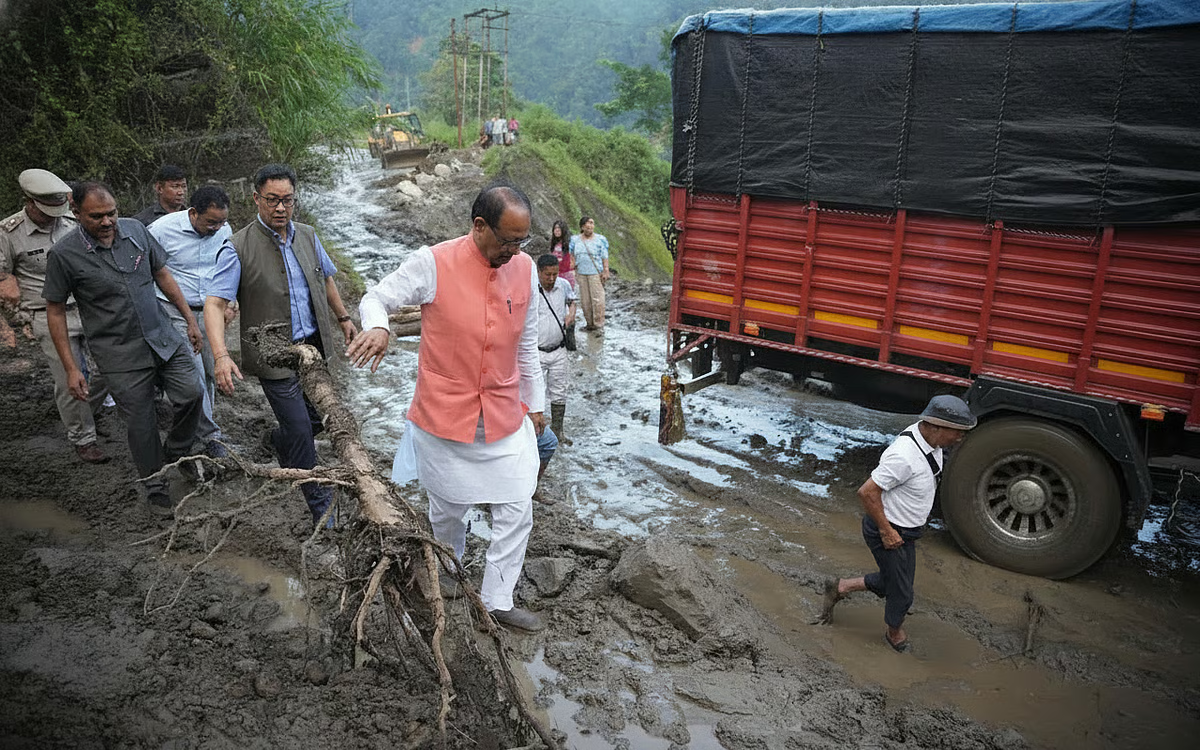
Following directions issued by Prime Minister Narendra Modi to assess the escalating flood and disaster situation in Northeast India, Union Minister Shivraj Singh Chouhan initiated a series of high-level reviews and field inspections aimed at evaluating the extent of damage and coordinating relief measures. The Union Minister chaired extensive review meetings in Guwahati on June 30 before proceeding to Arunachal Pradesh’s worst-affected flood and landslide zones on July 1 for aerial and ground assessments. Moreover, the initiative reflects the Centre’s emphasis on rapid disaster evaluation, coordinated response mechanisms, and immediate assistance to affected populations across the region.
Central Government Lifts Temporary Controls on Petrol and Diesel Distribution Across Northeast
Kirana Livelihoods Protected By KHADC Decision
Union Minister Conducts High-Level Disaster Review in Guwahati
Union Agriculture Minister Shivraj Singh Chouhan conducted comprehensive disaster management reviews in Guwahati on June 30 as part of the Centre’s response to the worsening flood situation in Northeast India. Consequently, senior officials and disaster response agencies participated in discussions regarding emergency preparedness, relief operations, and rehabilitation strategies.
According to officials, the review meetings focused on assessing the impact of floods, landslides, and infrastructure damage across multiple northeastern states. Moreover, authorities examined the status of relief operations and evaluated the availability of resources required for immediate intervention. Therefore, inter-agency coordination remained a key priority.
Officials emphasized that rapid assessments and timely administrative decisions are essential for minimizing the impact of natural disasters. Furthermore, the review highlighted the importance of continuous monitoring and emergency response planning. As a result, coordination mechanisms were further strengthened.
Meanwhile, disaster management agencies continued to monitor weather patterns and evolving ground conditions. Consequently, emergency preparedness measures remained active.
Aerial and Ground Surveys Conducted in Arunachal Pradesh
Following the Guwahati review, Union Minister Shivraj Singh Chouhan proceeded to Arunachal Pradesh on July 1 to conduct aerial and ground-level assessments in severely affected flood and landslide zones. Moreover, the inspections were aimed at obtaining a comprehensive understanding of the scale of destruction and identifying urgent response requirements.
Officials stated that the surveys covered several of the state’s worst-affected regions, where heavy rainfall and flooding had caused extensive damage to infrastructure and disrupted connectivity. Consequently, authorities reviewed the condition of roads, bridges, public facilities, and affected communities. Such assessments remain critical for effective relief planning.
Furthermore, the field visits enabled direct interaction with local officials and disaster response personnel. As a result, authorities were able to gather first-hand information regarding operational challenges and immediate priorities.
Meanwhile, relief and rescue agencies continued their operations in affected areas. Similarly, administrative teams remained engaged in damage assessment activities.
Prime Minister’s Directive Accelerates Disaster Response Efforts
The high-level review and field assessments were conducted following directives issued by Prime Minister Narendra Modi to ensure rapid evaluation and effective management of the ongoing disaster situation. Moreover, the Centre has emphasized the importance of coordinated action and timely intervention during natural calamities. Therefore, senior officials have intensified monitoring and response efforts.
Authorities noted that effective disaster management requires close cooperation among central ministries, state governments, and emergency response agencies. Consequently, operational coordination and resource deployment have been strengthened. Such measures contribute significantly to improving response efficiency.
Furthermore, officials reiterated the government’s commitment to supporting affected populations through relief, rehabilitation, and recovery initiatives. As a result, emergency response operations remain a top administrative priority.
Meanwhile, state administrations continue to coordinate with central agencies to facilitate relief efforts. Similarly, assessment and recovery planning activities remain underway.
Disaster Preparedness and Recovery Planning Remain Critical
The recent floods and associated disasters have highlighted the importance of disaster preparedness, resilient infrastructure, and coordinated emergency management systems. Moreover, extreme weather events continue to challenge vulnerable regions across the Northeast. Therefore, authorities have emphasized the need for long-term mitigation and adaptation strategies.
Experts noted that infrastructure resilience, improved forecasting systems, and strengthened disaster response capabilities can significantly reduce the impact of future disasters. Consequently, policymakers continue to prioritize investments in disaster preparedness and risk reduction. Such initiatives contribute to long-term resilience and sustainable development.
Furthermore, coordinated assessments and timely interventions remain essential for effective recovery planning. As a result, government agencies continue to focus on both immediate relief and long-term reconstruction.
Meanwhile, emergency monitoring and response activities remain active across affected regions. Similarly, authorities continue to evaluate evolving conditions.
Conclusion
The high-level disaster assessments conducted by Union Minister Shivraj Singh Chouhan following Prime Minister Narendra Modi’s directive underscore the government’s focus on rapid response, coordinated action, and effective disaster management. Moreover, the aerial and ground surveys in Arunachal Pradesh reflect the importance of direct assessments in planning relief and rehabilitation efforts.
The ongoing response highlights the critical role of inter-agency cooperation, disaster preparedness, and infrastructure resilience in addressing natural disasters. Therefore, authorities remain committed to supporting affected communities and strengthening emergency response mechanisms.
As assessment and recovery operations continue, coordinated efforts between central and state agencies are expected to remain essential in mitigating the impact of the disaster.
FAQs
1. Who led the high-level disaster assessment?
Union Minister Shivraj Singh Chouhan led the review meetings and field assessments.
2. Where was the initial review conducted?
The first high-level review meeting was held in Guwahati on June 30.
3. Which state was surveyed on July 1?
The aerial and ground assessments were conducted in Arunachal Pradesh.
4. Why were the surveys conducted?
The surveys aimed to assess disaster damage and coordinate relief and rehabilitation efforts.
5. What prompted the high-level assessment?
The review and surveys were conducted following directives issued by Prime Minister Narendra Modi.