

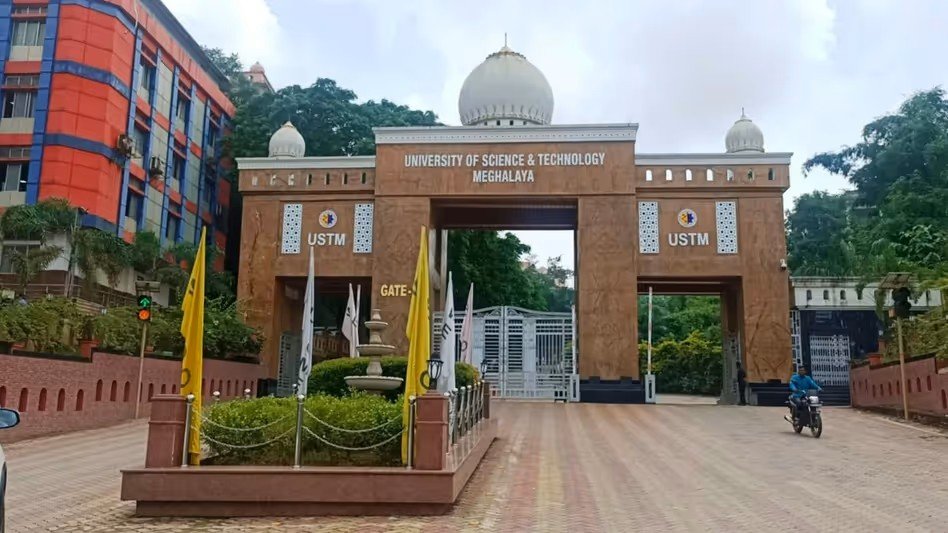
The Supreme Court’s Central Empowered Committee (CEC) has flagged a serious case of environmental violation in Meghalaya. It reported that the University of Science and Technology, Meghalaya (USTM), has encroached upon 25 hectares of forest land in Ri-Bhoi district. The panel has recommended a penalty of Rs 150 crore on the institution. The findings come at a time when the region is already witnessing heated debates over ecological damage, with political groups linking the issue to the ongoing ‘flood jihad’ controversy.
Read More: Assam CM: D-Voter Cases Almost Resolved, Citizenship Clear Before 1971
Encroachment revealed in Supreme Court report
According to the committee’s findings, USTM carried out construction activities on forest land without necessary clearances. Nearly 25 hectares of forest in Ri-Bhoi were encroached upon for expansion projects, including buildings, hostels, and roadways. The report stressed that such activities have severely impacted the local ecosystem and caused damage to natural drainage patterns.
The CEC, which functions under the Supreme Court, submitted that the encroachment was deliberate and systematic. It noted that USTM had continued its expansion despite repeated objections from state forest authorities. The panel recommended recovery of at least Rs 150 crore as environmental compensation from the university management.
USTM’s position and response
Officials from USTM have not yet issued a detailed response to the committee’s findings. However, sources from the university suggested that the administration may challenge the report in court. They claimed that certain portions of the land were already under dispute and that the institution had acquired permissions for some construction.
Even so, the report has placed the university under immense scrutiny. The reputation of USTM, which is regarded as a leading private educational hub in the Northeast, faces a significant blow. Students and parents expressed concern over whether the penalty and legal challenges could affect the institution’s functioning in the coming years.
Political reactions and ‘flood jihad’ row
The report coincided with an ongoing political storm over ‘flood jihad,’ a term recently used by certain groups to allege that illegal land use and encroachment in the Northeast were leading to man-made disasters. Leaders critical of the Meghalaya government pointed out that this case reflected the larger problem of unauthorized construction contributing to flooding and erosion.
Opposition parties demanded strict action not only against USTM but also against government officials who allegedly ignored violations. Some activists accused the state administration of turning a blind eye to the expansion of private institutions in ecologically sensitive areas.
Meanwhile, the ruling dispensation in Meghalaya tried to downplay political allegations, saying the matter was under the Supreme Court’s consideration. Officials stressed that the government would cooperate fully with the court’s directions and ensure that environmental laws were upheld.
Environmental concerns raised
The encroachment in Ri-Bhoi district has sparked renewed discussions about unchecked urbanization in forested zones. Experts noted that forest loss not only affects biodiversity but also worsens flood risks in downstream regions. With Meghalaya frequently witnessing heavy rainfall, loss of natural drainage due to construction has been a growing problem.
Environmentalists welcomed the Supreme Court panel’s recommendation, calling it a step towards accountability. They argued that heavy fines are necessary to discourage large institutions from taking shortcuts in land acquisition. Some urged the court to ensure immediate restoration measures, including replanting and rehabilitation of degraded land.
Broader impact on higher education in the Northeast
The case also raises broader questions about how private universities are expanding across the Northeast. While institutions like USTM have provided students with access to higher education, critics warn that some of them prioritize rapid growth over legal and ecological compliance.
Educationists fear that if the allegations hold, it could discourage investment in private universities in Meghalaya and nearby states. However, they also believe that stronger regulations could strike a balance between academic expansion and environmental protection.
Way forward
The Supreme Court will now take a final call on the recommendations made by the CEC. If the fine is imposed, USTM will be under pressure to pay the massive penalty while continuing its academic operations. Activists and local residents have demanded that the funds collected from such penalties be used for ecological restoration in the affected region.
The case has become symbolic of the tension between development and conservation in Meghalaya. As the state deals with rising climate challenges and political controversies, the verdict in this matter is expected to set a precedent for how future encroachment cases will be addressed.
The revelation that USTM encroached upon 25 hectares of forest land has raised serious concerns in Meghalaya. With the Supreme Court panel recommending a Rs 150 crore fine, the case highlights the growing challenges of balancing higher education expansion with environmental protection. As debates over ‘flood jihad’ intensify, the state faces a moment of reckoning on how to enforce ecological laws while supporting development.
Read More: Assam Bamboo Conclave 2025 Highlights Green Economy and Jobs