

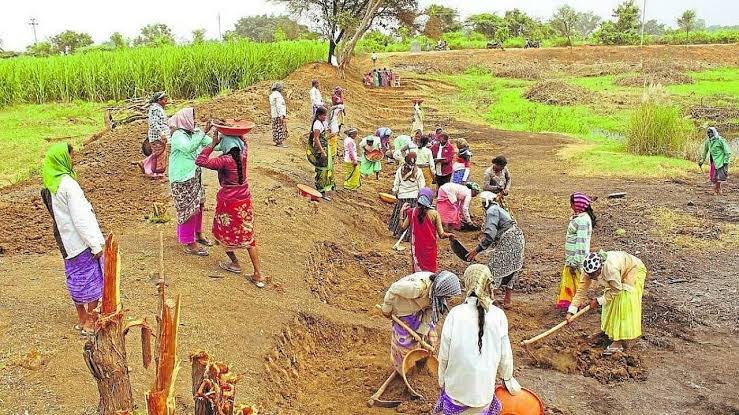
The Viksit Bharat Rural Transition has entered a new phase as state rural development departments began replacing older welfare models with an enhanced 125-day mandatory employment guarantee. The transition aims to strengthen rural livelihoods, improve income security, and align employment programmes with evolving rural development priorities.
North East Space Applications Gain Momentum as Jitendra Singh Reviews NESAC Geo-Mapping Tools
The Viksit Bharat Rural Transition has gained momentum as state rural development departments initiated the replacement of older welfare models with an enhanced 125-day mandatory employment guarantee. The policy shift reflects an effort to strengthen livelihood support while expanding employment opportunities in rural areas. Moreover, the transition highlights the growing emphasis on integrating employment generation with long-term rural development objectives.
Employment guarantee programmes have long served as an important pillar of rural welfare by providing wage employment and supporting local infrastructure development. Therefore, the latest initiative seeks to build upon existing welfare mechanisms through an expanded employment framework.
Viksit Bharat Rural Transition Introduces Enhanced Employment Framework
Under the Viksit Bharat Rural Transition, state rural development departments have begun implementing an enhanced 125-day mandatory employment guarantee to replace earlier welfare approaches. The initiative is designed to provide additional employment opportunities while supporting sustainable rural development.
Moreover, the revised framework places greater emphasis on productive employment rather than solely relying on conventional welfare assistance. Consequently, policymakers expect the transition to strengthen economic resilience among rural households while encouraging community-based development activities.
The initiative represents an administrative shift toward employment-focused rural support programmes.
125-Day Employment Guarantee Aims to Strengthen Rural Livelihoods
The enhanced employment guarantee extends opportunities for eligible rural workers to participate in public development projects over a longer period. Furthermore, employment-based support enables households to earn wages while contributing to the creation of community assets.
The Viksit Bharat Rural Transition reflects the broader objective of combining livelihood security with infrastructure development. Therefore, employment programmes may support activities such as water conservation, rural connectivity, land improvement, and other approved development works, depending on applicable programme guidelines.
Expanding employment opportunities can also contribute to improving income stability in rural communities while supporting local economic activity.
Viksit Bharat Rural Transition Focuses on Sustainable Development
The transition from traditional welfare models to employment-oriented programmes demonstrates a broader emphasis on sustainable rural development. Moreover, employment guarantees can encourage productive participation in projects that create long-term public assets for local communities.
Governments often review welfare programmes to ensure they remain responsive to changing economic conditions and development priorities. Similarly, the enhanced employment guarantee seeks to strengthen social protection while promoting community development through structured public works.
Meanwhile, successful implementation will depend on effective planning, timely allocation of resources, and coordination among implementing agencies at the state and local levels.
Employment-Based Welfare Supports Long-Term Growth
The Viksit Bharat Rural Transition highlights the growing role of employment-led welfare strategies in rural policy. Moreover, linking livelihood support with development projects can generate benefits that extend beyond immediate income assistance.
Employment guarantee programmes also contribute to local development by creating durable public infrastructure while strengthening household purchasing power. Consequently, the enhanced framework seeks to combine social welfare objectives with broader economic development goals.
As implementation progresses, authorities are expected to monitor programme outcomes to ensure that employment opportunities and development objectives are achieved effectively.
Conclusion
The Viksit Bharat Rural Transition marks an important shift in rural development policy with the introduction of an enhanced 125-day mandatory employment guarantee. The initiative reflects an effort to strengthen livelihood security by moving from traditional welfare models toward employment-oriented support.
Moreover, the transition demonstrates the importance of integrating income generation with sustainable rural development. By expanding employment opportunities and supporting community infrastructure, the programme aims to improve both economic resilience and local development.
Overall, the new employment framework represents a significant step in the evolution of rural welfare policy. As implementation continues across the states, its effectiveness will depend on transparent administration, efficient execution, and sustained support for rural communities.
FAQs
1. What is the Viksit Bharat Rural Transition?
The Viksit Bharat Rural Transition refers to the shift by state rural development departments from older welfare models to an enhanced 125-day mandatory employment guarantee framework.
2. What is the objective of the enhanced employment guarantee?
The programme aims to strengthen rural livelihoods by providing additional employment opportunities while supporting community development projects.
3. Why are employment guarantee programmes important?
Employment guarantee programmes provide wage employment, improve household income security, and contribute to the creation of public infrastructure in rural areas.
4. Does the initiative replace previous welfare models?
According to the announced policy direction, state rural development departments have begun transitioning from older welfare approaches to the enhanced employment guarantee framework.
5. How can the programme benefit rural communities?
The programme can improve livelihood security, support local infrastructure development, encourage productive employment, and contribute to long-term rural economic growth.