

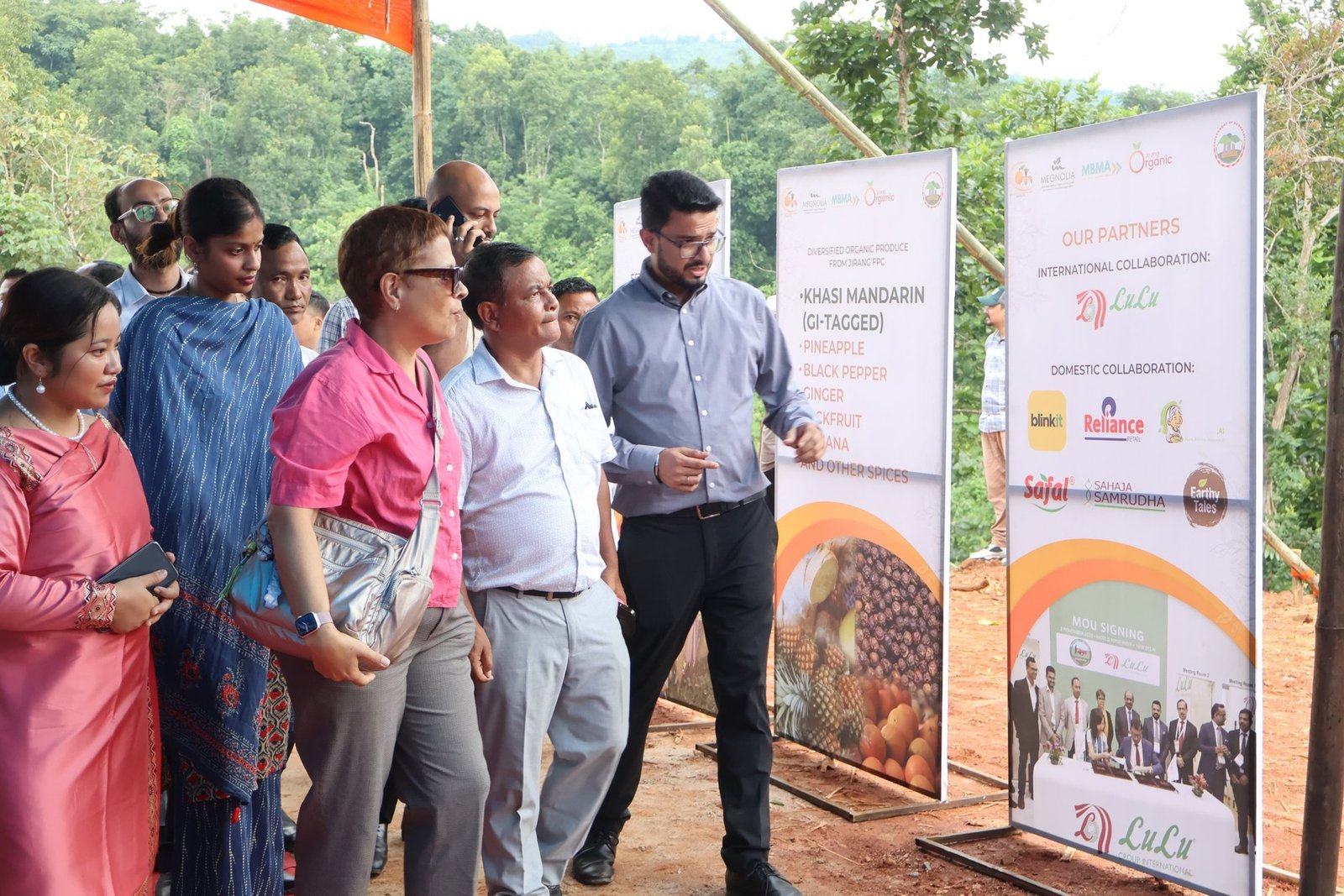
The Jirang GI Products Export initiative has gained recognition as the women-led Jirang Farmer Producer Company (FPC) in Meghalaya expands the reach of its Geographical Indication (GI)-tagged agricultural products to international markets. Moreover, the expansion highlights the growing role of women entrepreneurs in strengthening rural enterprises, promoting value-added agriculture, and increasing export opportunities. Consequently, the initiative is expected to enhance farmer incomes while showcasing Meghalaya’s unique agricultural heritage on the global stage.
Meghalaya’s Jirang Farmer Producer Company Records ₹1.17 Crore Revenue
Digital Entertainment Takedown Leads to Removal of Regional Series ‘Satluj’
Jirang GI Products Export Strengthens Women-Led Enterprise
The Jirang GI Products Export initiative reflects the success of a women-led Farmer Producer Company in building competitive agricultural businesses through collective entrepreneurship. Furthermore, the expansion into overseas markets demonstrates the increasing capability of rural producer organizations to meet international demand.
Women-led enterprises contribute significantly to inclusive economic development. Consequently, initiatives that strengthen women’s participation in agriculture help improve household incomes and community resilience.
Moreover, collective business models enable farmers to access better markets and stronger bargaining power. Therefore, the Jirang FPC continues to expand its commercial opportunities.
Additionally, leadership by women encourages greater participation in rural entrepreneurship. Thus, the initiative supports inclusive growth.
GI-Tagged Products Enhance Global Market Access
The Jirang GI Products Export programme focuses on promoting Geographical Indication (GI)-tagged agricultural products that represent the distinctive identity and quality of Meghalaya’s produce. Furthermore, GI recognition helps strengthen product authenticity and consumer confidence in international markets.
GI-tagged products often command greater recognition because of their geographical origin and unique characteristics. Consequently, producers may benefit from improved market value and stronger branding.
Moreover, export-oriented marketing encourages higher standards in production and packaging. Therefore, local enterprises can compete more effectively in global markets.
Similarly, product branding strengthens the visibility of regional agricultural specialties. Additionally, international demand creates new opportunities for rural producers.
Value Addition Drives Agricultural Growth
The Jirang GI Products Export initiative demonstrates the importance of processing, branding, packaging, and organized marketing in increasing agricultural value. Furthermore, value-added products help farmers generate better returns while reducing dependence on raw commodity sales.
Efficient value chains improve the competitiveness of agricultural enterprises. Consequently, Farmer Producer Companies play an important role in connecting farmers with premium markets.
Moreover, better market access encourages investment in quality improvement. Therefore, producers continue adopting modern agricultural and post-harvest practices.
Similarly, improved logistics support reliable export operations. Additionally, value addition strengthens long-term business sustainability.
Export Expansion Supports Rural Development
The Jirang GI Products Export initiative highlights how international market access can contribute to sustainable rural development in Meghalaya. Furthermore, expanding exports creates employment opportunities, encourages entrepreneurship, and strengthens the state’s agricultural economy.
Export-oriented agriculture promotes diversification and economic resilience. Consequently, rural communities can benefit from higher incomes and broader commercial opportunities.
Moreover, collaboration among producer companies, government agencies, and export partners strengthens market access. Therefore, institutional support remains essential for long-term success.
Similarly, innovation and quality assurance improve competitiveness in international markets. Additionally, sustainable agricultural practices help preserve the unique identity of GI-tagged products.
Conclusion
The Jirang GI Products Export initiative showcases the achievements of Meghalaya’s women-led Jirang Farmer Producer Company in taking GI-tagged agricultural products to global markets. Moreover, the expansion reflects the growing strength of women entrepreneurs, organized farming, and value-added agricultural businesses.
Furthermore, continued investment in product quality, export infrastructure, branding, and market connectivity will remain essential for sustaining international growth. Consequently, the Jirang GI Products Export initiative represents an important milestone in promoting Meghalaya’s agricultural heritage while supporting inclusive and sustainable rural development.
FAQs
1. What is the Jirang GI Products Export initiative?
It refers to the expansion of GI-tagged agricultural products from Meghalaya’s women-led Jirang Farmer Producer Company into international markets.
2. What is a GI-tagged product?
A Geographical Indication (GI)-tagged product is recognized for its unique qualities or reputation linked to a specific geographical region.
3. How does the initiative benefit farmers?
It improves market access, supports value addition, strengthens branding, and creates opportunities for higher income through exports.
4. Why is the company’s women-led model significant?
It demonstrates the growing role of women in agricultural entrepreneurship, rural business leadership, and inclusive economic development.
5. Why is the Jirang GI Products Export initiative important?
It promotes Meghalaya’s unique agricultural products internationally while strengthening rural livelihoods, women-led enterprises, and sustainable export growth.