

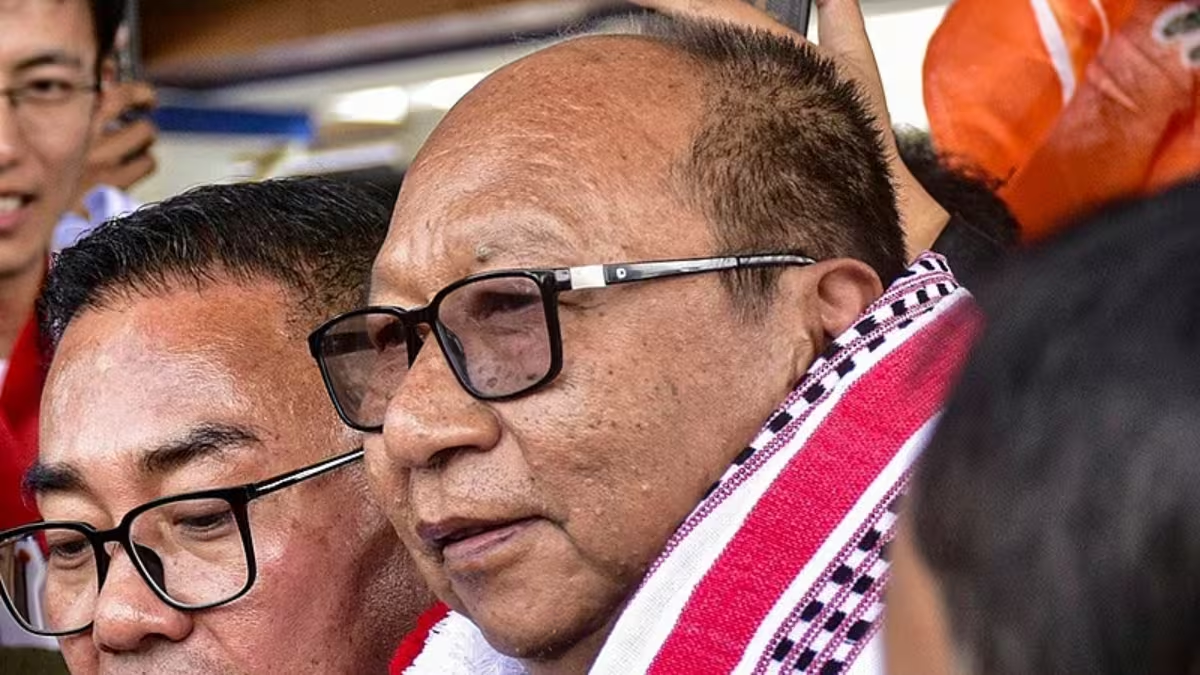
The Y. Khemchand Singh UNC Appeal gained attention in 2026 after the Manipur Chief Minister urged leaders of the United Naga Council (UNC) to lift highway blockades through dialogue. The appeal emphasized restoring normal transportation while encouraging peaceful engagement between stakeholders.
The Y. Khemchand Singh UNC Appeal became a key development in 2026 as Manipur Chief Minister Y. Khemchand Singh called on leaders of the United Naga Council (UNC) to lift highway blockades. The appeal highlighted the government’s preference for resolving issues through discussion while seeking the restoration of normal traffic movement. Moreover, the Chief Minister stressed the importance of maintaining public convenience and uninterrupted connectivity across the state.
Highways serve as critical transport corridors for the movement of people, goods, and essential services. Therefore, restoring normal traffic remains an important administrative priority whenever disruptions occur.
NSCN-IM Ukhrul Attack Denial Issued
Y. Khemchand Singh UNC Appeal Calls for Lifting Blockades
During the Y. Khemchand Singh UNC Appeal, the Chief Minister urged United Naga Council (UNC) leaders to remove highway blockades through peaceful dialogue. The request reflected the government’s effort to restore transportation while maintaining communication with stakeholder groups.
Moreover, dialogue remains a widely used mechanism for addressing public issues involving multiple parties. Consequently, the appeal focused on finding a constructive path toward normalizing road connectivity.
The Chief Minister’s statement underscored the government’s commitment to engaging through institutional channels.
Highway Connectivity Remains an Administrative Priority
The Y. Khemchand Singh UNC Appeal highlighted the significance of maintaining uninterrupted highway connectivity. Furthermore, national and state highways play an essential role in supporting economic activity, emergency services, and the daily movement of citizens.
Disruptions to transport corridors can affect multiple sectors. Therefore, authorities generally seek timely solutions that restore normal movement while respecting lawful processes.
Moreover, coordinated discussions often help governments and stakeholders identify practical approaches to resolving transportation-related concerns.
Y. Khemchand Singh UNC Appeal Encourages Dialogue
The appeal emphasized dialogue as the preferred method for resolving differences between the government and stakeholder organizations. Similarly, discussions provide opportunities to exchange views and work toward mutually acceptable outcomes.
The Y. Khemchand Singh UNC Appeal reflects the broader principle of addressing public issues through communication and administrative engagement. Consequently, continued dialogue may contribute to reducing tensions and improving coordination among all parties.
Meanwhile, government officials are expected to continue monitoring the situation while maintaining discussions through established institutional mechanisms.
Peaceful Resolution Supports Public Interest
The Y. Khemchand Singh UNC Appeal also reinforces the importance of peaceful resolution in matters affecting public infrastructure and transportation. Moreover, restoring highway access benefits residents, businesses, healthcare services, and supply chains that depend on reliable road connectivity.
Constructive engagement between governments and community organizations can support long-term stability while addressing concerns through lawful and democratic processes. Therefore, dialogue remains an important component of effective public administration.
As discussions continue, authorities are expected to pursue measures aimed at restoring normal traffic movement and maintaining public convenience.
Conclusion
The Y. Khemchand Singh UNC Appeal in 2026 represents an effort by the Manipur government to encourage the lifting of highway blockades through dialogue with United Naga Council (UNC) leaders. The appeal reflects the administration’s focus on restoring transportation while maintaining peaceful engagement with stakeholders.
Moreover, uninterrupted highway connectivity remains essential for economic activity, public services, and daily life. Continued communication between the government and community representatives can contribute to resolving issues through established institutional channels.
Overall, the Y. Khemchand Singh UNC Appeal highlights the importance of dialogue, cooperation, and administrative coordination in addressing public concerns. Future developments will depend on ongoing discussions and decisions taken by the concerned parties.
FAQs
1. What is the Y. Khemchand Singh UNC Appeal?
The Y. Khemchand Singh UNC Appeal refers to the Chief Minister’s request for United Naga Council (UNC) leaders to lift highway blockades through dialogue in 2026.
2. Who are the UNC?
The United Naga Council (UNC) is an organization representing Naga interests in Manipur.
3. Why did the Chief Minister make the appeal?
He appealed for the restoration of normal highway movement and encouraged dialogue as the preferred method for resolving the issue.
4. Why are highway blockades significant?
Highway blockades can affect transportation, trade, access to essential services, and the movement of people across the region.
5. What approach did the government emphasize?
The government emphasized peaceful dialogue and administrative engagement as the means to resolve the situation and restore normalcy.