


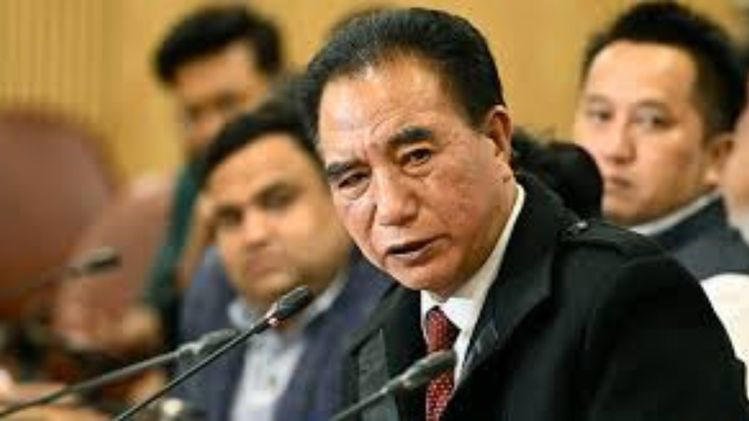
Mizoram Chief Minister and Zoram People’s Movement (ZPM) leader Lalduhoma has clarified that his party has not joined the National Democratic Alliance (NDA), putting to rest speculation regarding the political alignment of the ruling party in the state. The statement comes amid ongoing discussions in political circles about the relationship between regional parties and national political formations ahead of future electoral and governance-related developments.
Lalduhoma emphasized that while the ZPM maintains cordial relations with the Central Government and engages constructively on matters concerning the development of Mizoram, it has not formally become a constituent of the NDA. The Chief Minister reiterated that the party continues to function independently and remains committed to pursuing policies based on the interests and aspirations of the people of Mizoram.
His remarks have attracted considerable attention in political circles, particularly in the Northeast, where regional parties often play a significant role in shaping governance and policy outcomes.
Clarification Amid Political Speculation
The Chief Minister’s statement follows growing speculation regarding the possibility of ZPM aligning more closely with the NDA at the national level. Political observers had been discussing the nature of interactions between the Mizoram government and the Centre, leading to questions about whether such cooperation indicated a formal political alliance.
Addressing these concerns, Lalduhoma stated that cooperation with the Central Government on developmental issues should not be interpreted as a political merger or alliance. He emphasized that responsible governance requires constructive engagement with the Centre regardless of political affiliations.
According to the Chief Minister, the state’s developmental priorities remain the primary focus of his administration, and interactions with the Union Government are guided by the objective of securing benefits for Mizoram and its people.
ZPM’s Independent Political Identity
Lalduhoma stressed that the Zoram People’s Movement has maintained its own distinct political identity since its inception. The party emerged as a regional political force with a focus on governance reforms, transparency, accountability, and development-oriented policies.
Over the years, ZPM has positioned itself as a party committed to addressing the specific needs and aspirations of Mizoram. Its political approach has largely centered on regional issues, administrative efficiency, and citizen-centric governance.
The Chief Minister noted that preserving the party’s independent identity remains important and that decisions regarding political alliances are considered carefully with the interests of the state in mind.
The clarification reinforces ZPM’s stance as a regional political entity operating according to its own priorities and policy framework.
Importance of Centre-State Cooperation
While rejecting suggestions that ZPM has joined the NDA, Lalduhoma underscored the importance of maintaining a healthy working relationship with the Central Government. He noted that cooperation between state governments and the Centre is essential for implementing development projects, securing financial support, and addressing administrative challenges.
The Chief Minister emphasized that effective governance often requires collaboration across political boundaries. States rely on support from the Centre for infrastructure projects, social welfare programs, economic development initiatives, and disaster management efforts.
According to Lalduhoma, engaging constructively with the Union Government does not necessarily imply political alignment but reflects a commitment to advancing the interests of the people.
Focus on Development and Governance
The Mizoram government has consistently highlighted development and governance as key priorities. Since assuming office, the administration has focused on initiatives related to infrastructure, economic growth, healthcare, education, agriculture, and employment generation.
The Chief Minister stated that all decisions taken by the government are guided by the objective of improving the quality of life for citizens. This includes seeking assistance and cooperation from various stakeholders, including the Central Government, whenever necessary.
Observers note that development-oriented governance often requires pragmatic engagement with different institutions and levels of government. The state’s leadership has repeatedly emphasized that such engagement should not be viewed through a purely political lens.
Regional Parties in India’s Federal Structure
The issue also highlights the important role played by regional parties within India’s federal political system. Regional parties often represent unique local interests and bring state-specific perspectives into broader national discussions.
Political analysts point out that regional parties frequently collaborate with national parties on certain issues while maintaining independent organizational structures and policy positions. Such arrangements are common in India’s diverse political landscape and reflect the complexities of federal governance.
ZPM’s position, as articulated by Lalduhoma, appears to align with this broader pattern of maintaining political autonomy while engaging constructively with national institutions.
The Chief Minister’s clarification reinforces the distinction between administrative cooperation and formal political alliances.
Political Significance of the Statement
The statement carries significance not only for Mizoram but also for the broader political dynamics of the Northeast. The region has witnessed evolving political alignments in recent years, with various regional and national parties seeking to strengthen their presence and influence.
By clarifying ZPM’s position, Lalduhoma has sought to remove ambiguity regarding the party’s relationship with national political formations. The statement is likely to be closely examined by political observers, party workers, and voters seeking clarity on the future direction of the ruling party.
Political transparency regarding alliances and affiliations is often considered important for maintaining public trust and ensuring informed democratic participation.
Public Perception and Political Messaging
The Chief Minister’s remarks also serve as an important message to supporters and the broader electorate. Many regional party supporters place significant value on maintaining political independence and ensuring that local interests remain central to decision-making.
By emphasizing ZPM’s independent status, Lalduhoma has reinforced the party’s commitment to representing Mizoram’s unique aspirations and concerns. At the same time, he has highlighted the importance of practical cooperation with the Centre for achieving developmental goals.
This balanced approach reflects the challenges faced by regional governments in navigating relationships with national institutions while preserving their political identity.
Governance Beyond Political Labels
Lalduhoma’s comments suggest a broader perspective on governance, one that prioritizes outcomes over political labels. The Chief Minister indicated that development, welfare, and public service should remain the primary focus of any administration.
He stressed that constructive engagement with various stakeholders is essential for addressing the needs of citizens and ensuring sustainable progress. Political differences, he suggested, should not prevent cooperation when it comes to matters of public interest.
This approach aligns with the principle that governance requires flexibility, dialogue, and collaboration while remaining accountable to the electorate.
Looking Ahead
The clarification that ZPM has not joined the NDA provides important insight into the party’s current political stance and future direction. While maintaining an independent identity, the party appears committed to working with the Central Government on issues that benefit Mizoram and support the state’s development agenda.
Chief Minister Lalduhoma’s statement underscores the distinction between administrative cooperation and political affiliation, emphasizing that effective governance often requires engagement across political boundaries. The remarks also reaffirm ZPM’s commitment to representing regional interests while pursuing policies aimed at improving governance and development outcomes.
As Mizoram continues to focus on economic growth, infrastructure development, and social progress, the state’s political leadership is likely to remain focused on balancing regional priorities with constructive engagement at the national level. The Chief Minister’s clarification provides a clear message that ZPM intends to chart its own political course while continuing to work toward the welfare and advancement of the people of Mizoram.