

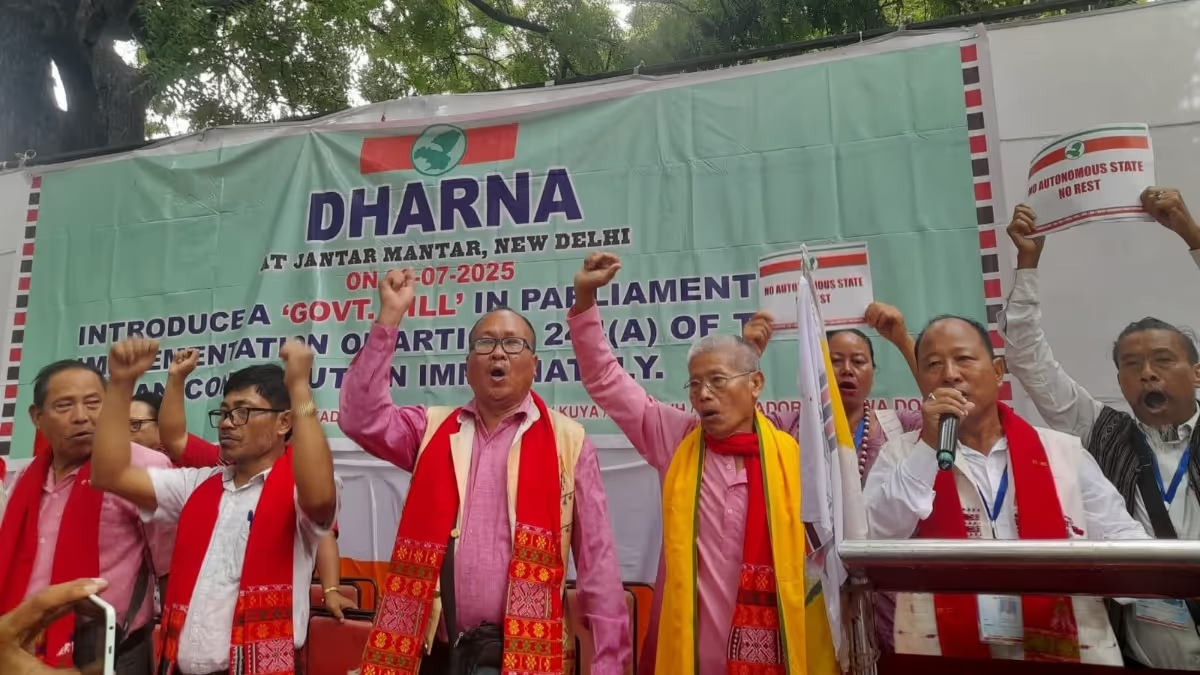
Assam hill districts protests over Article 244(A) have erupted after the Deputy Speaker’s controversial remarks, igniting strong reactions from locals demanding autonomy. Read the latest coverage.
Assam hill districts protests over Article 244(A): Unrest erupts as Deputy Speaker stokes controversy
Assam hill districts protests over Article 244(A) erupted recently when Deputy Speaker Numal Momin made inflammatory remarks suggesting the provision was unnecessary and potentially harmful to the region. These comments triggered widespread discontent and strong backlash from local communities.
Why Assam hill districts protests over Article 244(A) ignited
The Assam hill districts protests over Article 244(A) stem from remarks by Numal Momin, who claimed that the existing powers granted by Chief Minister Himanta Biswa Sarma exceed what Article 244(A) would offer, and argued that pursuing it would result in a “loss” for hill district residents.
Indigenous groups in Karbi Anglong, Dima Hasao, and West Karbi Anglong perceive Article 244(A) as a critical constitutional promise for autonomy. These hill communities have long fought for the implementation of this provision to secure better governance, control over law and order, and financial independence beyond the limited Sixth Schedule autonomy.
Immediate reactions and protest highlights
Protesters rallied in large numbers across the hill districts, burning effigies of the Deputy Speaker and demanding an unambiguous commitment to Article 244(A) implementation.
Local Congress leaders, including KA‑DCC members, condemned Momin’s remarks as “anti‑hill,” asserting that public sentiment overwhelmingly supports Article 244(A).
A press briefing led by APCC figures publicly criticized the Deputy Speaker for undermining tribal aspirations and political promises made to hill community.
What is Article 244(A) and why it matters
Article 244(A), added by the Twenty‑second Amendment in 1969, empowers Parliament to create an autonomous State within Assam, with its own legislature or Council of Ministers, granting more autonomy than the Sixth Schedule councils currently allow.
For decades, several tribal and student organisations have demanded full implementation—highlighting that the existing Sixth Schedule bodies lack control over law and order, limited financial powers, and no legislature. Article 244(A) could reshape governance in hill districts significantly.
Historical context of autonomy demand
The push for autonomy in these regions dates back to the 1950s, culminating in the creation of Meghalaya in 1972. However, Karbi Anglong and Dima Hasao chose to remain within Assam, relying on future promised autonomy via Article 244(A).
Peace accords in 2021 with Karbi militant groups and a subsequent agreement in 2022 with Dima Hasao insurgent factions included provisions for greater autonomy and a ₹1,000 crore development package—yet full statutory autonomy under Article 244(A) remains unfulfilled.
Strong sentiment fuels Assam hill districts protests over Article 244(A)
The protests reflect deep frustration and emotional strength. Locals expressed that Momin’s remarks represented not just political ignorance but an attempt to weaken a constitutional promise long awaited by indigenous communities. The sentiment is overwhelmingly negative toward the Deputy Speaker’s position.
Political implications and what’s next
- Opposition parties, including Congress, accuse the BJP of betraying tribal promises and stirring division by attempting to minimise Article 244(A) significance.
- Protest groups insist the state government must affirm commitment to autonomy within days to prevent further escalation.
- Analysts believe if the controversy deepens, it could affect political stability in upcoming elections—especially in tribal-majority seats.
READ MORE: Doboka Panchayat Violence: Full Timeline of the Incident