


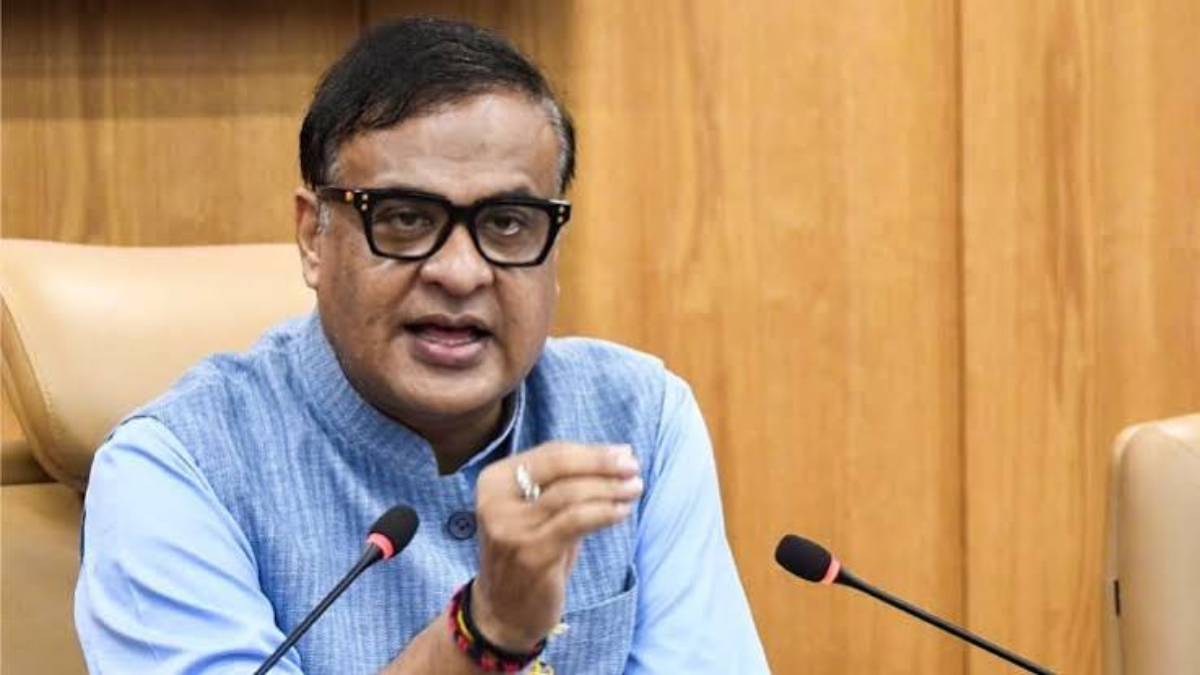
Assam Police reforms are set to receive renewed attention as Chief Minister Himanta Biswa Sarma pushes for a stronger, modern and people-focused policing system in the state. The government’s approach combines tighter supervision, faster investigations, technology-driven policing and better public services, with recent crime data showing improvements in several key indicators.
Assam Police reforms focus on stronger investigations
The latest statewide crime review, chaired by Assam DGP Harmeet Singh, highlighted the progress made up to June 2026. The crime rate per lakh population stood at 112.1, down from 121.5 in 2025 and 379 in 2021.
Cases pending investigation also fell to 10,486 in June 2026, compared with 11,140 in 2025 and 1,33,982 in 2021. The monthly average of criminal case registrations declined to 3,430.3, from 3,682.9 in 2025 and 11,103.3 in 2021.
The charge-sheet rate, meanwhile, rose to 86.58 per cent from 81.46 per cent in 2025 and 39.40 per cent in 2021. Police authorities have attributed the improvement to stronger supervision, sharper investigations and greater use of technology.
Technology at the centre of policing
A major part of the latest Assam Police reforms is the use of technology to make policing faster and more accessible.
Assam Police recently became the first state agency in the Northeast to be registered as an Offline Verification Seeking Entity under the Unique Identification Authority of India. It is also only the third police force nationally to receive this registration.
The system is particularly relevant in Assam, where several hilly, char and border areas can have unreliable internet connectivity. Police patrol teams can use Aadhaar QR codes for instant credential verification without depending on network speed.
The move is expected to simplify services such as tenant verification, character verification, passport verification and arms-licence verification. It also aims to make it harder for criminals or illegal infiltrators to use fake or photocopied identity documents.
Building a people-friendly police system
The push for Assam Police reforms is not limited to crime control. Sarma has repeatedly stressed the need to make police stations more accessible to ordinary citizens.
In September 2024, he said police stations should become more people-centric as militancy-related incidents declined. He also backed the role of Nagarik Samitis, or citizen committees, in strengthening relations between police stations and local communities.
The committees were envisaged as a bridge between citizens and police, particularly for public-service responsibilities such as permissions for fairs and festivals and issuing certificates. Sarma said this could allow police personnel to focus more closely on criminal justice and investigations.
Training for new-age crimes
Cybercrime and technology-enabled offences are another priority under the government’s policing strategy. Sarma has previously called for police personnel, including officers in charge of police stations, to receive training to deal with cybercrime.
The broader objective is to create a force that can respond to conventional offences while also handling increasingly complex digital threats. Earlier, Sarma had described smart policing as requiring a force that is modern, mobile, accountable, responsive and technologically equipped.
The emphasis also extends to crimes against women, drug trafficking and organised crime. Sarma has called for faster investigations and adoption of effective practices to improve women’s safety and ensure cases reach their logical conclusion.
Prosecution and accountability remain key
The government’s policing agenda also links better investigation with stronger prosecution. At a conference of Superintendents of Police at the Lachit Borphukan Police Academy in Dergaon in May 2025, Sarma stressed law-and-order improvement, investigation quality and police reforms.
An initiative involving the Director of Prosecution was announced to improve coordination between investigation and prosecution. The conference also reviewed police successes against drug trafficking, ivory smuggling, rhino poaching, cyber fraud and counterfeit currency networks.
These measures indicate that the government sees policing as part of a wider justice-delivery system rather than only a crime-control mechanism.
A broader shift in Assam policing
The latest Assam Police reforms build on a longer effort to move the force away from a primarily counter-insurgency-focused role towards everyday public service. With crime indicators showing improvement, the government is placing greater emphasis on investigation, technology, accountability and citizen interaction.
The challenge now will be to ensure that improvements reflected in official statistics translate into faster services, fair investigations and greater public confidence across Assam. The emphasis on modern tools, professional training and community engagement suggests that the state is seeking a policing model that is both firm on crime and responsive to citizens.
For the government, the next phase of Assam Police reforms will therefore be about sustaining measurable gains while making the police force more accessible, efficient and prepared for emerging security challenges.