


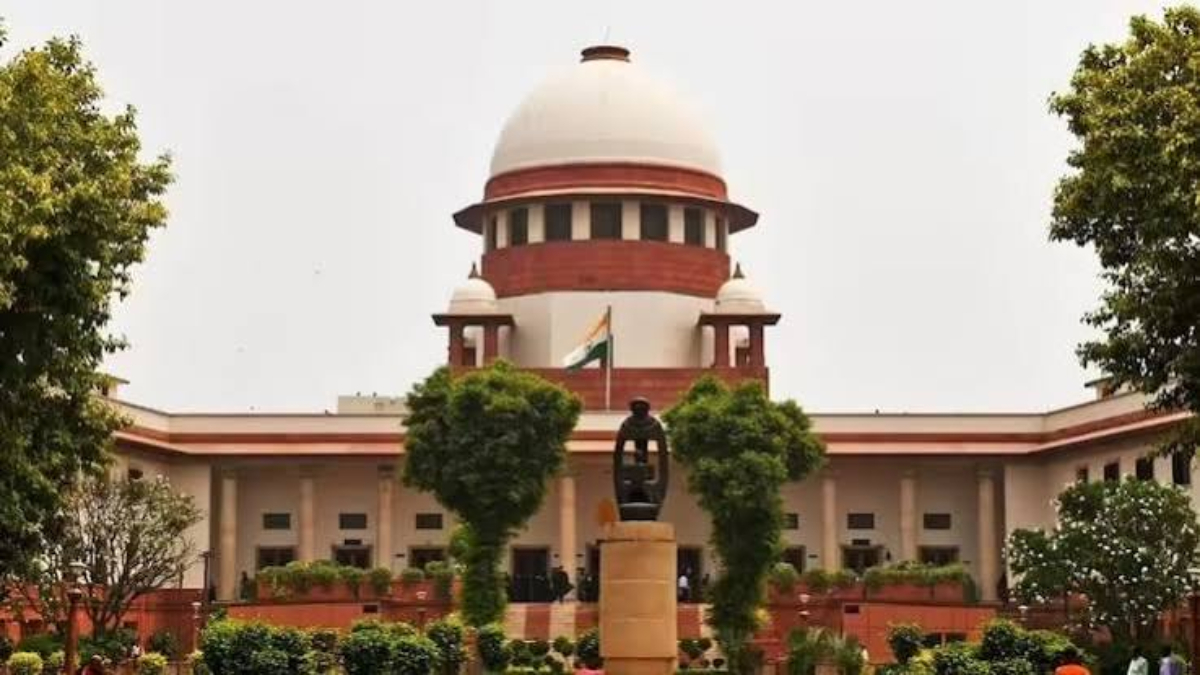
Sikkim electoral roll revision will continue with 2002 as the reference year after the Supreme Court on Monday, August 17, declined to interfere with the Election Commission of India’s decision. The bench, headed by Chief Justice of India Surya Kant and comprising Justices Joymalya Bagchi and V. Mohana, rejected a plea seeking an earlier base year for the ongoing Special Intensive Revision (SIR) in the northeastern state.
The petition was filed by the Sikkimese Mulniwasi Suraksha Sangh, which argued that the 2002 electoral roll could create problems for Sikkim because of the state’s distinct demographic and constitutional history. The organisation had sought 1993 as the reference year instead.
Supreme Court declines to change Sikkim electoral roll base year
The Supreme Court found no reason to disturb the Election Commission’s choice of 2002. During the hearing, the bench noted that the year had been used as a uniform reference point for the SIR exercise and that a change at this stage could disrupt the process.
The Election Commission told the court that the 2002 roll was selected because it was the last Special Intensive Revision roll prepared in Sikkim. It also submitted that the 1993 roll had undergone subsequent modifications and adjustments before the 2002 roll was prepared.
The poll panel further argued that changing the base year now would effectively require the revision exercise to begin again. The SIR process in Sikkim is already well underway, with the draft electoral roll published in July and the claims and objections process completed on August 4.
Why the petitioner challenged the 2002 cut-off
The petitioner questioned whether the 2002 reference point was suitable for Sikkim. It argued that the state’s demographic profile is different from that of many other parts of India and claimed that the 2002 revision had resulted in the inclusion of migrant populations.
The organisation also raised concerns about a perceived mismatch between demographic data and electoral figures. Its counsel proposed using the 1993 electoral roll, while also acknowledging uncertainty over whether that year would ultimately be the appropriate cut-off.
The bench, however, questioned the basis for seeking a separate reference year for Sikkim. It also noted that no political party or other major stakeholder from the state had approached the court to challenge the use of 2002. The court questioned the petitioner’s claim to represent Sikkimese interests from outside the state.
ECI says revision cannot be restarted
The Election Commission maintained that the 2002 reference year was part of a broader, uniform approach to the SIR exercise. It argued that replacing the cut-off after the process had advanced would create practical difficulties.
The Supreme Court ultimately agreed that there was no sufficient ground for judicial intervention. The bench indicated that the petitioner could instead raise its concerns before the Sikkim government.
The ruling means the current Sikkim electoral roll revision will proceed using the 2002 roll as its reference point.
Sikkim SIR already covers more than 4.7 lakh electors
The electoral revision has already involved extensive field-level verification. According to the Sikkim government, the state had 4,71,018 electors during the enumeration phase. Of these, 4,33,294 enumeration forms were received between May 30 and June 28.
The exercise involved 572 Booth Level Officers across 623 polling stations, along with electoral registration officials and representatives of recognised political parties. The draft roll was published on July 5, allowing eligible voters to seek inclusion and existing electors to raise claims or objections.
More than 37,000 names were initially left out of the draft roll after the enumeration exercise. The CEO’s office said these cases involved voters who were deceased, had permanently shifted, were enrolled at multiple locations or could not be traced. Officials clarified that the final status of such names would depend on scrutiny by the appropriate electoral authorities.
Final electoral roll due in September
The SIR process is not yet complete. The official schedule provides for scrutiny and disposal of claims and objections through September 2, followed by publication of the final electoral roll on September 6.
The Chief Electoral Officer’s office has also provided voters with access to draft rolls, lists of electors whose names were not included and forms for inclusion, deletion and correction.
The Supreme Court’s decision therefore keeps the ongoing process on its existing course. While concerns over the appropriate historical reference year may continue to be debated, the 2002 cut-off will remain in place unless changed through another competent process.
For now, electoral authorities in Sikkim will proceed with verification and disposal of claims before the final rolls are published next month. The ruling removes a major legal challenge to the current revision framework while leaving the petitioner free to pursue its concerns before the state government.