

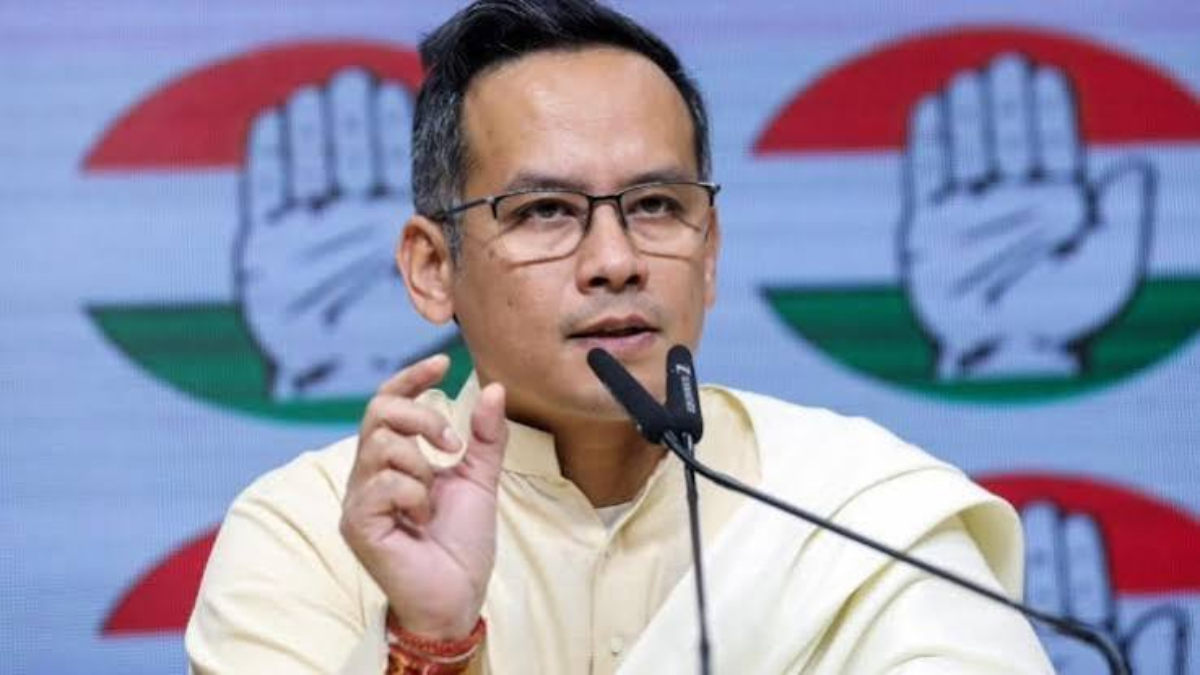
Assamese youth detention has triggered a fresh political controversy in Guwahati after Congress leader Gaurav Gogoi criticised the detention of young activists and volunteers, questioning the BJP’s response to youth-led political activity. The remarks came amid a series of protests and detentions in Assam, including the latest police action against Cockroach Janta Party (CJP) leaders and volunteers.
Assamese youth detention draws Gogoi’s criticism
Gogoi’s criticism comes against the backdrop of his own detention in Guwahati on September 25. The Assam Pradesh Congress Committee president was detained along with several party leaders while marching from Rajiv Bhawan towards the Chief Electoral Officer’s office.
The Congress protest sought the resignation of Chief Election Commissioner Gyanesh Kumar. Police had erected barricades near the Congress headquarters, and Gogoi and other leaders were detained after attempting to cross them.
Gogoi subsequently said that detention would not silence the Congress. According to The Times of India, he described the protest as a democratic effort and questioned whether the BJP was “scared” of political opposition.
The latest episode involving young activists has added another dimension to the political dispute.
CJP volunteers detained before Guwahati meeting
On September 27, Assam Police detained CJP co-convenor and spokesperson Ashutosh Ranka along with several party leaders and volunteers shortly before a planned regional volunteers’ meeting in Guwahati.
Reports put the number of detainees at around 30 or more, including four members of the organisation’s central committee. CJP, however, said the number could be higher. The exact figure could not be independently verified.
The meeting was initially scheduled at Assam Shree Parshuram Seva Sadan on Kharga Choudhury Road in Athgaon. Organisers later shifted it to Chowdhury Tila, opposite the Assam Secretariat, after alleging that pressure had been placed on the original venue.
CJP described the gathering as peaceful and demanded the immediate release of those detained.
Why were the activists detained?
The police have not publicly provided a detailed explanation for the detentions, according to reports available on Sunday. This has left the circumstances surrounding the action disputed.
CJP founder Abhijeet Dipke said Ranka and others were taken to an unknown location. Party leaders alleged that the action was intended to prevent them from raising questions about education, electoral rolls, land and other public issues in Assam.
Ranka had planned to visit government schools and meet families affected by electoral-roll revision. CJP leaders had also recently held discussions with opposition figures in Assam, including Raijor Dal leader Akhil Gogoi, about floods and the organisation’s activities in the state.
These developments have placed youth activism and freedom to assemble at the centre of the latest political debate.
Youth politics becomes a growing issue
The CJP has emerged in 2026 as a youth-oriented political movement that has focused on education, unemployment, institutional accountability and electoral issues. Its activities have drawn attention from opposition parties and political leaders across India.
The organisation had earlier organised a prolonged protest in Delhi over education-related concerns and the NEET controversy. Its activities have since expanded towards state-level outreach and grassroots mobilisation.
The Guwahati detention therefore comes at a time when CJP is seeking to build an organisational presence in Assam and the wider Northeast.
Political confrontation widens in Assam
The detention of CJP volunteers follows Gogoi’s detention two days earlier, although the two incidents involved different organisations and immediate issues.
The Congress protest focused on the Election Commission and the Special Intensive Revision of electoral rolls. Congress has alleged irregularities in the functioning of the poll panel and demanded an independent review of electoral-roll decisions. The Election Commission has maintained that decisions relating to SIR were taken through its institutional process.
Meanwhile, CJP’s Guwahati programme centred on youth mobilisation and issues including education, electoral rolls and governance.
For Assam, the developments underline a broader political contest over how dissent, protests and youth-led movements are handled. The competing claims from political groups and authorities remain part of an evolving situation.
As the controversy continues, the Assamese youth detention issue is likely to remain part of the wider debate over political participation, protest rights and the space available for emerging youth movements in the state. With the police yet to publicly clarify the full basis for the latest detentions, further statements from authorities and the organisations involved are expected to shape the next phase of the dispute.