

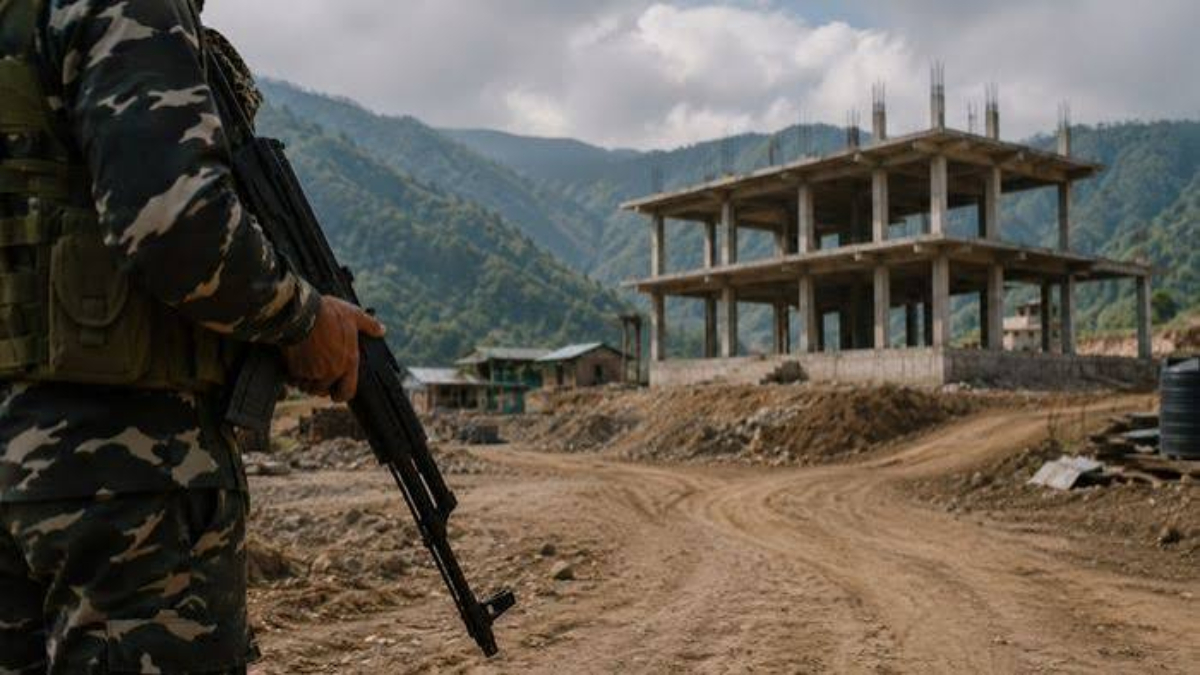
Kuki chiefs in Manipur’s Tengnoupal district have opposed a proposed Indian Reserve Battalion (IRB) headquarters in the area, raising fresh concerns over security, land and community representation in the violence-affected region. The development comes amid continuing tensions in Tengnoupal, where civil society groups have repeatedly raised objections over government decisions and security-related issues.
The opposition is significant because Tengnoupal has remained a sensitive district since the outbreak of ethnic violence in Manipur in May 2023. The district includes Moreh, the strategic border town along the India-Myanmar frontier, and has witnessed repeated security incidents during the prolonged unrest.
Kuki chiefs raise objections to IRB proposal
The Kuki chiefs have reportedly objected to the proposed IRB headquarters, with concerns centred on the location and implications of establishing a major security installation in the area.
The latest objection also needs to be viewed against the background of an earlier proposal to establish the headquarters of the 11th IRB at Saivom village in Tengnoupal district. In June 2021, the Manipur Cabinet had approved the construction of the 11th IRB headquarters at Saivom. The Kuki Students’ Organisation’s Tengnoupal unit had then welcomed the decision and said land for the project had been surveyed in consultation with the village chief.
Government budget documents also recorded provision for compensation related to land acquired for construction of the 11th IRB battalion headquarters at Saivom.
The current opposition therefore marks a significant change from earlier public support for the project among some Kuki organisations.
Security concerns remain central in Tengnoupal
The proposed IRB facility comes at a time when security arrangements in Tengnoupal continue to attract close attention.
Moreh, which lies in Tengnoupal district, witnessed serious violence during the ethnic conflict. Security personnel, including IRB personnel, have been deployed in the border town during periods of heightened tension. The area has also seen attacks on security establishments and clashes involving armed groups.
In January 2024, two security personnel were killed in attacks on security camps in Moreh, highlighting the risks faced by police and other forces operating in the district.
The history of attacks and weapons-related incidents has also shaped the debate around security infrastructure in Manipur. In August 2023, more than 300 weapons and nearly 19,800 rounds of ammunition were looted from the 2nd IRB headquarters at Naranseina in Bishnupur district. The CBI later filed a chargesheet against seven accused in the case.
These incidents underline why authorities consider the security infrastructure of strategic importance. At the same time, community concerns over the location and functioning of security establishments remain politically sensitive.
Why the Tengnoupal location matters
Tengnoupal occupies a strategically important position because it connects the Imphal Valley with Moreh and the international border with Myanmar. Any expansion of police and security infrastructure in the district therefore has implications beyond local administration.
The district has also witnessed disagreements over administrative decisions. In September 2025, the Kuki Chiefs’ Association, Tengnoupal Block, opposed a proposal to shift the district headquarters from Tengnoupal village to Khebung. The association argued that the move could disrupt administration, development and communal harmony.
The latest dispute over the IRB headquarters adds another layer to the continuing debate about governance and security arrangements in the district.
Recent tensions add to the sensitivity
Relations between Kuki-Zo civil society groups and the authorities have remained strained. In May 2026, several Tengnoupal-based organisations, including the Kuki Chiefs’ Association, announced an indefinite economic blockade over demands linked to the killing of three Kuki-Zo religious leaders and the release of people they said were being held hostage. The proposed agitation was expected to affect the Imphal-Moreh road.
Earlier that month, Kuki-Zo civil society organisations in Tengnoupal also observed a shutdown over the arrest of a community leader. The groups alleged selective targeting and sought intervention from the Centre.
These developments illustrate the difficult environment in which any new security or administrative proposal is being considered.
Government faces challenge of balancing security and trust
For the state government, establishing adequate security infrastructure remains important, particularly in a district bordering Myanmar. However, the opposition from Kuki chiefs indicates that consultation with local stakeholders may be crucial before moving ahead.
The dispute also highlights the wider challenge facing Manipur authorities: restoring confidence among communities while maintaining law and order and protecting strategically important areas.
Any decision on the proposed IRB headquarters is likely to be closely watched by communities across Tengnoupal. With the district continuing to face political, security and communal sensitivities, authorities will need to address concerns transparently while ensuring that security requirements are not compromised.