

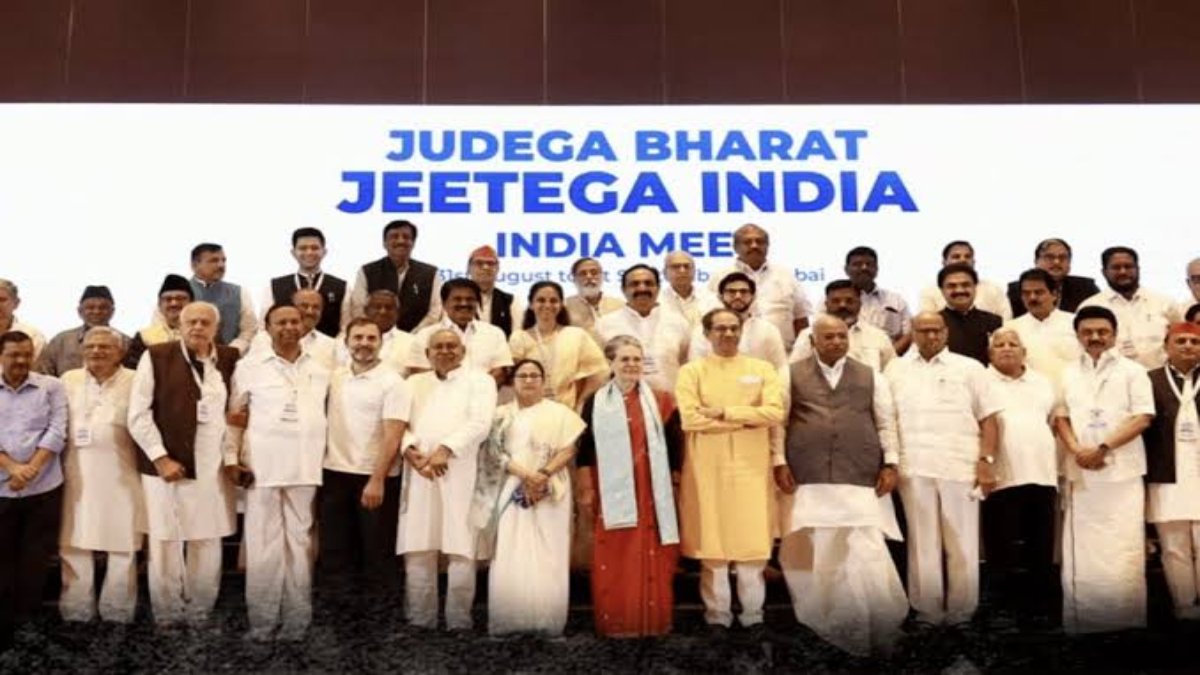
INDIA Alliance boycott anchors has emerged as one of the biggest political developments, with the Opposition bloc announcing that its leaders and spokespersons will no longer participate in debate shows hosted by 14 television anchors across nine news channels. The decision, taken by the alliance’s media committee, has sparked a nationwide debate on media freedom, political accountability, and the relationship between news organizations and political parties. The move has also triggered strong reactions from the BJP, media bodies, and journalists.
Why the INDIA Alliance Boycott Anchors Decision Was Taken
The INDIA alliance said the decision was made after extensive discussions within its media committee. According to Congress leader Pawan Khera, who announced the list, the alliance believes several television debates have increasingly promoted divisive narratives instead of focusing on issues of public interest. He stated that the decision was taken “with a heavy heart” and was aimed at refusing to participate in what the Opposition described as “hate-filled” programming.
The alliance clarified that it is not imposing restrictions on journalists. Instead, it has decided that representatives of member parties will simply avoid appearing on specific television shows hosted by the listed anchors.
Anchors and Channels Included in the Boycott
The list released by the INDIA alliance includes 14 prominent television anchors from nine different news channels. Among them are:
- Arnab Goswami (Republic)
- Sudhir Chaudhary and Chitra Tripathi (Aaj Tak)
- Navika Kumar and Sushant Sinha (Times Now Navbharat)
- Amish Devgan, Aman Chopra, and Anand Narasimhan (News18)
- Gaurav Sawant and Shiv Aroor (India Today TV)
- Prachi Parashar (India TV)
- Rubika Liaquat (India 24/Bharat24)
- Aditi Tyagi (Bharat Express)
- Ashok Shrivastava (DD News)
Under the decision, spokespersons from parties within the Opposition alliance will neither participate in debates hosted by these anchors nor attend events organized by them.
INDIA Alliance Boycott Anchors: Opposition’s Justification
The Opposition alliance has defended its decision by arguing that television debates on certain channels have shifted away from journalism toward political polarization. Leaders claimed many discussions prioritize sensationalism and communal narratives instead of unemployment, inflation, economic issues, and governance.
Congress leader Pawan Khera emphasized that the alliance was not targeting individuals personally but was taking a stand against what it considers a pattern of programming that contributes to social division. He added that the decision could be reviewed in the future if the nature of the debates changes.
BJP and Media Bodies Respond
The BJP strongly criticized the announcement, accusing the Opposition of attempting to silence critical media voices. Party leaders compared the move to restrictions imposed during the Emergency and argued that political parties should answer tough questions rather than avoid interviews.
Meanwhile, media organizations, including broadcaster associations, also expressed concern. They argued that political parties selectively boycotting journalists could set an unhealthy precedent for press freedom and democratic engagement. Several organizations maintained that journalists should remain free to question political leaders regardless of ideological differences.
Powerful Tribute: Meghalaya Khasi Resistance Leaders Honoured with 15-Foot Statues
Political and Media Impact
The controversy has once again highlighted the increasingly strained relationship between political parties and television news channels in India. Media debates have become a major platform for political messaging, and refusing to participate in selected programs could significantly affect both television discussions and political communication strategies.
Supporters of the alliance argue that political parties have the right to choose which platforms they engage with. Critics, however, contend that avoiding certain journalists may reduce opportunities for public scrutiny and accountability.
Political analysts note that the decision is likely to intensify debates over media neutrality, editorial independence, and the growing polarization within India’s television news landscape.
Public Reactions on Social Media
The announcement quickly became a trending topic across social media platforms, where reactions were sharply divided. Supporters praised the alliance for taking a stand against what they described as biased journalism, while critics accused it of avoiding uncomfortable questions.
Several journalists defended their editorial independence, insisting that robust questioning is an essential part of democratic journalism. Others argued that viewers should ultimately decide which news programs they trust.
What Happens Next?
The INDIA Alliance boycott anchors decision is expected to remain a significant political issue in the coming months. Whether the boycott changes the nature of television debates or further deepens divisions between political parties and mainstream media remains to be seen.
For now, the alliance has maintained that its representatives will continue engaging with media platforms but will stay away from the listed television shows. The controversy has added another dimension to India’s evolving political discourse, with questions surrounding media ethics, political participation, and freedom of expression likely to remain at the center of public debate.