

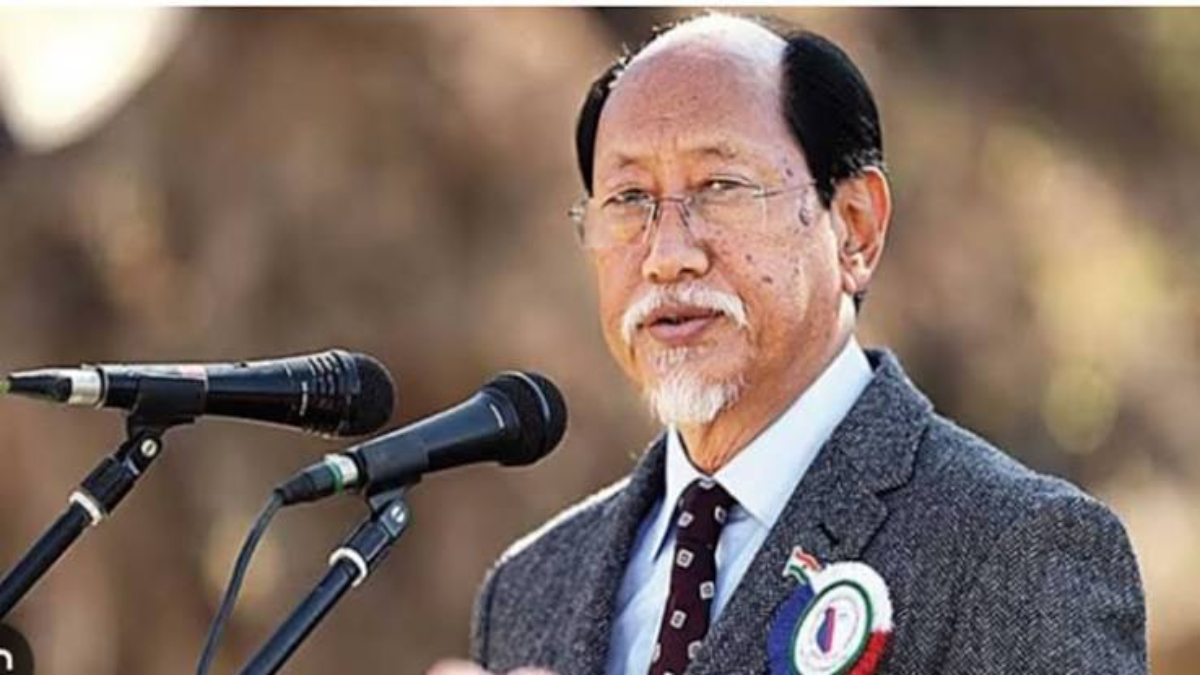
Naga peace talks have gained fresh momentum after Nagaland Chief Minister Dr Neiphiu Rio called for an early, honourable and acceptable settlement to the long-running Naga political issue and urged faster operationalisation of the Frontier Nagaland Territorial Authority (FNTA). Rio made the appeal while addressing Nagaland’s 80th Independence Day celebration at the Civil Secretariat Plaza in Kohima on August 15, 2026.
Rio seeks progress in Naga peace talks
Rio said the people of Nagaland continued to yearn for an early solution to the political issue. He welcomed the recent constitution of a committee headed by the Minister of State for Home Affairs to lead the Naga peace talks, describing the move as a response to repeated appeals for the dialogue to be elevated to the ministerial level.
The chief minister urged the Centre to reach out to all negotiating parties with urgency and clarity so that the newly constituted committee can begin its work and fulfil its mandate. He reiterated that the Nagaland government would continue to play the role of facilitator in efforts to achieve an acceptable political settlement.
The development follows renewed efforts by the state government to push the peace process forward. Earlier this month, the Political Affairs Committee, chaired by Rio, reaffirmed its demand for a ministerial-level interlocutor and resolved to engage stakeholders to prepare a roadmap towards an early settlement.
Frontier Nagaland Territorial Authority remains a priority
Alongside the Naga peace talks, Rio reaffirmed the state government’s support for the early operationalisation of the Frontier Nagaland Territorial Authority. The FNTA is intended to provide an institutional framework for greater development and administrative empowerment in Eastern Nagaland.
A tripartite Memorandum of Agreement was signed on February 5, 2026, between the Government of India, the Nagaland government and the Eastern Nagaland Peoples’ Organisation (ENPO) for establishing the authority. The proposed FNTA covers six districts: Tuensang, Mon, Longleng, Kiphire, Noklak and Shamator.
The agreement envisages a special self-governing arrangement aimed at addressing the region’s social, economic, educational, cultural and linguistic aspirations. It also seeks to reduce developmental disparities between Eastern Nagaland and other parts of the state.
Legal hurdles delay FNTA implementation
The operationalisation of the FNTA has faced legal and constitutional questions, particularly over the proposed transfer of legislative powers.
The Nagaland government introduced the FNTA Bill, 2026 in the Assembly in March, but consideration of the legislation was deferred after the Ministry of Home Affairs sought more time to examine the issue. The state government had also sought legal advice on whether legislative powers could be delegated to the proposed authority under the existing constitutional framework.
In July, the state government announced that it would convene a special session of the Nagaland Legislative Assembly to enact legislation for the FNTA. The proposed law is expected to include provisions for legislative powers over transferred subjects and departments, subject to consultation with and approval from the MHA and conformity with the Constitution.
Government and ENPO push for faster action
The FNTA issue has remained a major concern for the ENPO, which has repeatedly sought implementation of the February agreement. In July, the organisation deferred a proposed public rally after the state government announced plans for a special Assembly session. ENPO, however, maintained that the MoA should be implemented in letter and spirit.
The state government has also sought an increase in the proposed development package for Eastern Nagaland from ₹5,000 crore to at least ₹10,000 crore. The demand reflects the government’s focus on addressing longstanding infrastructure and development gaps in the region.
The state has said the FNTA will receive funding based on population and area, while the Centre is expected to provide special development grants for infrastructure and other projects. The authority is also envisaged to prepare annual plans for departments and subjects placed under its control.
A crucial phase for Nagaland
The renewed focus on the Naga peace talks and the FNTA comes at a significant time for Nagaland. The state government is seeking movement on two major fronts: a political settlement to the decades-old Naga issue and an institutional mechanism aimed at accelerating development in Eastern Nagaland.
For the peace process, the effectiveness of the newly constituted ministerial-level committee will depend on its ability to bring negotiating parties together and move discussions towards a mutually acceptable settlement. For the FNTA, coordination between the state government, Centre and ENPO will remain essential to resolving outstanding constitutional and legislative questions.
Rio’s latest appeal therefore places renewed emphasis on dialogue, consultation and timely implementation. With the state government continuing to facilitate the Naga peace talks while pursuing the FNTA framework, the coming months could be important in determining whether these long-standing political and administrative issues move closer to resolution.
Manipur Polo Heritage Takes the Spotlight in a Powerful Miss Universe India 2026 Costume