

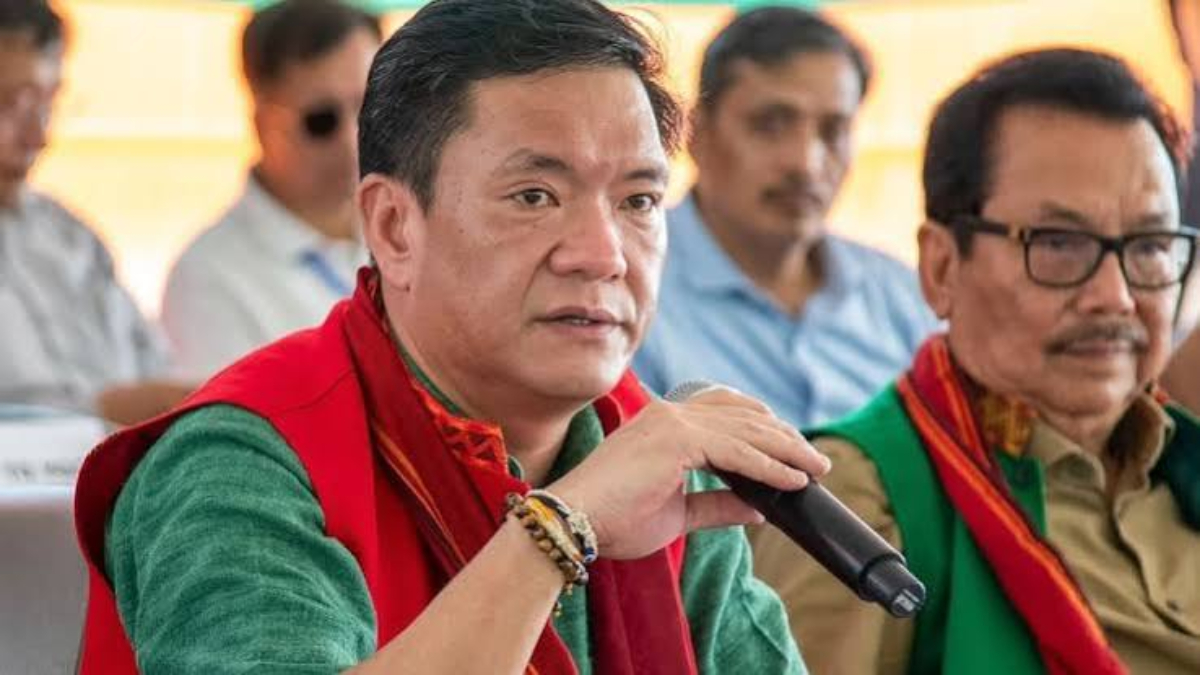
Siang project plans in Arunachal Pradesh remain tied to the findings of the proposed feasibility and pre-feasibility studies, with Chief Minister Pema Khandu reiterating that the massive project will move ahead only if technical assessments support it. The statement comes as the proposed Siang Upper Multipurpose Project (SUMP) faces renewed opposition in parts of Siang and Upper Siang districts.
The latest developments have added urgency to the debate. The Arunachal Pradesh Cabinet recently approved an Empowered High-Level Committee to coordinate the Pre-Feasibility Report (PFR) survey and related activities. The move came amid continued concerns among sections of local communities over land, displacement, environmental effects and the future of the Siang valley.
Siang project depends on technical findings
The proposed SUMP is planned as an approximately 11,000-MW multipurpose hydropower and storage project on the Siang River. The river forms the upper course of the Brahmaputra after entering Arunachal Pradesh from Tibet. The project has been described by the government as important for energy security, water management and flood moderation.
However, the government has not reached the stage of approving construction. The immediate task is to complete the PFR and establish whether the proposed site and design are technically viable. Earlier, Khandu said the preliminary assessment would help determine issues such as geological suitability, possible submergence, dam-related parameters and electricity generation potential.
This means the feasibility process remains a key decision point. If the technical findings do not support the proposal, the project would not automatically proceed simply because survey activities have been undertaken.
High-level panel formed for the survey
On September 23, the state Cabinet approved an empowered high-level committee to guide and coordinate the PFR survey in Siang and Upper Siang districts. Rural Development and Panchayati Raj Minister Ojing Tasing heads the committee, while MLAs Alo Libang and Oni Panyang are members.
The government said the committee would facilitate sustained engagement with residents and ensure that survey activities are conducted in a transparent, peaceful and people-centric manner. The Cabinet also said the concerns and aspirations of likely project-affected families and local communities would remain central to the process.
The project was accorded National Project status by the Centre in 2008. Government statements have linked it to water and energy security, flood moderation in the Siang-Brahmaputra basin, employment and longer-term regional development.
Local support and opposition continue
The Siang project has received support from several villages for PFR-related activities. In February, 76 of 120 households in Karko village signed an MoU supporting preparation of the PFR. In Sitang, 58 of 84 households initially signed a similar agreement, while further households later joined the process.
Geku also saw 110 households support PFR activities in June, according to reports. Such agreements indicate that views within the affected region are not uniform.
At the same time, opposition remains strong in some areas. Residents and indigenous groups have raised concerns about possible displacement, submergence, environmental impacts, livelihoods and cultural ties to the river. The issue has also generated political scrutiny, with the Arunachal Pradesh Congress Committee forming a fact-finding panel on the project’s possible social and environmental impact.
Fresh tensions raise pressure on Siang project
The debate intensified on September 28 when clashes were reported between villagers and security personnel in Geku. Reports said protesters were opposing the project and the deployment of Central Armed Police Forces, while four people were reportedly arrested after the confrontation.
The incident came just before Khandu’s scheduled visit to Siang and Upper Siang districts. The Chief Minister was expected in Boleng on September 29 and Yingkiong on September 30, with the visit taking place against the backdrop of continuing disagreements over PFR activities.
Khandu has previously said the government would not force the project on local residents and has stressed dialogue and public participation. In 2025, he said a public hearing would follow the PFR process and that local consent would be important to the government’s decision.
The immediate focus, therefore, remains on completing the scientific assessment while maintaining engagement with communities. For the Siang project, the feasibility findings will provide the technical basis for determining whether the ambitious proposal can progress, while the response of local communities will remain an important part of the wider process.
Maibam Gulubi Claims Major Gold at Asian Bench Press Championship