

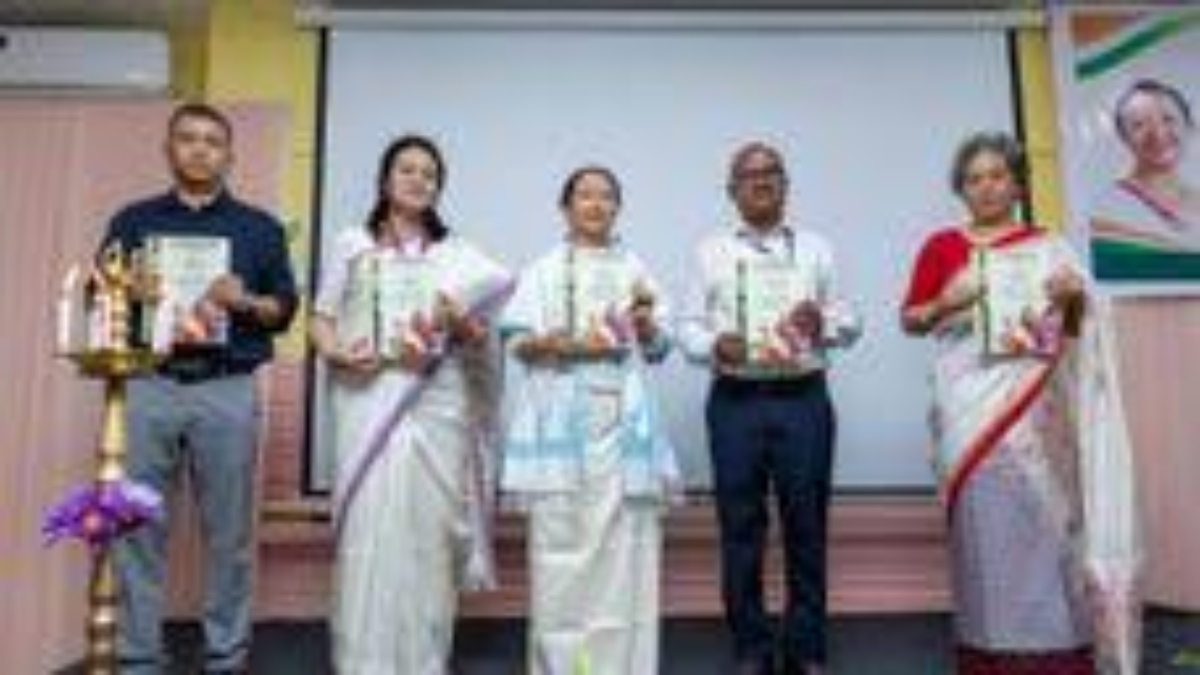
indigenous knowledge has received renewed attention in the Northeast after NITI Aayog Member Dr Joram Aniya called for traditional agricultural practices to be preserved and strengthened through scientific research and innovation. Speaking at the National Conference on Natural Farming 2026 at Umiam in Meghalaya, Aniya said the region’s traditional systems should be studied scientifically rather than allowed to disappear with changing agricultural practices.
The three-day conference, organised by Central Agricultural University (CAU), Imphal, from September 9 to 11, brought together around 500 farmers, researchers, policymakers, students, agricultural scientists and industry representatives. The discussions focused on natural farming, sustainable agriculture, soil health and ways to make farming more self-reliant.
Indigenous knowledge needs scientific validation
Dr Aniya stressed that the Northeast has a rich base of traditional agricultural knowledge developed through generations of interaction with local soil, climate, forests and water systems. She urged students and researchers to examine these practices through scientific methods while retaining their community-based value.
Her remarks placed indigenous knowledge at the centre of a wider discussion on the future of agriculture in the region. She highlighted the relationship between soil health, food quality, human health and the wellbeing of future generations.
Aniya also encouraged researchers to explore new agricultural approaches and strengthen traditional practices through science. She said younger generations should be encouraged to see farming as a source of dignity and pride.
From Ziro to Manipur, traditional practices matter
The call has particular relevance for the Northeast, where farming traditions vary widely between communities and landscapes. From the Apatani agricultural systems of Ziro in Arunachal Pradesh to jhum cultivation practiced in several parts of the region, traditional knowledge remains closely linked with local ecological conditions.
NITI Aayog has previously noted the importance of indigenous knowledge and traditional agricultural practices in the Northeast, particularly for climate-adaptive agriculture. The region’s biodiversity and fragile ecosystems make locally adapted farming knowledge relevant to discussions on sustainability.
Aniya specifically called for traditional systems such as jhum cultivation to undergo scientific study. She pointed to the need for greater understanding of fallow periods, ecological regeneration, biodiversity and seasonal agricultural cycles.
Such research could help distinguish practices that can be strengthened or adapted from those that may need modification under changing environmental and economic conditions.
Scientific research can strengthen traditional farming
The emphasis on scientific backing does not necessarily mean replacing traditional systems with modern methods. Instead, the approach discussed at the conference seeks to bring researchers and farming communities together to document, test and improve existing practices.
This could include research into soil fertility, crop diversity, seed preservation, natural inputs, pest management and water conservation. Documentation can also help preserve knowledge that is traditionally transmitted through families and communities rather than formal institutions.
The approach is particularly important as younger people increasingly move away from farming. Recording local practices and testing their effectiveness could help prevent valuable knowledge from being lost while creating opportunities for practical innovation.
Natural farming and the Northeast’s potential
The conference also highlighted the Northeast’s potential for natural and sustainable agriculture. Assam Governor Lakshman Prasad Acharya, who attended the inaugural session as chief guest, stressed the importance of combining traditional agricultural wisdom with scientific innovation.
Acharya pointed to Sikkim’s experience with organic farming and said the biodiversity-rich Northeast could develop into a major hub for natural farming. He also highlighted the potential of the region’s GI-tagged products under a “Local to Global” approach.
Speakers at the conference called for region-specific recommendations, stronger scientific research, reduced dependence on chemical inputs and better value chains connecting farmers with processing, branding and markets.
A wider role for indigenous knowledge
The discussion around indigenous knowledge extends beyond agriculture. Traditional communities across the Northeast possess locally developed understanding of forests, medicinal plants, food preservation, livestock, water management and biodiversity.
Dr Aniya’s own academic background includes research and documentation of indigenous languages, folklore and cultural heritage. NITI Aayog describes her as a scholar of indigenous knowledge systems with interests spanning tribal studies, history, culture and inclusive development.
Her intervention at the Umiam conference therefore adds a policy dimension to a subject that has long been part of community life across the Northeast.
The challenge now is to build effective links between farmers, universities, research institutions and policymakers. Scientific evaluation can help identify which traditional practices deliver measurable benefits, while community participation can ensure that research remains grounded in local realities.
For the Northeast, preserving indigenous knowledge while testing and strengthening it through modern research could create a bridge between inherited wisdom and future agricultural needs. The discussions at Umiam have placed that bridge at the centre of a growing conversation on sustainable farming, ecological resilience and rural prosperity.
Maharashtra Mega Recruitment Drive: Fadnavis to Launch Rozgar Mahakumbh on September 29