

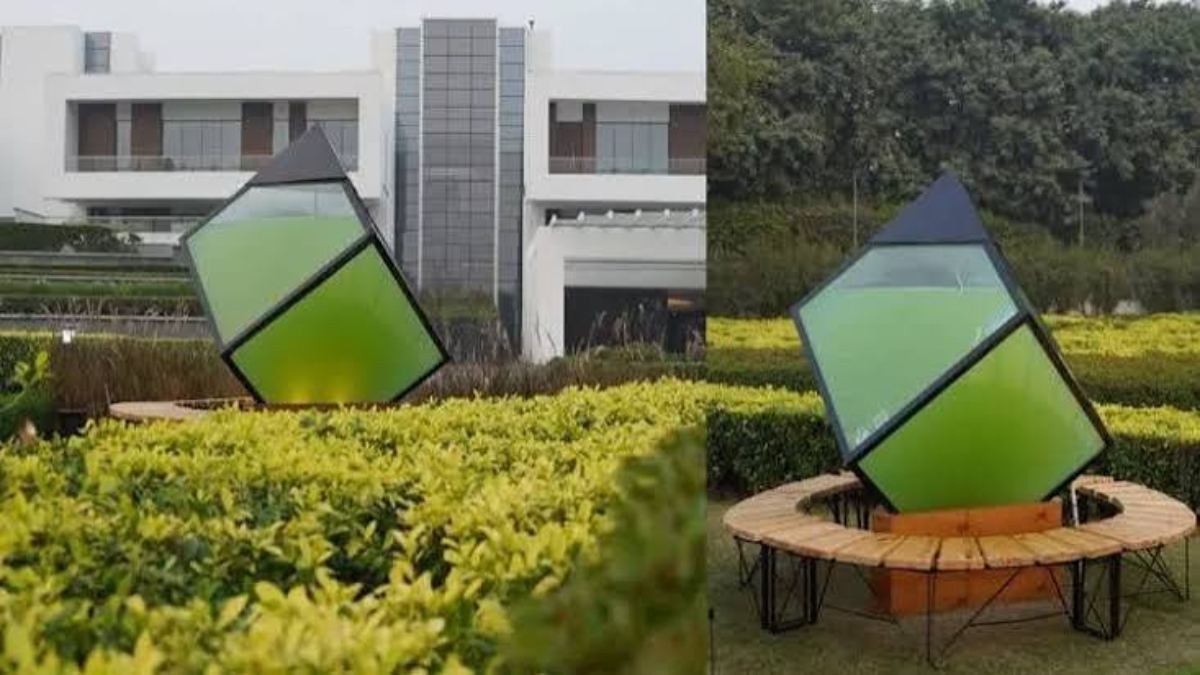
Mobile Liquid Tree is emerging as an innovative solution to tackle urban air pollution in India, offering a sustainable alternative for cities where planting conventional trees is difficult due to limited space. Developed by researchers and innovators in India, the country’s first mobile Liquid Tree is designed to absorb carbon dioxide while releasing oxygen through microalgae, helping improve air quality in densely populated urban areas. The breakthrough highlights how science and green technology can work together to create cleaner, healthier cities.
What Is a Mobile Liquid Tree?
A Mobile Liquid Tree is a compact, movable air-purification system that uses a tank filled with water and specially cultivated microalgae. These microscopic organisms naturally perform photosynthesis by absorbing carbon dioxide and releasing oxygen, much like traditional trees.
Unlike regular trees that require years to mature and fixed planting spaces, the mobile unit can be transported and installed in areas with heavy pollution, such as traffic intersections, industrial zones, public squares, metro stations, and commercial districts. This flexibility makes it a practical solution for cities facing rapid urbanization and shrinking green spaces.
The development represents a significant step forward in India’s efforts to adopt climate-friendly technologies that complement existing environmental conservation measures.
How the Mobile Liquid Tree Works
The Mobile Liquid Tree functions by harnessing the natural ability of microalgae to remove carbon dioxide from the atmosphere.
The system typically consists of:
- A transparent tank containing water and nutrient-rich microalgae.
- Solar-powered or energy-efficient pumps to circulate the water.
- Sensors that monitor the health and growth of the algae.
- A compact frame that allows easy transportation and installation.
As sunlight reaches the algae, they absorb carbon dioxide from the surrounding air and release oxygen through photosynthesis. Since microalgae grow much faster than conventional trees, they can absorb significant amounts of carbon dioxide relative to their size.
Researchers also note that harvested algae biomass can potentially be used for biofertilizers, biofuels, or other sustainable applications, making the technology environmentally beneficial beyond air purification.
Why India Needs Mobile Liquid Tree Technology
India continues to face severe air pollution challenges, particularly in rapidly growing metropolitan cities. Vehicular emissions, industrial activities, construction dust, and seasonal factors contribute to declining air quality across many urban centres.
One of the biggest challenges in combating pollution is the lack of available land for planting sufficient numbers of trees. Many busy roads, commercial hubs, and transport corridors simply do not have enough space for large-scale greenery.
This is where the Mobile Liquid Tree offers an effective alternative. Since the units occupy minimal space and can be relocated as required, they provide targeted pollution control in high-emission areas without requiring permanent landscaping.
While experts emphasize that these systems cannot replace natural forests or urban tree plantations, they can supplement existing environmental initiatives and improve localized air quality.
Recent Development Marks a Milestone
India’s first mobile Liquid Tree marks an important milestone in the country’s environmental innovation landscape. The project demonstrates how advanced biotechnology can address real-world urban challenges using nature-inspired solutions.
The mobile design distinguishes it from earlier stationary liquid tree models developed in other countries. By making the unit portable, developers have increased its usefulness for municipal authorities, educational institutions, research organisations, and environmental agencies.
The innovation also aligns with India’s broader climate commitments, including reducing carbon emissions, promoting green infrastructure, and improving urban sustainability through technological advancements.
Potential Applications Across Indian Cities
The Mobile Liquid Tree could find applications across various public and private spaces, including:
Traffic Junctions
Busy intersections with continuous vehicle emissions could benefit from strategically placed units that help absorb carbon dioxide and improve local air quality.
Educational Institutions
Schools, colleges, and universities can use the technology both as an environmental initiative and as an educational tool for students studying sustainability and biotechnology.
Industrial Areas
Industrial clusters often experience higher pollution levels. Mobile Liquid Tree installations can complement existing pollution-control measures in such locations.
Public Parks and Events
Since the system is portable, it can be temporarily deployed during large public gatherings, exhibitions, festivals, or awareness campaigns to promote environmental responsibility.
Complementing Existing Green Initiatives
Although the Mobile Liquid Tree offers exciting possibilities, experts stress that it should complement—not replace—traditional tree plantation drives.
Natural forests provide biodiversity, wildlife habitats, groundwater recharge, cooling effects, and numerous ecosystem services that artificial systems cannot fully replicate.
Instead, mobile Liquid Trees can bridge the gap in highly urbanized areas where planting mature trees is difficult. Combined with afforestation, renewable energy adoption, cleaner transportation, and stricter emission controls, such innovations can contribute meaningfully to healthier urban environments.
A Promising Step Towards Cleaner Cities
India’s first Mobile Liquid Tree showcases the country’s growing focus on sustainable innovation to address pressing environmental challenges. By combining biotechnology, portability, and efficient carbon absorption, the system offers a practical tool for improving air quality in congested urban locations.
As cities continue expanding, innovative solutions like the Mobile Liquid Tree can support broader environmental goals while raising public awareness about sustainable living. Continued research, pilot deployments, and collaboration between scientists, civic authorities, and policymakers will determine how widely this technology is adopted in the years ahead. If implemented alongside conventional green infrastructure, it could become an important part of India’s strategy to create cleaner, greener, and healthier cities.