

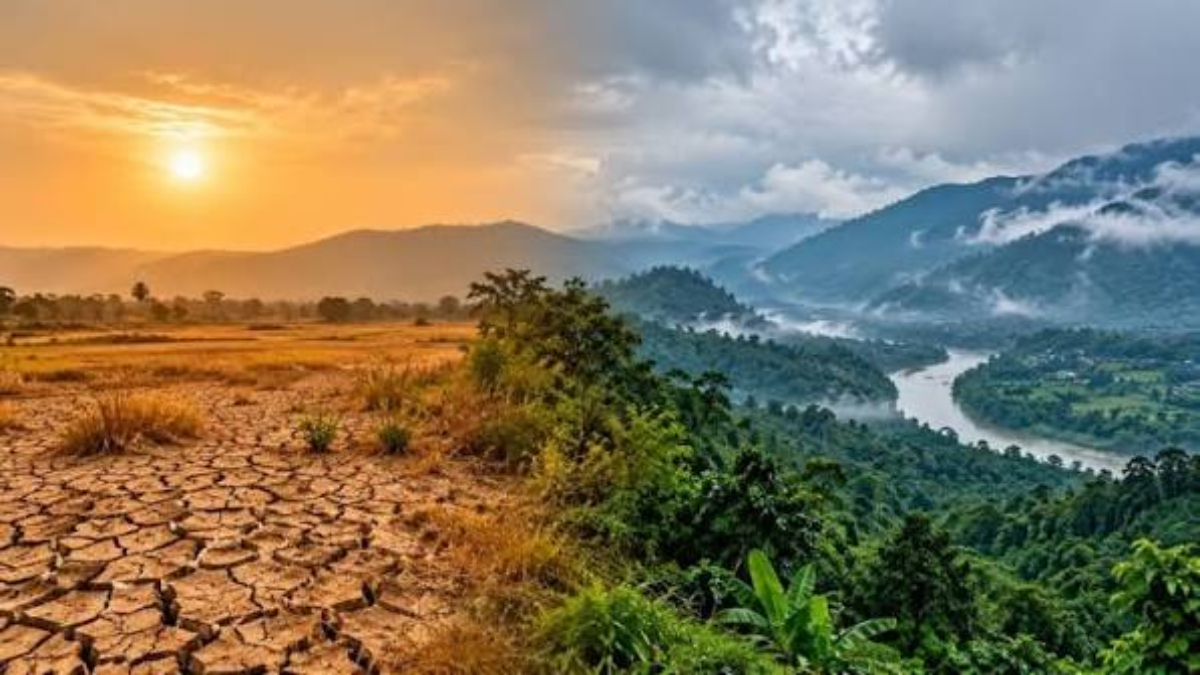
Northeast India climate change has emerged as a significant concern following a new study by the India Meteorological Department (IMD) that identifies a long-term shift in the region’s climate zones. The research indicates that areas previously classified under the tropical savannah climate are transitioning towards a temperate climate, highlighting changes in temperature and rainfall patterns across the country.
Published in the IMD journal MAUSAM in October 2026, the study examines historical weather observations spanning seven decades. Its findings offer fresh insights into how changing climatic conditions are reshaping India’s regional climate classification and could influence future weather forecasting, agricultural planning and environmental management.
IMD Study Identifies Major Climate Zone Changes
The study, titled “Identifying the climate zones shifts of Indian meteorological subdivisions: insights from historical records”, was conducted by scientists associated with the India Meteorological Department and the Indian Institute of Tropical Meteorology (IITM), Pune.
The research analysed observed rainfall and maximum and minimum temperatures between 1951 and 2020. Researchers compared climate classifications based on updated 30-year moving averages, examining how the distribution of climate zones changed between the 1961–1990 and 1991–2020 reference periods.
According to the findings, Northeast India has experienced a shift from tropical savannah conditions towards a temperate climate classification. The study also identified a transition towards hotter, drier climate conditions in parts of northwestern India.
These findings demonstrate that climate zones are not necessarily fixed over time. Sustained changes in temperature and precipitation can alter how a region is classified under established climate assessment systems.
Why Is the Tropical Savannah Climate Zone Shrinking?
The tropical savannah climate is generally associated with warm temperatures, seasonal rainfall and a distinct dry period. Under the Köppen-Geiger classification system, it is commonly represented by the code Aw.
The distribution of this climate type across parts of Northeast India reflects the region’s varied geography, monsoon influence and seasonal weather patterns. Tripura, for example, is predominantly associated with tropical savannah conditions in regional climate classifications.
However, the IMD study indicates that the balance between climate categories has changed over the decades. Areas previously classified as tropical savannah are increasingly being placed within the temperate category as long-term climatic conditions evolve.
The findings do not necessarily mean that every location in Northeast India is experiencing identical weather changes. The region includes extensive plains, plateaus and mountainous areas, creating substantial differences in local temperature and rainfall.
Instead, the research highlights a broader change in the climate characteristics used to classify the region over extended periods.
How Temperature and Rainfall Influence the Shift
The researchers examined rainfall alongside maximum and minimum temperatures to identify changes in climate classifications. These factors are essential for understanding whether a region is becoming warmer, cooler, wetter or drier over time.
Temperature affects the seasonal conditions that distinguish tropical and temperate climates, while rainfall patterns help determine whether an area experiences a pronounced dry season or more sustained moisture.
The IMD study identifies increasing temperatures and declining rainfall as important drivers of climate-zone changes across parts of India. However, the specific mechanisms behind the Northeast India transition require careful interpretation alongside the study’s regional observations.
Long-term averages are particularly important because individual years can experience unusually heavy rainfall, droughts or temperature extremes without necessarily indicating a permanent climate shift.
By comparing successive climate reference periods, researchers can identify broader trends that might otherwise remain difficult to distinguish from normal year-to-year variability.
What the Findings Mean for Agriculture and Water Resources
The changing climate classification could have important implications for agricultural planning across Northeast India. Farmers depend on predictable seasonal rainfall and temperature conditions when selecting crops, preparing fields and deciding when to sow.
Changes in these conditions may require agricultural authorities to reassess crop suitability, irrigation requirements and local farming recommendations. However, the study does not establish that every crop or farming area will be affected in the same way.
Water-resource management is another important consideration. Northeast India receives substantial rainfall during the monsoon, but changes in rainfall distribution can influence water availability, river flows and the management of reservoirs and local water supplies.
Understanding long-term climate trends can help authorities improve agricultural advisories, strengthen water-management strategies and prepare for potential weather-related risks.
Implications for Climate Monitoring and Forecasting
The IMD research also highlights the importance of continuously updating climate assessments. Historical climate classifications provide a useful baseline, but they may become less representative when temperature and rainfall patterns change over several decades.
More frequent analysis of observed weather data can help meteorologists identify emerging trends and improve their understanding of regional climate behaviour.
For Northeast India, where communities, agriculture and ecosystems are closely connected to monsoon conditions, continued monitoring is especially important. Climate-zone assessments can complement studies of extreme rainfall, dry spells and temperature trends, helping authorities develop more region-specific adaptation strategies.
The findings should also be understood within the limits of the research period, which ends in 2020. They describe changes observed across historical climate reference periods rather than providing a direct measurement of every subsequent weather event.
As climate research advances, integrating updated observations with regional assessments will remain essential for understanding how Northeast India’s climate may evolve in the coming decades.
The IMD study offers important evidence that India’s climatic boundaries are changing over time. Continued observation, better agricultural planning and stronger regional climate assessments will be crucial to understanding the implications for Northeast India’s communities, natural resources and long-term environmental resilience.
Meghalaya Legal Services Authority Unveils Garo Language Mediation Film