

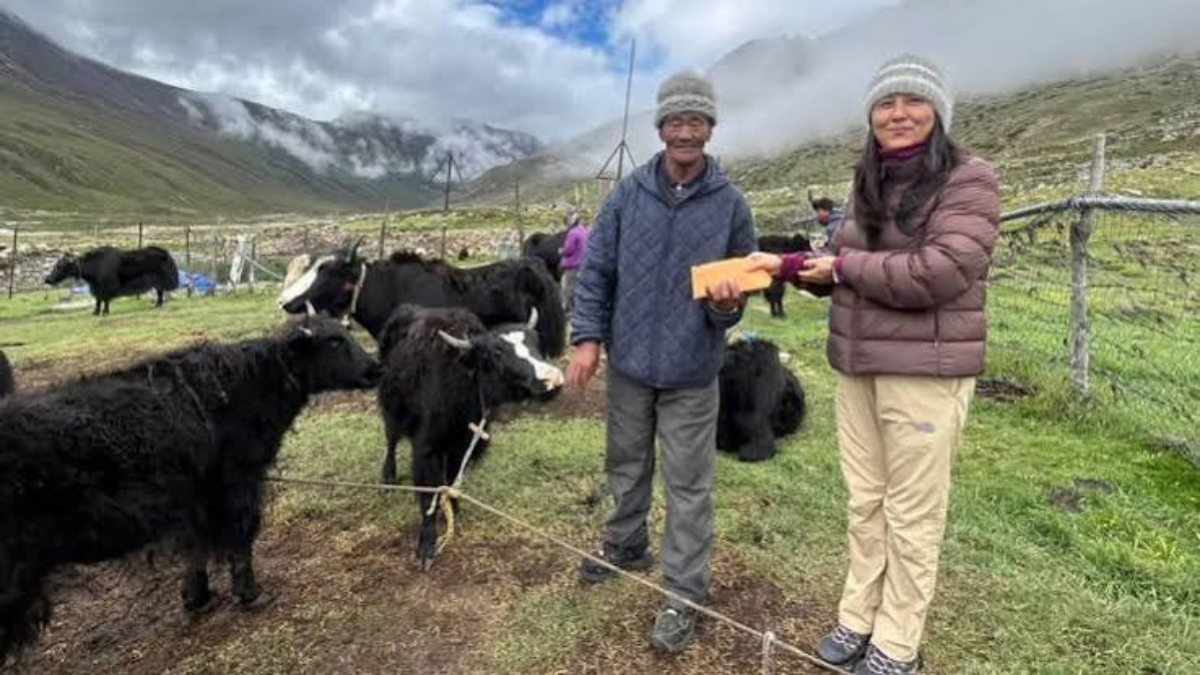
Sikkim yak calf rally brought a unique livestock event to one of the state’s most remote mountain regions, with the Animal Husbandry and Veterinary Services Department organising the programme at around 15,000 feet above sea level in Gochung and Lashar Valley of Lachen, Mangan district. Held on August 29, the event combined recognition of yak calves with veterinary support for traditional herding communities.
The programme was organised under the Rashtriya Gokul Mission (RGM) 2026–27 and funded by the Sikkim Livestock Development Board (SLDB). It also comes at an important time for yak conservation, following the recent recognition and registration of the Sikkimese Yak as a distinct breed by the National Bureau of Animal Genetic Resources (NBAGR), Government of India.
Sikkim yak calf rally reaches remote mountain pastures
The event was held in the high-altitude pastures of Gochung and Lashar, where the Dongkong group of yak herders moves during the summer months. The community collectively owns around 1,831 yaks and continues the traditional practice of seasonal migration to remote grazing areas.
Reaching the herders was itself a major undertaking. A departmental team travelled approximately 18 kilometres along the Gochung-Lashar-Byamzey route through difficult terrain and oxygen-thin air. The team was led by Additional Director Dr Dechen O. Kaleon and included veterinary and departmental officials from Mangan, Chungthang, Phodong and Lachen.
The difficult journey underlines the challenges faced by communities that rear livestock in some of Sikkim’s highest and least accessible settlements. Bringing government veterinary services directly to these areas also reduces the need for herders to travel long distances for basic animal care.
Eleven Drokpas participate in the calf event
Eleven yak farmers, locally known as Drokpas, participated in the rally. Some herders entered more than one calf, giving the event a competitive as well as community-focused character.
Tshering Choenden’s calf secured the first position and received a cash prize of Rs 15,000. Tshering Norbu’s calf won second place with Rs 12,000, while Pema Thinley’s calf stood third and received Rs 10,000. The remaining eight participants were given consolation prizes of Rs 5,000 each.
The awards provided direct recognition to yak herders while drawing attention to the importance of maintaining healthy and productive animals in the high-altitude environment.
Veterinary support adds value to Sikkim yak calf rally
The programme went beyond a livestock competition. Participating Drokpas received care packages containing cooking oil and washing powder. The department also distributed veterinary supplies, including ectoparasiticides, dewormers and calcium supplements for the yaks.
Such support is particularly relevant in remote grazing areas, where access to regular veterinary services can be difficult because of steep terrain, long distances and harsh mountain conditions.
The combination of a calf rally and veterinary outreach therefore offered practical assistance while also recognising the role of herders in maintaining Sikkim’s traditional livestock practices.
Recognition strengthens focus on Sikkimese Yak
The Sikkim yak calf rally also gained significance from the recent official recognition of the Sikkimese Yak as a distinct breed by NBAGR. The development places greater emphasis on conserving the state’s indigenous yak population and supporting the communities that have traditionally reared these animals.
Yaks are closely associated with high-altitude livelihoods across the Himalayan region. In Sikkim, yak herding remains an important traditional occupation in remote northern areas. The Dongkong herders’ seasonal movement to Gochung and Lashar demonstrates how livestock practices continue to adapt to the natural conditions of the mountains.
Supporting traditional livelihoods at 15,000 feet
The initiative reflects an effort to take livestock development programmes beyond easily accessible areas. Under the Rashtriya Gokul Mission, the broader objective is to conserve indigenous bovine breeds and improve livestock productivity. The programme in Mangan adds a local dimension by focusing on a distinct high-altitude yak population and the people who depend on it.
For the Drokpas, the event offered more than prizes. It brought government officials to their seasonal pastures, provided animal-health supplies and highlighted the value of their traditional knowledge and livelihood.
At 15,000 feet, the Sikkim yak calf rally showcased how livestock conservation, veterinary outreach and community support can come together in one of the state’s most challenging environments. The initiative also sends a wider message about the need to protect indigenous breeds and sustain the mountain communities that keep these traditions alive.