

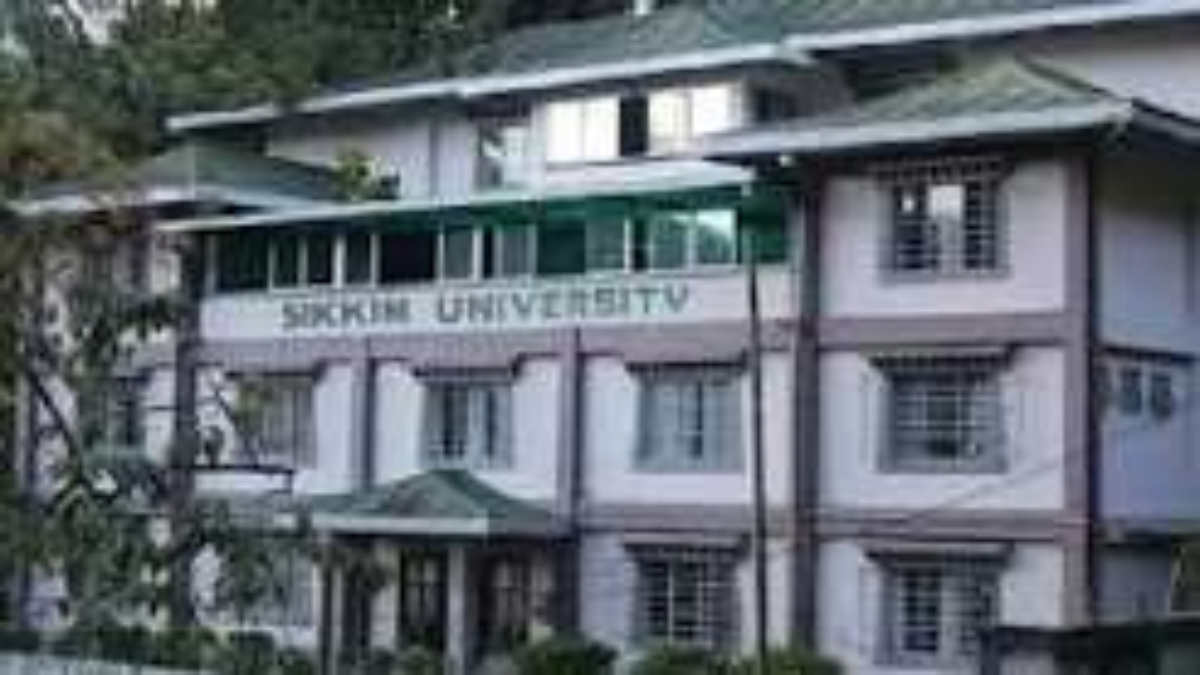
Sikkim University Mass Communication has emerged as a point of concern after enrolment in the programme reportedly fell to just three students, prompting former Sikkim University vice-chancellor Prof Mahendra P Lama to flag what he described as signs of “institutional decay”. The sharp decline has raised questions over the health of academic programmes at one of the Northeast’s prominent central universities.
Three-student enrolment raises concern
The reported enrolment figure has drawn attention because Mass Communication was among the programmes established with the broader objective of giving Sikkim University a multidisciplinary academic character. Prof Lama, who served as the university’s founding vice-chancellor, has raised concerns over the direction in which the institution has developed.
The latest situation has renewed debate over student interest, academic administration and the university’s ability to maintain the standards associated with its early years. The concern is particularly significant for a programme linked to journalism, media studies and communication, fields that have expanded rapidly with the growth of digital platforms.
The decline to three students is being viewed not simply as an admission issue but as a possible indicator of wider institutional challenges. Prof Lama’s reference to “institutional decay” has therefore added urgency to discussions about the university’s academic environment and long-term functioning.
Sikkim University Mass Communication had an ambitious beginning
The Sikkim University Mass Communication programme was part of a larger academic vision developed after the university was established in 2007. Prof Lama had earlier written that the institution was intended to combine a strong national outlook with a local identity while promoting multidisciplinary learning.
During its formative years, Sikkim University introduced departments in areas including Mass Communication and Information Technology, along with programmes focused on subjects such as peace and conflict studies, sustainable development, indigenous studies and languages.
The university’s original model placed emphasis on communication, discussion, debate, research and interdisciplinary learning. Prof Lama had argued that such approaches could help transform a university located in the Himalayan periphery into an institution with wider national and international relevance.
Current department continues to offer postgraduate and research programmes
Despite the reported fall in enrolment, the Sikkim University Mass Communication department continues to operate. The university’s official website lists MA/MSc, MPhil and PhD programmes under the department. It is based at the GeoMASC Building at Indira Bypass, Tadong.
The university’s current departmental information also lists several teaching faculty members associated with Mass Communication, indicating that the academic infrastructure remains in place. The department is currently headed by an in-charge, according to the university’s latest departmental listing updated in September 2026.
Recent university records also show continuing research activity in the discipline. A 2025 university notification listed Mass Communication among departments with PhD scholars receiving non-NET fellowship support, while university examination records in 2026 included PhD coursework in Mass Communication.
Why the enrolment decline matters
A fall to three students could have implications beyond classroom strength. Low enrolment can affect the viability of specialised courses, peer interaction, academic activities and the overall visibility of a department.
Mass Communication is also a field undergoing significant change. Students today have opportunities in digital journalism, social media, advertising, public relations, filmmaking, content production, broadcasting and communication research. Universities therefore face growing pressure to ensure that their programmes remain relevant to changing industry requirements.
For Sikkim University Mass Communication, strengthening practical training, industry exposure, digital media education and career pathways could be important in attracting students. Clear communication about placements, internships, research opportunities and programme outcomes may also influence prospective applicants.
A wider institutional question
The controversy surrounding enrolment comes against the backdrop of the university’s changing academic landscape. The institution that once promoted itself through innovative programmes and multidisciplinary education now faces questions about how effectively those ambitions are being sustained.
Prof Lama’s criticism places the spotlight on whether falling student numbers should be treated as an isolated departmental problem or as a warning sign requiring broader institutional assessment.
The immediate challenge is to understand why student interest has fallen so sharply and whether corrective measures can restore confidence. For Sikkim University Mass Communication, the answer could depend on how effectively the university connects academic learning with the rapidly changing media industry.
The reported three-student intake has thus become more than a statistic. It has triggered a larger discussion about academic vitality, institutional priorities and the future direction of Sikkim University. Addressing those concerns could be crucial if the university wants to revive student interest and protect the academic vision with which it was originally established.