

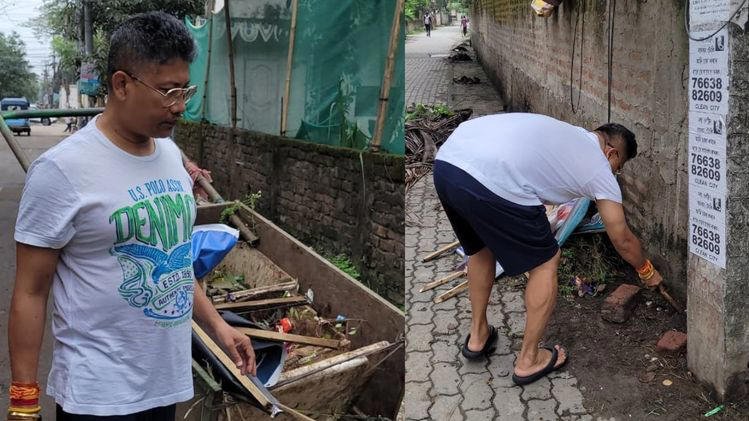
Assam minister Pijush Hazarika participated in a cleanliness drive in Guwahati, where he praised the efforts of sanitation workers from the Guwahati Municipal Corporation (GMC). The initiative highlighted the importance of maintaining hygiene and improving urban living conditions.
The Assam cleanliness drive GMC initiative saw active participation from civic officials, workers, and local residents. Hazarika joined the effort on the ground, demonstrating the government’s commitment to public cleanliness campaigns.
Moreover, the minister acknowledged the dedication of sanitation workers who play a crucial role in keeping the city clean. He emphasized that their contributions often go unnoticed despite their importance.
Read More: Historic Victory for Assam Temporary Tea Workers on May Day
Appreciation for GMC Sanitation Workers
During the drive, Pijush Hazarika interacted with GMC sanitation workers and expressed his appreciation for their hard work. He recognized their role in ensuring that Guwahati remains clean and livable.
He stated that sanitation workers form the backbone of urban management. Without their daily efforts, maintaining hygiene in a growing city would be challenging.
In addition, the minister highlighted the need to respect and support these workers. He encouraged citizens to cooperate with sanitation teams and follow proper waste disposal practices.
Furthermore, he noted that improving working conditions for sanitation workers should remain a priority. Providing necessary equipment and support can enhance their efficiency and safety.
Importance of Cleanliness Drives
Cleanliness drives like this one play a vital role in raising awareness about hygiene. They encourage community participation and promote responsible behavior among citizens.
The Assam cleanliness drive GMC initiative aims to create a culture of cleanliness. By involving local communities, authorities can ensure long-term impact.
Moreover, such campaigns contribute to public health. Clean surroundings reduce the risk of diseases and improve overall quality of life.
In addition, these initiatives align with national efforts to promote sanitation and cleanliness. They reinforce the importance of collective responsibility in maintaining public spaces.
Government’s Commitment to Urban Development
The participation of Pijush Hazarika reflects the government’s focus on urban development. Clean and well-maintained cities are essential for economic growth and social well-being.
The Assam government has been implementing various initiatives to improve urban infrastructure. These include waste management systems, road maintenance, and sanitation services.
Furthermore, the government aims to enhance the capacity of municipal bodies like the Guwahati Municipal Corporation. Strengthening these institutions can improve service delivery.
The cleanliness drive also highlights the importance of collaboration between government agencies and citizens. Together, they can achieve sustainable urban development.
Role of Citizens in Maintaining Cleanliness
While government initiatives are important, citizen participation remains crucial. Individuals must take responsibility for keeping their surroundings clean.
Pijush Hazarika urged residents to adopt better waste management practices. This includes proper segregation of waste and avoiding littering.
Moreover, he emphasized the importance of community involvement. Local groups and organizations can play a key role in promoting cleanliness.
In addition, awareness campaigns can educate people about the benefits of hygiene. This can lead to lasting behavioral change.
Impact on Guwahati’s Image
Cleanliness initiatives have a direct impact on a city’s image. A clean city attracts tourists, investors, and businesses.
Guwahati, as a major urban center in Assam, benefits from such efforts. Improved sanitation can enhance its reputation and boost economic opportunities.
Furthermore, cleanliness contributes to a better quality of life for residents. It creates a more pleasant and healthy environment.
The Assam cleanliness drive GMC initiative therefore supports both social and economic objectives.
Challenges in Urban Sanitation
Despite progress, urban sanitation faces several challenges. Rapid population growth increases the demand for services.
In addition, managing waste in densely populated areas can be difficult. Limited resources and infrastructure can affect efficiency.
Sanitation workers often work under challenging conditions. Therefore, improving their safety and working environment is essential.
Moreover, changing public behavior remains a challenge. Continuous efforts are needed to encourage responsible practices.
Way Forward
To sustain the impact of cleanliness drives, authorities must adopt a long-term approach. This includes regular campaigns, improved infrastructure, and better resource management.
The government may also invest in modern waste management technologies. These can enhance efficiency and reduce environmental impact.
In addition, training programs for sanitation workers can improve service quality. Providing proper equipment and support can increase productivity.
Furthermore, partnerships with private organizations and NGOs can strengthen efforts. Collaboration can bring new ideas and resources to the table.
Conclusion
The participation of Pijush Hazarika in the cleanliness drive in Guwahati highlights the importance of sanitation and community involvement. By praising GMC sanitation workers, he has acknowledged their critical role in urban management.
The Assam cleanliness drive GMC initiative demonstrates how collective efforts can improve living conditions. It also underscores the need for continued focus on hygiene and public awareness.
As Guwahati continues to grow, maintaining cleanliness will remain a priority. With active participation from both the government and citizens, the city can achieve sustainable development and a better quality of life.
Read More: Amit Shah Inaugurates Holy Buddha Relics Exposition in Leh