

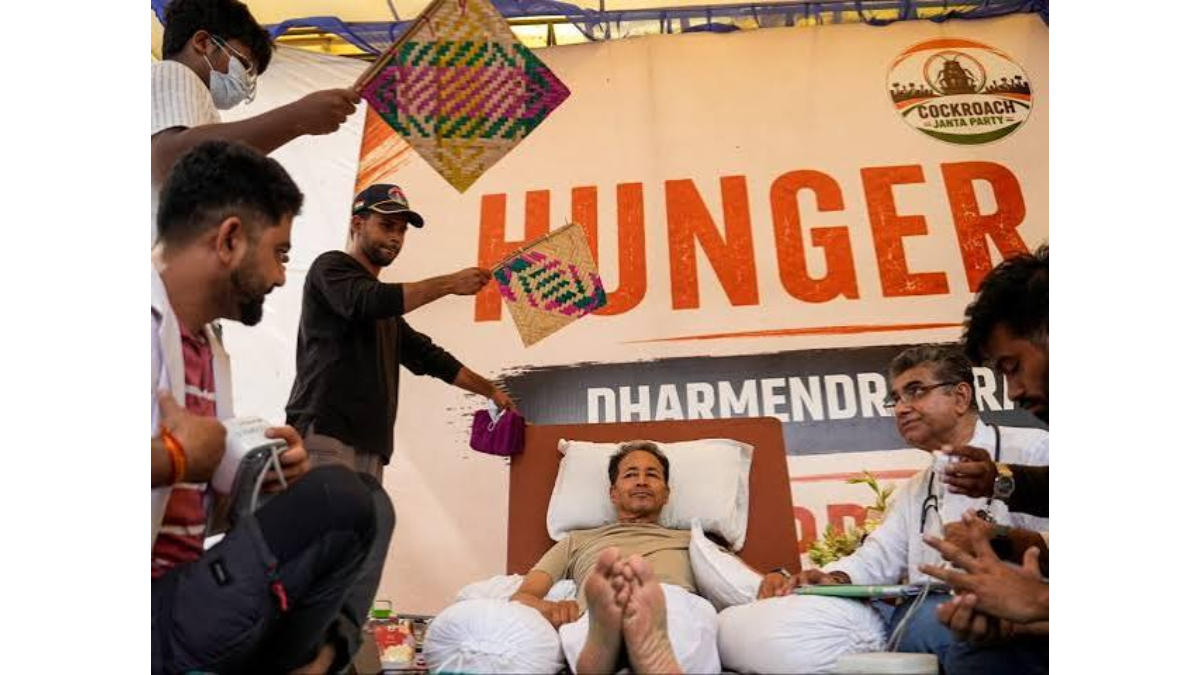
Sonam Wangchuk hunger strike has entered a crucial phase after the renowned climate activist announced that he is willing to end his indefinite fast if the Central government provides a clear assurance that no punitive or retaliatory action will be taken against students and young protesters who participated in the recent demonstrations. The development comes amid growing political attention, concerns over Wangchuk’s health, and ongoing nationwide debates over examination paper leaks and accountability in the education system.
Why Sonam Wangchuk Set a New Condition
Activist Sonam Wangchuk has written to Union Ministers J.P. Nadda and Jitendra Singh, stating that he is prepared to end his fast if the Centre guarantees that students and youth involved in the protests will not face legal cases, harassment, or retaliatory action.
According to Wangchuk, such an assurance is essential to protect young citizens who participated in peaceful demonstrations demanding accountability over alleged examination irregularities. He described the students’ participation as an exercise of democratic rights and urged the government to avoid any form of vindictive response.
Sonam Wangchuk Hunger Strike Linked to Broader Demands
The hunger strike began in late June and has become one of the most prominent symbols of the nationwide movement seeking reforms following allegations of examination paper leaks.
Besides protection for protesters, Wangchuk acknowledged that the Centre had already indicated a willingness to consider two of his key demands:
- Compensation for families of students who reportedly died by suicide following examination controversies.
- A meaningful discussion in Parliament on fixing accountability, including deliberation over the Education Minister’s resignation.
However, he made it clear that he would continue fasting until the government formally assures that no action will be taken against the young protesters.
Health Concerns Grow as Fast Continues
Wangchuk’s prolonged hunger strike has raised serious concerns about his health. He has been undergoing treatment at Medanta Hospital after his condition deteriorated during the fast.
Medical teams continue to monitor his condition closely, while supporters, civil society members, and political leaders have urged him to prioritize his health. Despite these appeals, Wangchuk has maintained that the movement’s objectives remain more important than his personal well-being unless the government offers the requested assurances.
Veteran Oken Amakcham Passes Away: National Award-Winning Manipuri Filmmaker Leaves Lasting Legacy
Political Leaders React
The issue has gained significant political traction in Parliament and outside it.
Several opposition leaders have expressed support for Wangchuk’s demands and criticized the government’s handling of the student protests. Reports indicate that opposition MPs attempted to meet Wangchuk at the hospital, although access became a point of political controversy.
Meanwhile, nationwide protests over alleged examination paper leaks have intensified, with opposition parties demanding greater accountability and comprehensive reforms to restore confidence in India’s examination system.
Government’s Response So Far
Following discussions between Union ministers and Wangchuk, the Centre reportedly conveyed a positive approach toward some of his demands, including compensation for affected families and discussions on accountability.
However, Wangchuk has emphasized that these assurances alone are insufficient. His primary condition remains an unequivocal commitment that students and young protesters will not face legal consequences for participating in peaceful demonstrations.
He also appealed to authorities to avoid excessive police action against protesters and uphold democratic values throughout the ongoing movement.
Why the Protest Matters
The movement has evolved beyond concerns about a single examination controversy. It now reflects wider public demands for transparency, accountability, and fairness in India’s competitive examination system.
Students across the country have voiced concerns over repeated allegations of examination irregularities and have called for stronger safeguards to protect the integrity of national entrance tests. Wangchuk’s fast has become a rallying point for these broader demands, drawing attention from political parties, student organizations, and civil society groups alike.
What Happens Next?
The next phase of the Sonam Wangchuk hunger strike depends largely on the Centre’s response. If the government provides the written assurance Wangchuk has requested, the activist has indicated he is prepared to end his indefinite fast.
Until then, discussions between government representatives and Wangchuk’s supporters are expected to continue. His decision has also placed renewed focus on balancing democratic protest, public accountability, and student welfare amid a politically sensitive national issue.
As Parliament debates education reforms and public pressure continues to mount, the government’s response could shape not only the future of Wangchuk’s protest but also broader conversations surrounding examination reforms and the protection of peaceful protesters in India.