

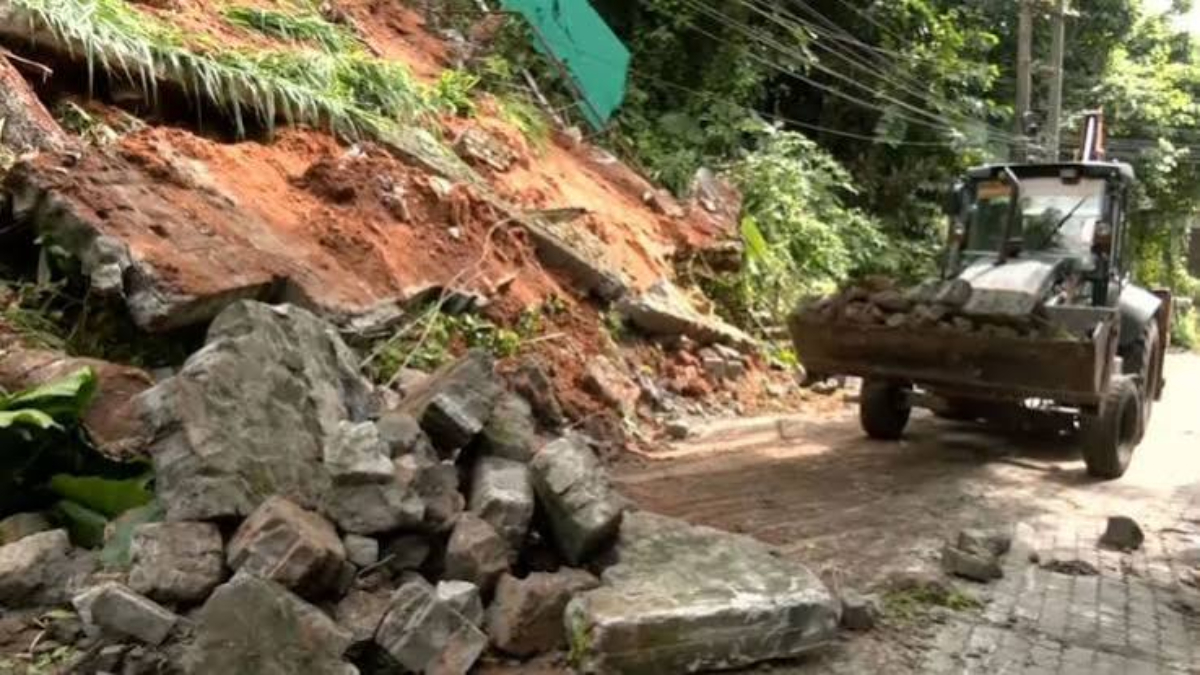
Illegal earth-cutting in Kharghuli has once again raised serious concerns over unregulated hill excavation in Guwahati after a massive landslide struck the Kharghuli area. Fortunately, no casualties were reported in the incident, but the landslide caused significant damage to infrastructure and renewed demands for stricter enforcement against illegal construction and earth-cutting activities in the city’s vulnerable hill regions.
Massive Landslide Hits Guwahati’s Kharghuli
A major landslide occurred in Guwahati’s Kharghuli locality following alleged illegal earth-cutting on a hillside. The incident triggered panic among residents as huge volumes of soil, rocks, and debris came crashing down, damaging roads, boundary walls, and nearby structures.
Authorities confirmed that no lives were lost and no injuries were reported, largely because the affected area was evacuated in time and the landslide occurred without directly impacting occupied houses. However, the incident exposed the growing risks associated with unchecked excavation in ecologically sensitive areas.
Officials from the district administration, Guwahati Municipal Corporation (GMC), police, and disaster management teams rushed to the site soon after the landslide to assess the situation and initiate safety measures.
Illegal Earth-Cutting in Kharghuli Under Scanner
Preliminary findings indicate that unauthorized earth-cutting activities on the hillside were a major factor behind the landslide. Local residents alleged that large-scale excavation had been taking place despite repeated complaints regarding the stability of the slope.
Officials have launched an investigation to identify those responsible for the illegal earth-cutting. Authorities are also examining whether proper permissions had been obtained for any construction work in the area.
The administration stated that strict legal action would be initiated against individuals or agencies found violating land-use and environmental regulations.
Residents Had Raised Safety Concerns Earlier
Residents of Kharghuli claimed that they had repeatedly warned authorities about excessive excavation and the increasing risk of landslides, particularly during the monsoon season.
According to locals, cracks had started appearing on portions of the hillside and surrounding land several days before the incident. Many feared that continued cutting of the slope weakened the soil structure, making it highly susceptible to collapse after rainfall.
The latest landslide has reinforced concerns that rapid urban expansion in Guwahati’s hill areas is often taking place without adequate geological assessments or proper environmental safeguards.
Authorities Begin Restoration and Safety Measures
Following the landslide, disaster response teams cleared debris from affected roads while engineers inspected nearby structures for possible damage. Barricades were placed around vulnerable sections to prevent public access until the area could be declared safe.
The district administration also instructed officials to monitor nearby slopes for any signs of further movement, especially as intermittent rainfall continues across Assam.
Experts have warned that unstable hillsides remain vulnerable to additional landslides if excavation activities continue without scientific planning and regulatory oversight.
Environmental Experts Stress Sustainable Development
Environmentalists have repeatedly cautioned against indiscriminate hill cutting in Guwahati, where several neighborhoods are located on fragile slopes. Unregulated excavation not only destabilizes hills but also increases the likelihood of landslides, soil erosion, and flash flooding.
Urban planners argue that proper slope stabilization measures, drainage systems, retaining walls, and strict enforcement of environmental regulations are essential before allowing construction in such areas.
Experts believe that sustainable urban development must balance infrastructure growth with environmental protection to minimize disaster risks in the rapidly expanding city.
Investigation Into Responsibility
The administration has initiated a detailed inquiry to determine how the alleged illegal excavation was allowed to continue. Officials are expected to examine construction approvals, land ownership records, and compliance with environmental norms.
Authorities have indicated that action may be taken against contractors, developers, or landowners if violations are established during the investigation.
The incident has also prompted renewed calls for regular inspections of ongoing construction activities across Guwahati’s hill regions to prevent similar disasters.
Need for Stronger Enforcement
The Kharghuli landslide has highlighted the urgent need for stricter monitoring of illegal excavation across Assam’s urban centres. Residents and environmental groups have urged the government to strengthen surveillance, improve coordination among civic agencies, and impose heavy penalties on violators.
Experts also recommend using modern geological surveys before approving development projects in landslide-prone zones. Such preventive measures can significantly reduce the risk of disasters while ensuring safer urban expansion.
A Wake-Up Call for Guwahati
The recent landslide serves as a reminder that environmental regulations cannot be ignored in the pursuit of development. Although the absence of casualties brought relief to residents, the damage caused by the collapse demonstrates the serious consequences of unauthorized hill cutting.
As investigations continue, authorities face increasing pressure to enforce existing laws more effectively and ensure accountability for violations. With the monsoon season still active, preventing further illegal excavation and protecting vulnerable slopes will remain a top priority for Guwahati’s administration.
Powerful Assam Land Acquisition Bill Aims to Speed Up Defence and Infrastructure Projects